Key takeaways
- Anchor sleep is the compromise NIOSH's shift-work training for nurses actually recommends: sleep straight after your shift, and on days off stay up until 3 or 4 a.m. so a window like 8 a.m. to noon is sleep time every single day.
- Flipping back to nights on every set of days off is the expensive option. NIOSH describes swapping schedules once or more per week as a perpetual state of jet lag.
- Light on the drive home is the free lever. NIOSH suggests more light in the first half of the shift, less in the second, and wraparound blue-blocking sunglasses from the building to the bedroom.
- The sunglasses caveat is a safety one. NIOSH warns that if you are very sleepy, blocking light can worsen drowsy driving - use them when someone else is driving, and do not drive when you are that tired.
- Caffeine has a 5 to 6 hour half-life per NIOSH, longer in some people, so front-load it and stop several hours before the shift ends. Persistent sleep problems are a clinician conversation, not a gear problem.
There are three workable night shift sleep schedules, and which one is right for you depends almost entirely on how many days off you get between stretches. Anchor sleep keeps a fixed block of hours that is always sleep time, on work days and days off alike — NIOSH's shift-work training for nurses describes exactly this compromise: sleep as soon as you get home on the nights you work, and on days off stay up until the middle of the night, around 3 or 4 a.m., then sleep until noon or 1 p.m., so that a window like 8 a.m. to noon is sleep time every single day. Split sleep breaks the day into two blocks, usually a few hours after you get home and a second sleep before you go back in. The full flip means sleeping days while you work and switching wholesale to nights on your days off.
The full flip is the most common and the most costly. NIOSH is blunt about the reason: when you swap between night work and night sleep one or more times a week, you can end up in a perpetual state of jet lag. If you have two days off between stretches, anchor sleep will treat you better. If you have five or more, plenty of nurses flip deliberately and accept one rough transition day at each end. What almost never works is having no plan and letting each stretch improvise itself.
Which schedule should I actually pick?
Anchor sleep is the compromise NIOSH's own training recommends for full-time night workers, and it is the least dramatic to run. The rule is a shared window. Pick four hours that are sleep on every 24-hour cycle — 8 a.m. to noon is the worked example — and build both your work-day sleep and your day-off sleep around it. On work days you extend it forwards by going to bed straight after your drive home. On days off you extend it backwards by staying up late rather than getting up early. The cost is social: you are functionally on a very late schedule even when you are off, and you will miss morning things.
Split sleep suits people whose households do not permit a single long block — school runs, a partner on days, a toddler. You take a three-to-four hour sleep on getting home, live your afternoon, then take a second three-to-four hour sleep before the shift. It works because total sleep is what matters most, and NIOSH's guidance is explicit that night workers should sleep as much as possible whenever the opportunity exists, including napping. The cost is that two shorter sleeps are lighter than one long one, and you have to defend both of them.
The full flip is the honest choice when your stretch is long and your days off are longer. You accept that the day after your last night is a write-off and that the day before your first night needs a long nap. NIOSH warns against the two tempting extremes here: staying awake all day before your first night shift, and staying awake the entire day after your last one. In both cases you are awake for too many hours, which raises short-term accident risk and feeds chronic sleep debtnight shift sleep debtThe accumulated shortfall between sleep obtained and sleep needed, which night rotations tend to build because daytime sleep is shorter and lighter. The gear angle is narrow and honest: blackout coverage, sound masking and a cool dark room address the environment. Anything beyond the environment is a conversation for a clinician..
Rotating shifts are their own problem. Fixed nights are hard; rotating between nights, evenings and days is harder, and it is worth naming that the NIOSH training for nurses declines to give rotating-shift strategies at all, because rotations vary too much — it points rotating workers to a sleep specialist instead. If you rotate and you are struggling, that is not a personal failure of discipline.
How do I stop the drive home from ruining my sleep?
This is the single most under-appreciated lever, and it is free.
Light is the signal that sets your body clock, and the sun on the drive home lands at the worst possible moment — right as you are trying to convince your body it is bedtime. NIOSH's night-shift module recommends increasing your light exposure during the first half of the shift to stay alert, then reducing it during the second half so that sleeping when you get home is easier. Before you leave the building, or before you pass any atrium windows, put on blue-light-blocking sunglasses — wraparound is best — and keep them on until you are in a dark bedroom.
There is a safety caveat here that matters more than the sleep benefit, and NIOSH states it directly: if you are very sleepy at the end of your shift, sunglasses can block the alerting effect of light and make drowsy driving worse. The safe version is to use them when someone else is driving. If you are genuinely too sleepy to drive, NIOSH's suggestions are the practical ones — get a ride, take caffeine and then a short nap before driving, take a taxi or transit, carpool, or sleep somewhere near the hospital. No sleep schedule survives a crash.
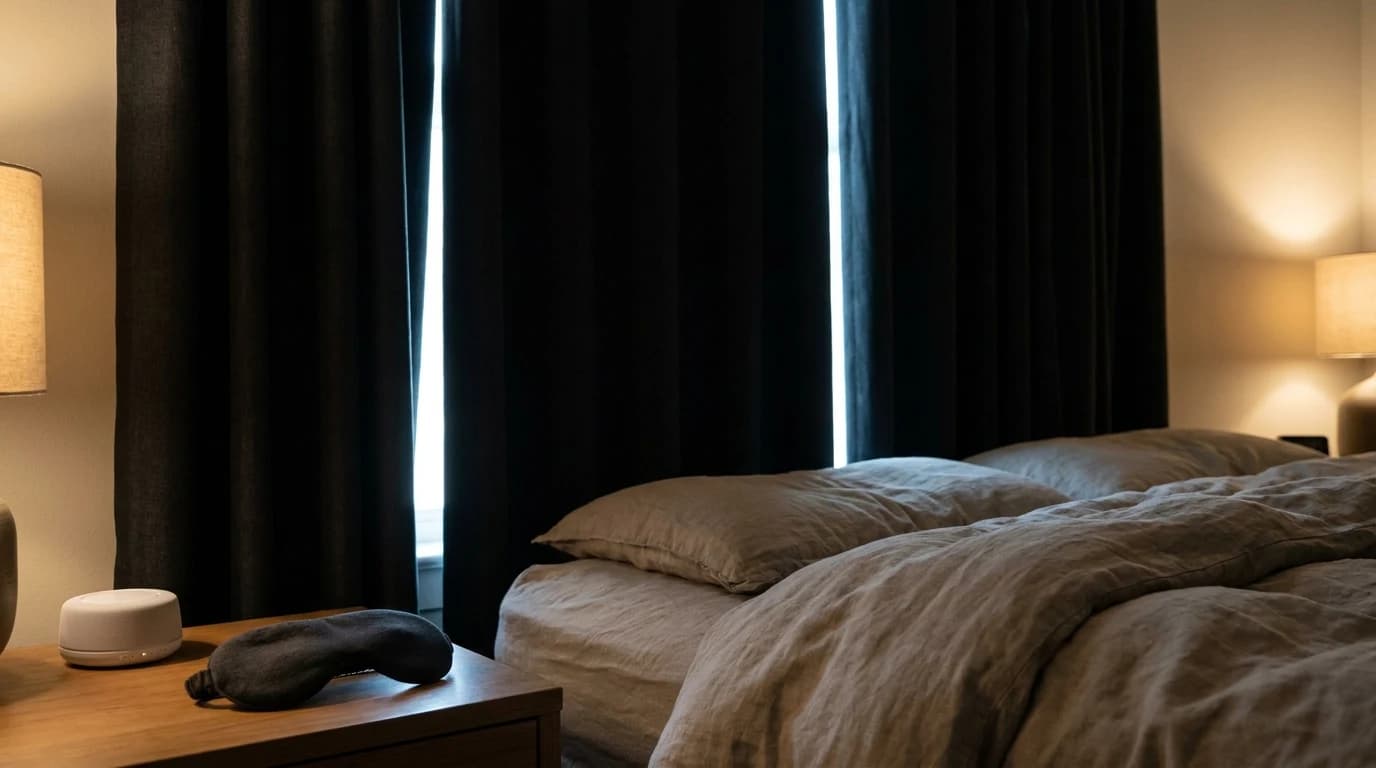
At the other end of the drive, the room has to be dark. NIOSH's sleep guidance for night nurses sets the bar at a bedroom so dark you cannot see your hand in front of your eyes, with light blocked at the windows and under the doors, and a dim red nightlight if you have to get up. Our night shift sleep gear kit walks through what actually gets a room there — the short version is that blackout curtains do more than anything you wear, with a mask like the ALASKA BEAR Mulberry Silk Sleep Mask in the mid-teens as the cheap patch for what the curtains miss, and steady non-looping sound to cover a daytime household. The full set lives on the night shift sleep gear page.
When should I stop drinking coffee?
Earlier than feels reasonable, and the arithmetic is straightforward. NIOSH's sleep module puts the half-life of caffeine at 5 to 6 hours — the time to clear half of what you drank — and notes it is considerably longer in some people. A coffee at 3 a.m. still has half its caffeine on board at around 8 or 9 a.m., which is precisely when you are trying to fall asleep.
The guidance NIOSH gives night workers who rely on caffeine is to take it at the beginning of the shift and stop several hours before the shift ends. In practice that means front-loading: coffee at the start and through the first half, nothing after roughly the midpoint, water and food for the back half. That is also when your light exposure should be coming down, so the two habits reinforce each other.
Two more things worth knowing. NIOSH's napping module describes the caffeine-then-nap sequence used to blunt sleep inertia — caffeine takes about 30 minutes to take effect, so taking it immediately before a short nap means you wake with both the nap and the caffeine working. And sugar is not a substitute: NIOSH's diet guidance for night nurses specifically flags sugar-rich, low-fiber foods as things that can increase sleepiness. If your break room strategy is a vending machine, see our lunch box guide for the boring alternative that actually holds up over twelve hours.
How long should the sleep itself be?
As long as you can make it. NIOSH's framing for night workers is that they usually get less sleep, and poorer-quality sleep, than day workers, so the instruction is to spend as much time in bed as possible rather than aiming at a target number. Two details from the same guidance are easy to act on: go straight to bed when you get home rather than doing chores or errands first, because early morning is prime sleep time for a night nurse; and eat a small protein-and-carbohydrate snack before bed if hunger is likely to wake you.
Naps count toward the total. A nap before your first night of a stretch is the standard way to arrive with something in the tank, and NIOSH's napping module notes that short naps of 15 to 30 minutes carry less grogginess than waking out of deep sleep around the one-hour mark.
The honest close
None of this is a treatment for anything. These are scheduling and environment strategies for a job that runs against your body clock, and they work at the margins — a better hour here, a less brutal transition there. If you are sleeping badly for weeks at a time, falling asleep at the wheel, or not recovering between stretches no matter how you arrange the day, that is a conversation for a clinician or a sleep specialist, not a curtain purchase. NIOSH's own training for nurses makes the same referral, particularly for anyone on a rotating schedule.
Pick one change from this page rather than five. For most night nurses the highest-value single move is the anchor window, and the second is the sunglasses on the way to the car.
| Schedule | How it runs | Best when | The cost |
|---|---|---|---|
| Anchor sleep | Keep a fixed window that is sleep on every 24-hour cycle; NIOSH works the example as 8 a.m. to noon. Extend it forwards after your drive home, backwards by staying up late on days off | You get about two days off between stretches | Social. You are functionally on a very late schedule even when off, and you miss morning things |
| Split sleep | Three to four hours on getting home, your afternoon, then a second three-to-four-hour sleep before the shift | Your household does not permit one long block: school runs, a partner on days, a toddler | Two shorter sleeps are lighter than one long one, and you have to defend both |
| The full flip | Sleep days while you work, then switch wholesale to nights on your days off | Your stretch is long and your days off are longer, five or more | NIOSH: swapping one or more times a week can leave you in a perpetual state of jet lag. One write-off day at each end |
| Rotating shifts | NIOSH’s shift-work training for nurses declines to give rotating-shift strategies at all, because rotations vary too much | Not a schedule you choose | It points rotating workers to a sleep specialist instead. Struggling on a rotation is not a failure of discipline |
Products discussed in this article
Every item named above, with the NurseComforts Score and the price we last recorded. Prices at the affiliate retailers we link change constantly.
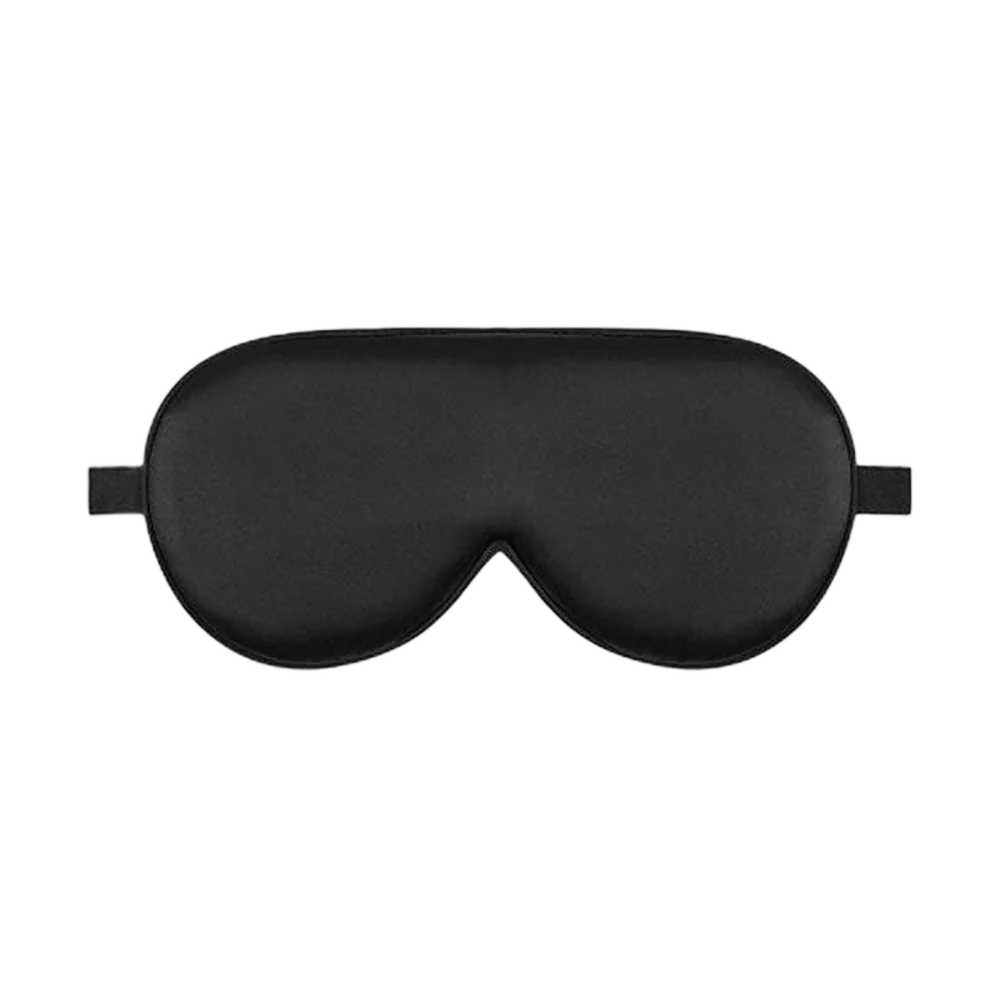
ALASKA BEAR Mulberry Silk Sleep Mask
86 · Score$15.99
Your next step