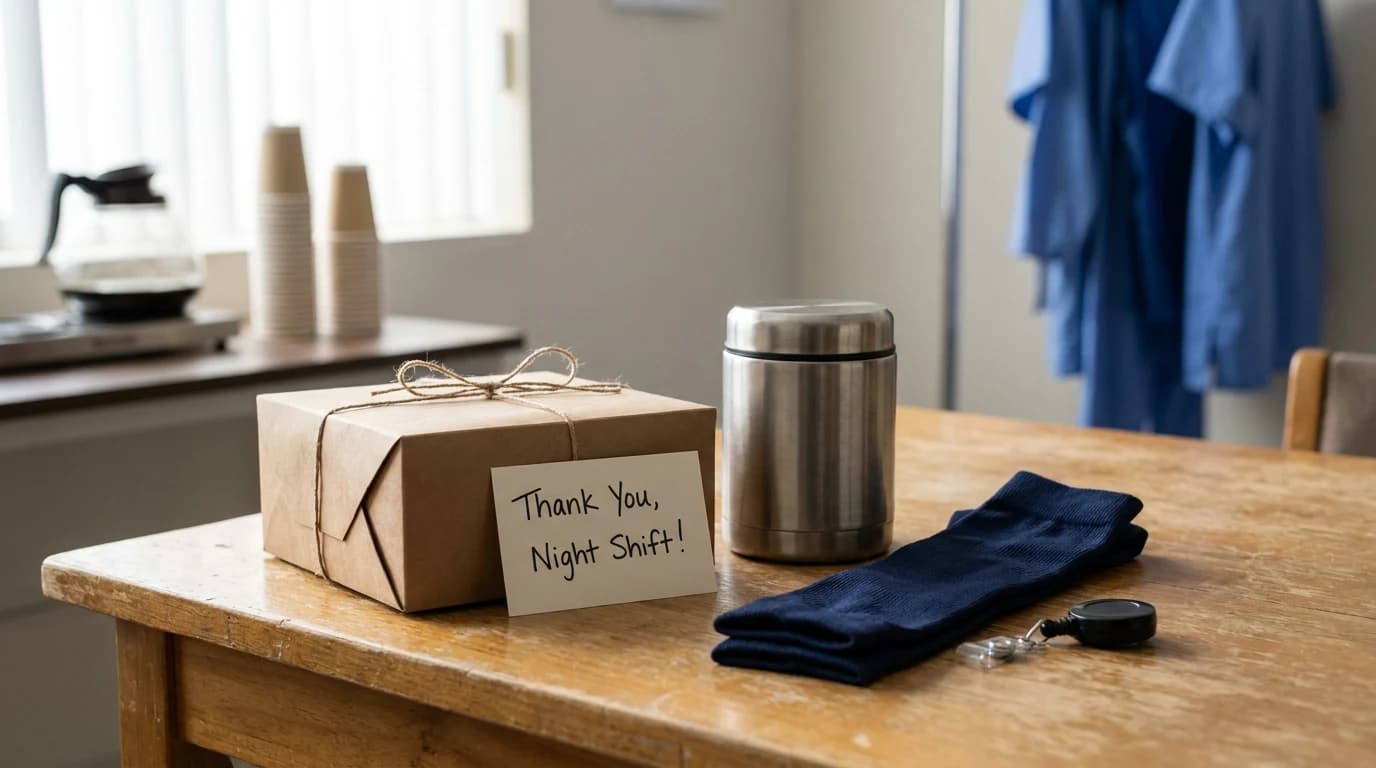
Gifts for Nurses by Who's Giving, and What Hospitals Allow
The right gift depends on who is giving it. Family can fix feet, sleep and lunch; patients and families run into written hospital gift policies, and cash is the
Read the guide →Graduated compression knee-highs for legs that finish a shift heavier than they started — including the multi-packs that make wearing them daily realistic.
Comrad's 15-20 mmHg knee-high three-pack is the sensible default: true graduated compression at the mild-to-moderate level most people actually want, sized by shoe size and calf circumference, and enough pairs to cover a work week. Firmer 20-30 mmHg exists and Physix Gear makes it cheap — but that is a step up you should take deliberately, not by default. The real tradeoff in this category is verifiable compression versus pack count.
Swipe the table sideways to reach all 5 picks — the row labels stay pinned on the left.
| The picks | Editorial #1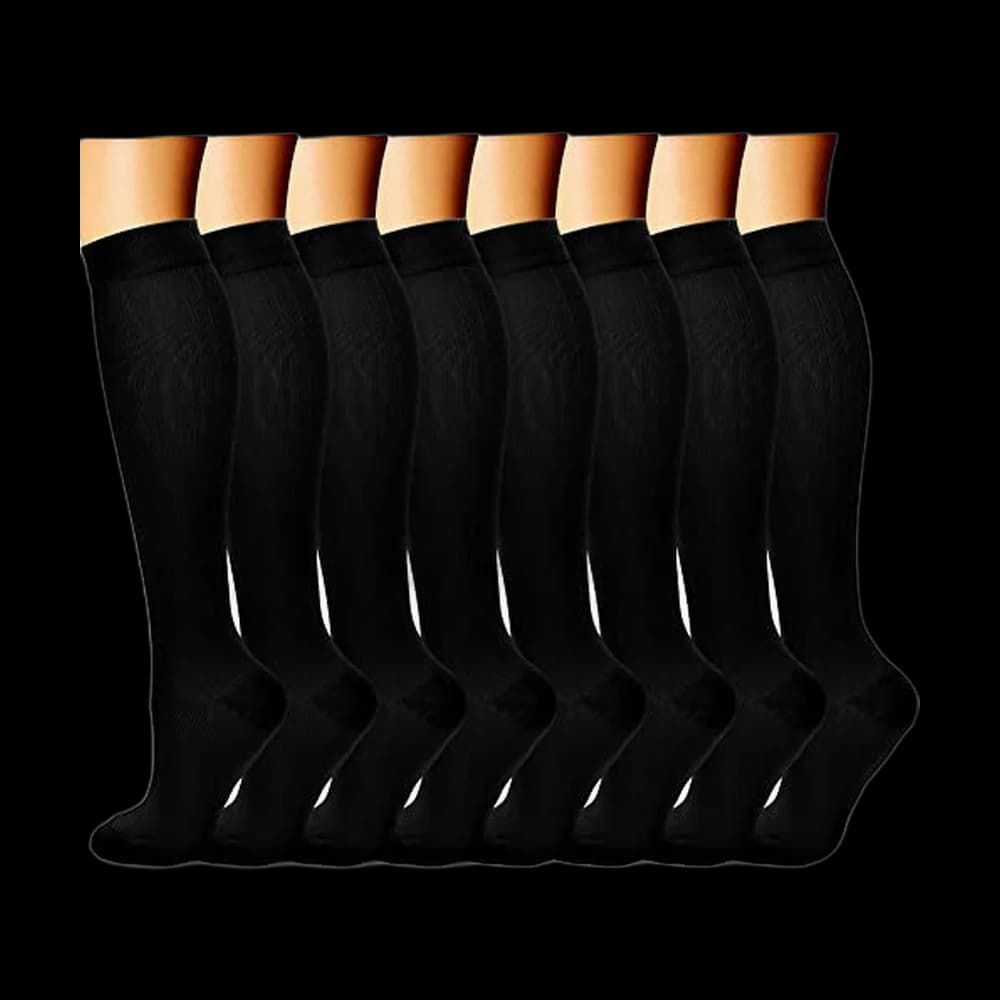 TOP PICKCHARMKING Socks, 8 Pairs★ Owner rating4.5 (90,077) TOP PICKCHARMKING Socks, 8 Pairs★ Owner rating4.5 (90,077) | Editorial #2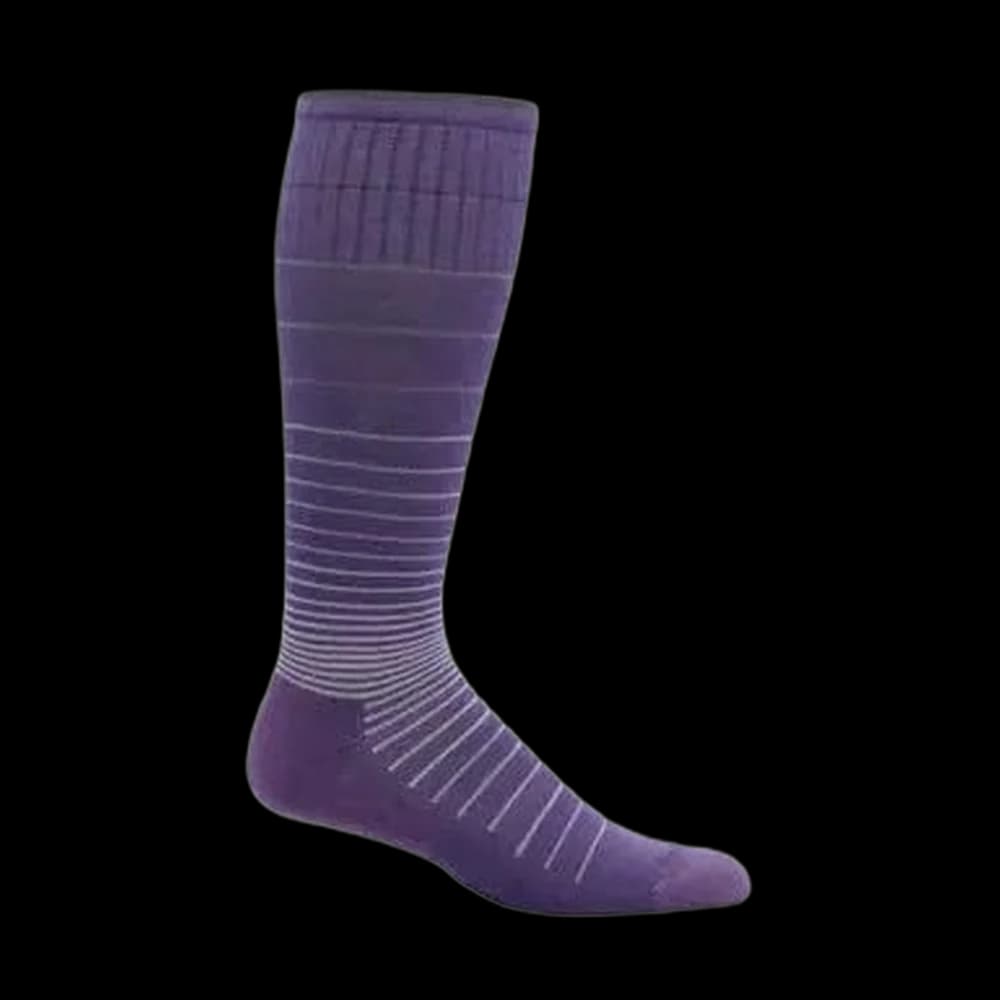 #2Sockwell Circulator★ Owner rating4.6 (4,986) #2Sockwell Circulator★ Owner rating4.6 (4,986) | Editorial #3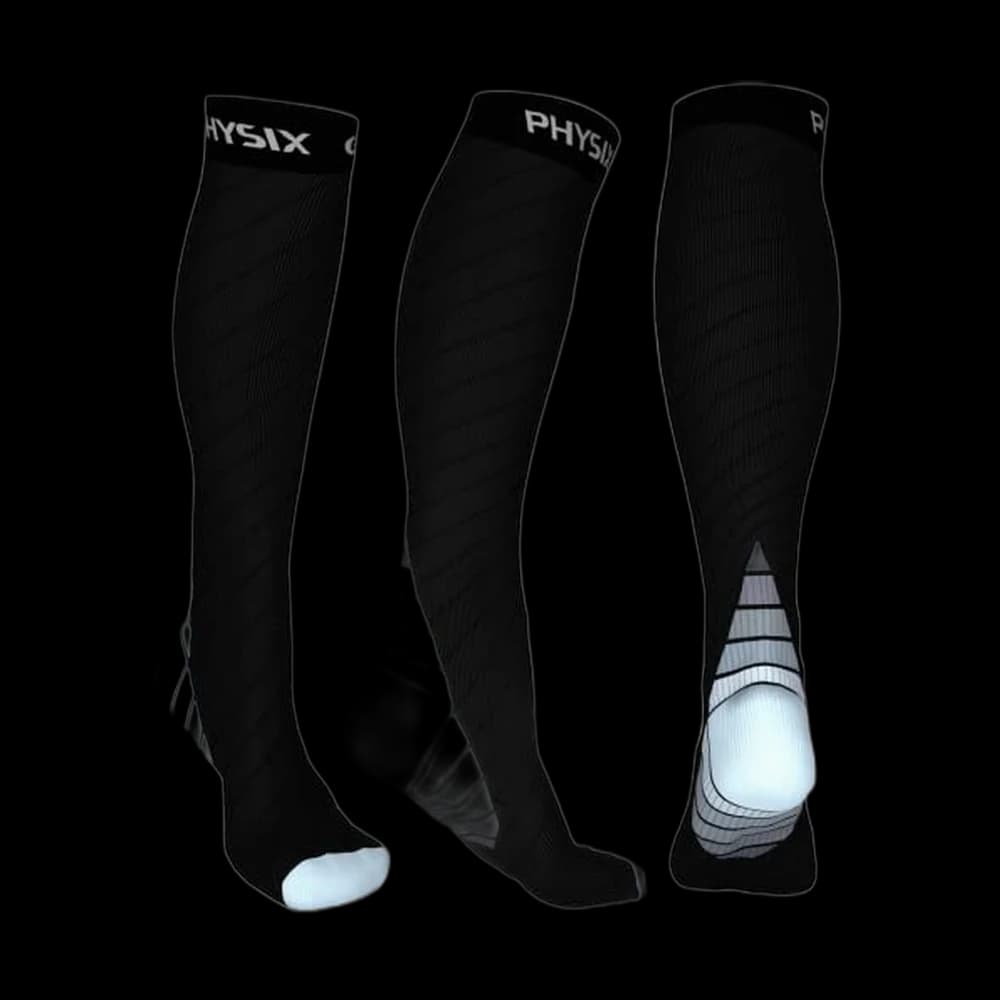 BEST VALUEPhysix Gear Sport 20-30★ Owner rating4.4 (42,744) BEST VALUEPhysix Gear Sport 20-30★ Owner rating4.4 (42,744) | Editorial #4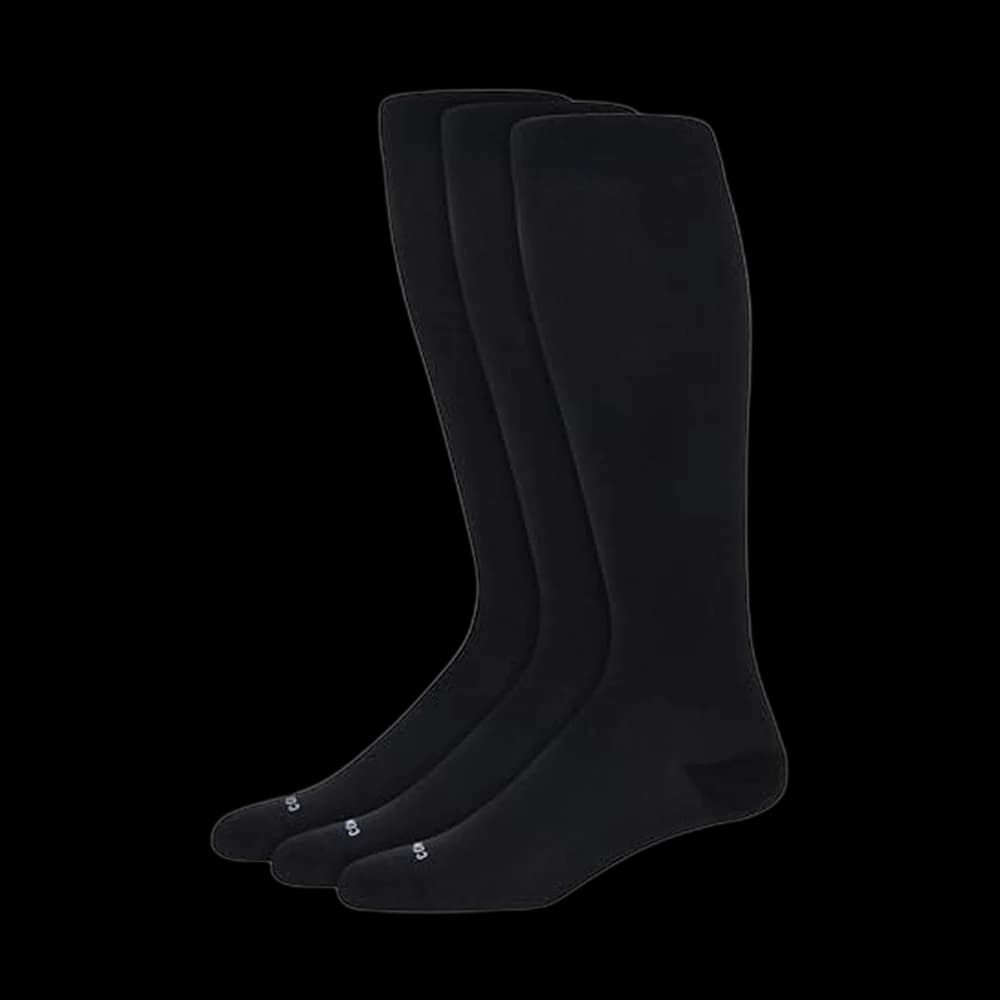 #4Comrad Knee-High, 3-Pack★ Owner rating4.3 (565) #4Comrad Knee-High, 3-Pack★ Owner rating4.3 (565) | Editorial #5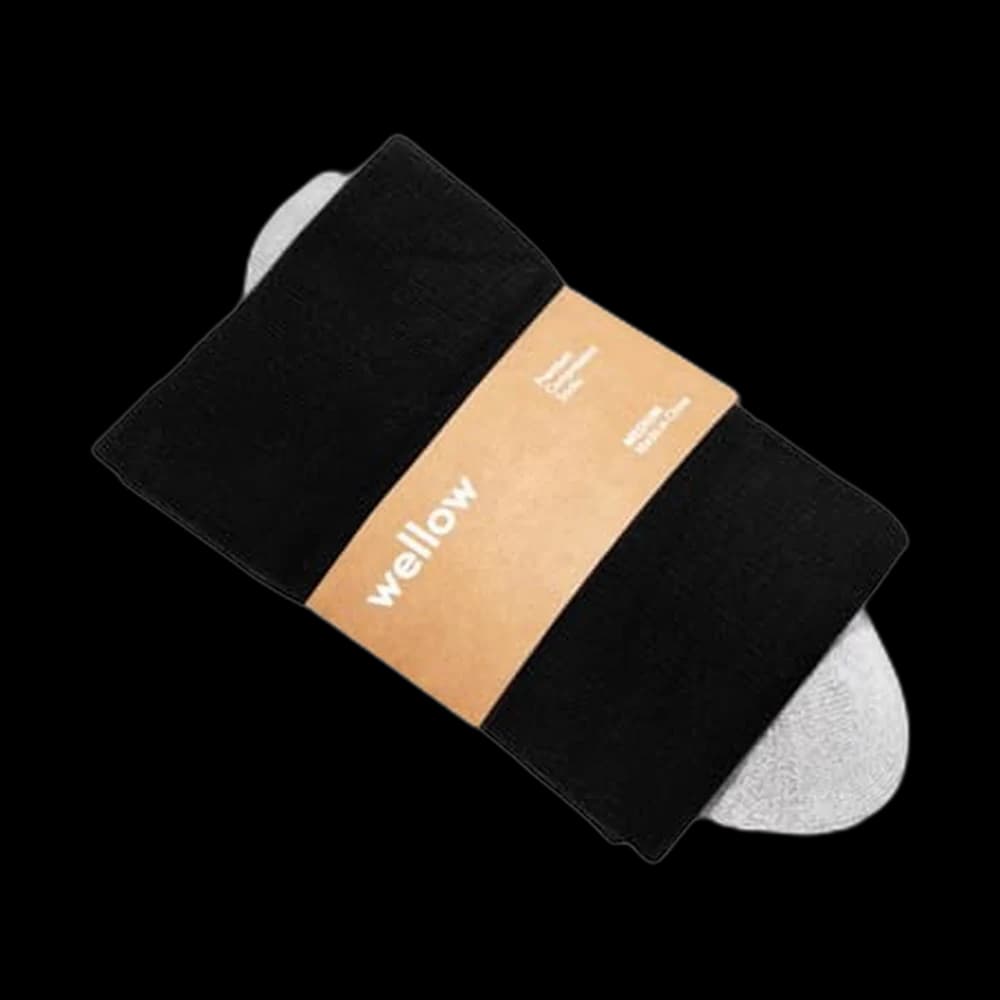 #5Wellow Bamboo 18-25 mmHg★ Owner rating4.2 (146) #5Wellow Bamboo 18-25 mmHg★ Owner rating4.2 (146) |
|---|---|---|---|---|---|
| Buy | Buy on Amazon · $19.99$2.50/pair (8 pairs)Price checked Oct 10 | Buy on Amazon · $32.95Price checked Oct 10 | Buy on Amazon · $18.82Price checked Oct 10 | Buy on Amazon · $101.99$34.00/pair (3 pairs)Price checked Oct 10 | Buy on Amazon · $31.99Price checked Oct 10 |
| NurseComforts Score | 81 Compression Delivery81Fit & Calf Sizing75Breathability & Odor81Ease of Donning75Wash Durability78Value87Owner Satisfaction82 Leads on Value 87; gives up most on Ease of Donning 75. | 79 Compression Delivery83Fit & Calf Sizing77Breathability & Odor95Ease of Donning77Wash Durability80Value64Owner Satisfaction83 Leads on Breathability & Odor 95; gives up most on Value 64. | 78 Compression Delivery79Fit & Calf Sizing73Breathability & Odor73Ease of Donning73Wash Durability76Value86Owner Satisfaction79 Leads on Value 86; gives up most on Ease of Donning 73. | 73 Compression Delivery83Fit & Calf Sizing71Breathability & Odor71Ease of Donning71Wash Durability74Value75Owner Satisfaction68 Leads on Compression Delivery 83; gives up most on Owner Satisfaction 68. | 67 Compression Delivery69Fit & Calf Sizing69Breathability & Odor87Ease of Donning69Wash Durability72Value61Owner Satisfaction58 Leads on Breathability & Odor 87; gives up most on Owner Satisfaction 58. |
| What buyers say | ↑ Quality↑ Comfort↑ Functionality↑ Appearance~ Fit~ CompressionBuyers praise quality, comfort, functionality and appearance. Mixed feedback on fit and compression.Based on 26,302 review mentions | ↑ Comfort↑ Fit↑ Compression↑ Functionality~ Value for money~ Ease Of UseBuyers praise comfort, fit, compression and functionality. Mixed feedback on value for money and ease of use.Based on 3,236 review mentions | ↑ Quality↑ Comfort↑ Compression↑ Support~ Fit~ Ease Of UseBuyers praise quality, comfort, compression and support. Mixed feedback on fit and ease of use. Some flag size.Based on 20,650 review mentions | ↑ Quality↑ Compression↑ Comfort~ Fit~ Ease Of Use~ Pain ReliefBuyers praise quality, compression and comfort. Mixed feedback on fit and ease of use.Based on 259 review mentions | ↑ Compression~ QualityBuyers praise compression. Mixed feedback on quality. Some flag fit.Based on 47 review mentions |
| Compression Level (mmHg) | 15-20 mmHg, graduated | 15-20 mmHg, moderate graduated | 20-30 mmHg, graduated | 15-20 mmHg, true graduated | 18-25 mmHg |
| Fiber Content | 85% nylon per the manufacturer; the remaining content is not stated on the listing | 32% merino wool, 31% bamboo rayon, 32% stretch nylon, 5% spandex, per Sockwell | Not stated on the listing | 91% nylon, 9% spandex with SmartSilver anti-odor treatment | Viscose from bamboo blend; exact percentages not stated on the listing |
| Size Range / Calf Fit | Knee-high wide calf; this listing is L/XL. Refer to the size-chart image on the listing, as no calf circumference is published | S/M fits women's shoe 4-7.5, M/L fits 8-11; accu-fit with a turn-welt top. No calf circumference published. This listing is S/M in plum | Knee-high, sized by shoe size range; this listing is L/XL in grey. No calf circumference published | Charted by shoe size and calf circumference; Large fits women's 11+ or men's 10.5-12.5 with a 15-17 inch calf. Size up if between sizes, per Comrad | This listing is Regular calf, size MD: designed for an 11.5 inch calf and stretching to 19 inches, with a 15 to 15.8 inch sock length |
| Pairs Per Pack | 8 pairs | 1 pair | 1 pair on this listing | 3 pairs | 1 pair |
Buyer-sentiment chips and summaries come from Amazon’s review-summary data. As an Amazon Associate we earn from qualifying purchases. Prices and availability are subject to change.
The reasoning behind each rank — the numbers live in the table above.
#1 · CHARMKING Compression Socks, 8 Pairs
Eight pairs of 15-20 mmHg graduated compression for less than the price of one premium pair, which makes this the pack that turns compression from an experiment into a habit. CHARMKING states the knit was upgraded to 85% nylon for 360-degree stretch, and the wide-calf knee-high cut suits more legs than most budget packs. The tradeoff is consistency: budget multi-packs vary pair to pair, they lose elasticity faster than premium knits, and there is no published calf-circumference chart beyond the size-chart image on the listing.
✓ Eight pairs, enough to wear compression every shift without a laundry problem
✗ Compression consistency varies pair to pair, which is the standard budget multi-pack pattern
#2 · Sockwell Circulator Compression Sock
The Circulator is the pick when the problem is a hot, damp foot as much as a heavy leg: Sockwell publishes the blend as 32% merino wool, 31% bamboo rayon, 32% stretch nylon and 5% spandex, at 15-20 mmHg graduated compression with a light cushion underfoot. Merino manages moisture and resists odor in a way nylon does not, which is what earns it the premium slot here. The tradeoff is laundry and money: wool wants a gentler wash cycle than a hospital sock usually gets, and one pair costs what a whole budget multi-pack does.
✓ 32% merino wool blended with bamboo rayon, nylon and spandex, per Sockwell
✗ Wool blends want gentler laundry than a machine-dry synthetic sock
Main button: women's sizes
#3 · Physix Gear Sport 20-30 mmHg Compression Socks
This is the accessible route into firm 20-30 mmHg support, for legs that stopped responding to the mild 15-20 tier. Physix Gear's graduated athletic fit is one of the most widely bought compression socks on Amazon and sits at budget-pack money despite being a firmer compression class than most of this category. The tradeoff is that 20-30 mmHg is a genuinely firm class: it is harder to pull on, and if you are new to compression or have any circulatory condition you should start milder and talk to your own clinician first.
✓ Firm 20-30 mmHg graduated compression, a tier above most socks in this price band
✗ 20-30 mmHg is firm and noticeably harder to pull on than a 15-20 sock
#4 · Comrad Knee-High Compression Socks, 3-Pack
Comrad's knee-highs deliver 15-20 mmHg of true graduated compression in a 91% nylon, 9% spandex knit with SmartSilver anti-odor treatment, and they ship three to a pack so you can actually wear compression on consecutive shifts. They earn the mid-range pick because the sizing is charted by both shoe size and calf circumference rather than a vague small-medium-large, which is the single biggest reason compression socks disappoint people. The tradeoff is price per pair and the compression tier: 15-20 mmHg is the mild-to-moderate level, not the firm support some legs need by hour ten.
✓ True graduated 15-20 mmHg, strongest at the ankle and easing up the leg
✗ Highest cost per pair in this category by a wide margin
#5 · Wellow 18-25 mmHg Bamboo Compression Socks
Wellow sits at an unusual 18-25 mmHg, between the mild 15-20 tier and the firm 20-30 class, in a viscose-from-bamboo knit with anti-odor treatment and a seamless toe and heel. It is the pick if 15-20 mmHg has not been enough but 20-30 mmHg is more than you want to fight on at 0630. Read the sizing carefully: this particular listing is the Regular calf build, designed for an 11.5 inch calf and stretching to 19 inches, not the wide-calf SKU, so measure before you order.
✓ 18-25 mmHg fills the real gap between the mild and firm compression tiers
✗ This listing is the Regular calf version, not the wide-calf build, despite the family name
What nurses say to each other
r/nursing treats compression socks as one of the few pieces of gear with near-consensus behind it, and the argument that carries the threads is preventive rather than comfort-based: veteran nurses repeatedly describe varicose and spider veins they attribute to years of going without, and newer nurses are told not to wait. 15-20 mmHg is the usual starting point, with firmer grades reserved for people who already have swelling or a diagnosis, and the advice on fit is to size by calf measurement rather than shoe size and to buy a wide-calf model rather than a bigger regular one. Whether price matters is genuinely unresolved — plenty of people report cheap multi-packs working fine for years, while others insist nothing under about twenty dollars a pair holds graduated compression past a few months. The recurring reason people quit is heat, sweat and itching rather than cost, and the workarounds posted are thinner or toeless pairs, natural-fiber options, and moisturizing after taking them off.
Nurses rave about
Nurses warn against
Sources: r/nursing
The surprising truth
The most expensive thing about compression socks is not the socks — it is owning too few. A single premium pair at $34-38 that you wear twice a week does less than an eight-pair budget set worn every shift, because the benefit tracks days worn, not dollars spent. This is the one category on the site where we'd tell you to buy the multi-pack first and upgrade later.
What we didn’t pick
Popular options we evaluated and passed on, with the specific reason each one fell short of our picks.
Enormous listing volume and near-identical construction to unbranded packs, with the copper claim carrying the price rather than the graduated gradient.
They skip the ankle and foot, which is exactly where a graduated sock does most of its work for someone standing all day.
This is a prescribed compression class. We are a gear site, not a clinician, and we won't recommend a dose that belongs in a care plan.
What to look for
Our five compression picks span 15-20, 18-25 and 20-30 mmHg, and pack sizes from a single pair to eight — a per-pair cost range of roughly 10x across the same shortlist.
Compression socks are the one thing on this page you buy again and again, which makes getting the basics right worth ten minutes.
Graduated is the feature. mmHg is the dose. "Graduated" means the sock is tightest at the ankle and eases as it goes up the leg — Comrad describes the effect as helping blood travel up from the feet toward the heart. A sock that squeezes evenly, or squeezes hardest at the top, is not doing that job. Check that the listing says graduated, not just "compression."
Start at 15-20 mmHg. Comrad classes 15-20 as the mild, most commonly used level, meant for daily wear, work and recovery — and it is where the overwhelming majority of people on their feet all day should begin. 20-30 mmHg is a firmer tier. Some nurses genuinely need it and say nothing else touches the swelling. It is also harder to get on, less comfortable to sit in, and not a level to self-prescribe if you have any circulatory condition, diabetes or peripheral neuropathy. That conversation belongs with your own clinician, not a review site.
Measure your calf. Actually measure it. This is where most compression purchases fail. Sizing is a function of shoe size and calf circumference — Comrad's small, for instance, is charted at a 10-14 inch calf. A sock that's too small becomes a tourniquet at the band; one that's too large delivers no meaningful compression at all and rolls down by lunch. If your calf sits outside the standard chart, buy a purpose-built wide-calf model rather than sizing up the length.
Put them on before your feet swell. Morning, before the shift, ideally before you're upright for long. Pulling compression onto an already-swollen leg is miserable and less effective.
Buy for the week, not the day. Compression only helps on the days you wear it, and a single premium pair means laundry decides whether you get the benefit. Either buy a multi-pack outright or build to four or five pairs. Replace them when the ankle band stops springing back — elastic fatigues, and a stretched-out sock is a normal sock with a marketing story.
Fabric decides whether you keep wearing them. Nylon blends are durable and cheap. Merino (Sockwell) manages heat and odor far better on a night shift. Bamboo viscose and cotton blends feel softest. This is the axis where personal preference legitimately beats spec sheets.
The right gift depends on who is giving it. Family can fix feet, sleep and lunch; patients and families run into written hospital gift policies, and cash is the
Read the guide →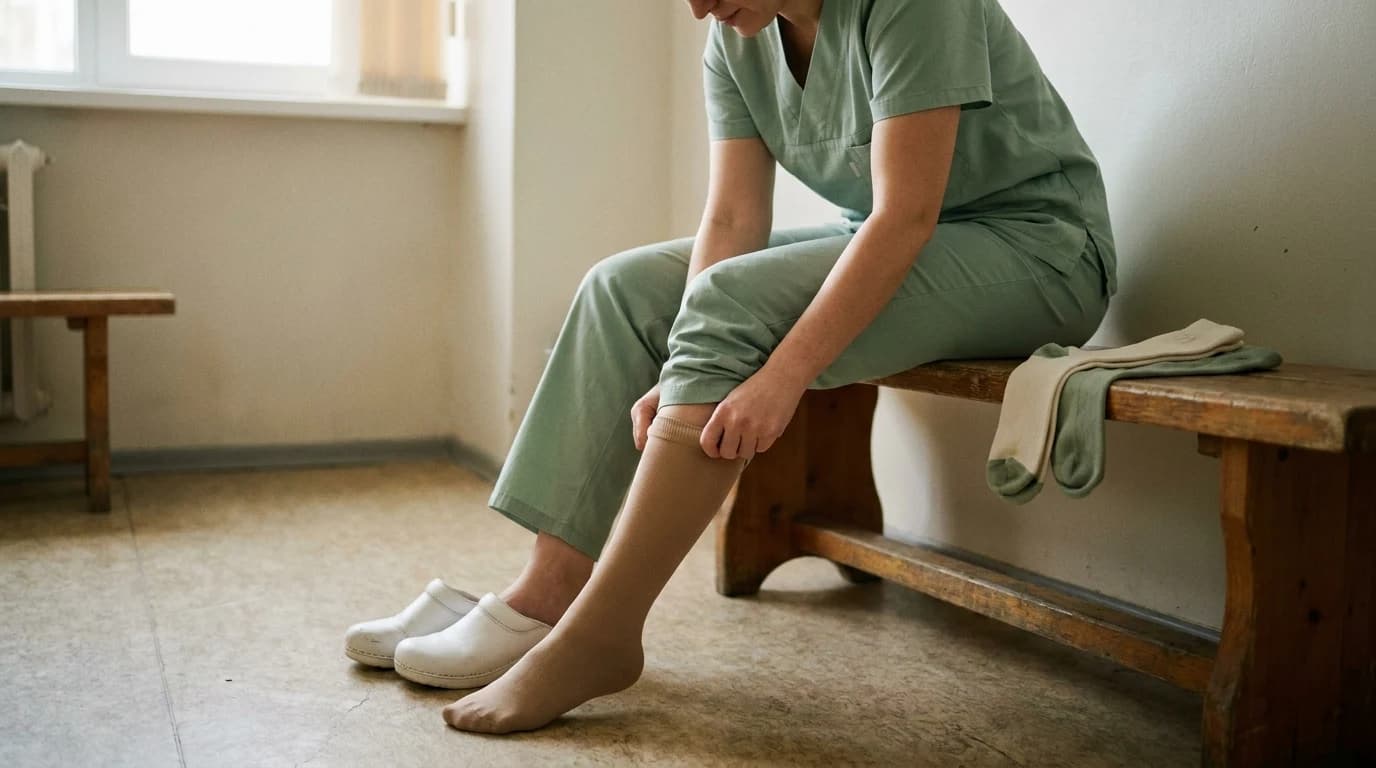
The answer is not a number of hours. Compression works while you are upright, so the useful rules are about when they go on, when they come off, and how many pa
Read the guide →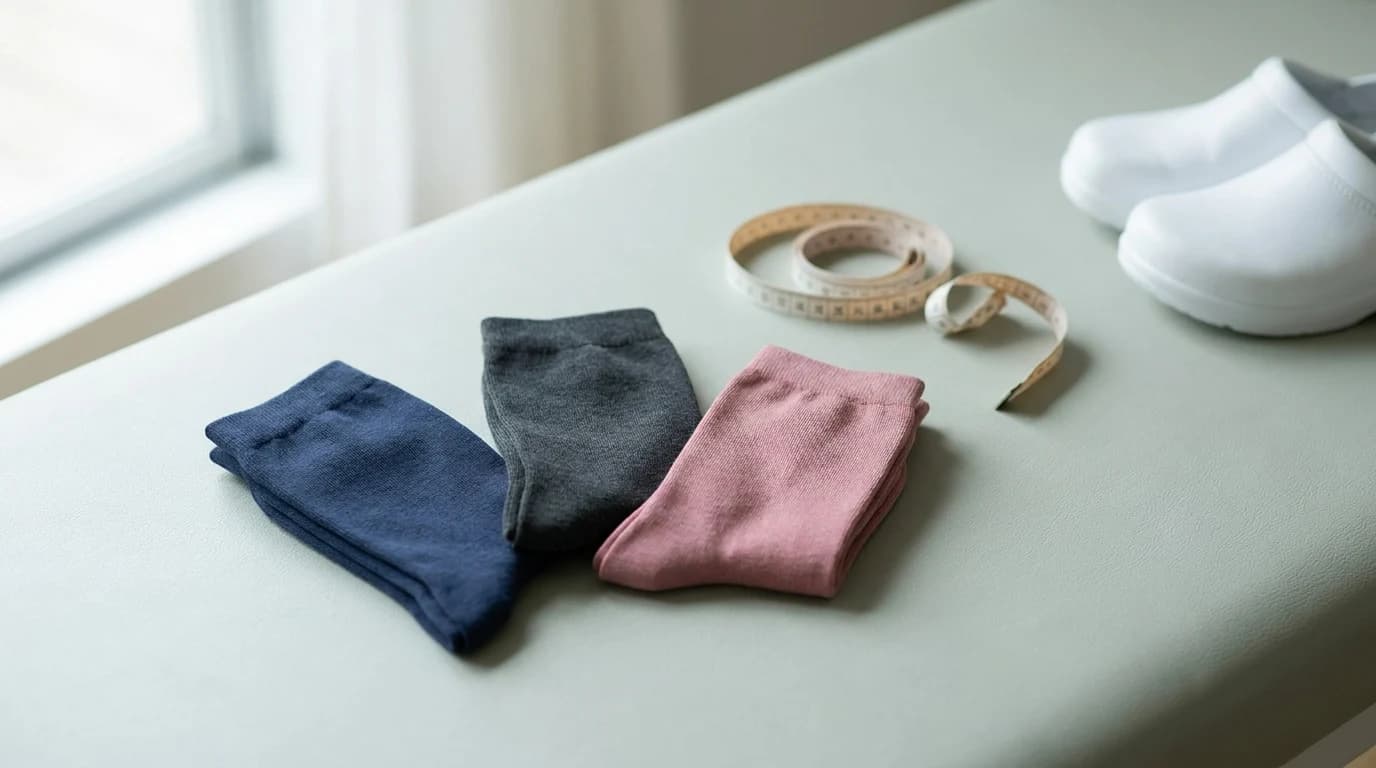
Most healthy nurses starting compression for long shifts begin at 15-20 mmHg and step up to 20-30 only if a fair trial does nothing; the number is pressure at t
Read the guide →