Quick Answer
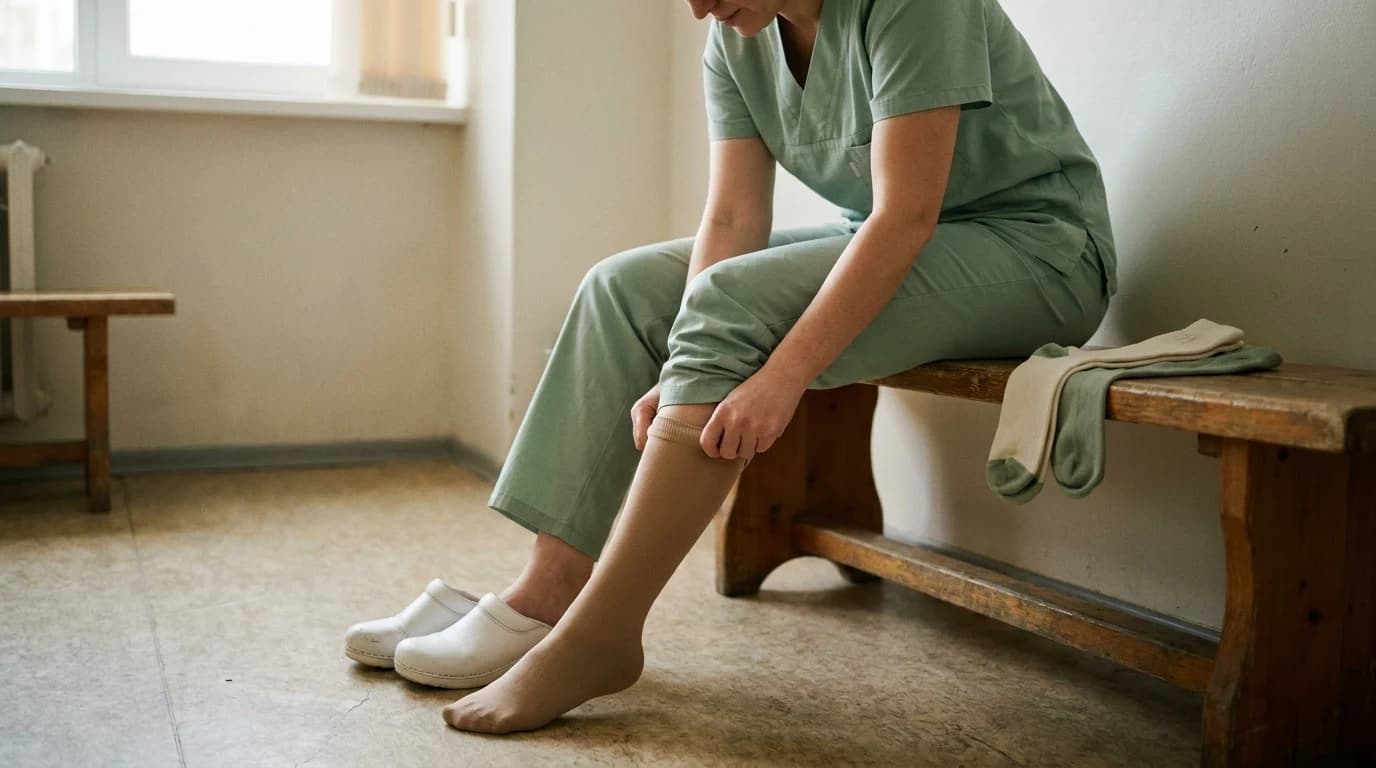
Put them on before you stand up - ideally before you get out of bed - wear them through the shift, and take them off when you are home and off your feet. Compression works against gravity, so the hours that count are the hours you are upright. Do not sleep in them unless a clinician has told you to, wash them after every wear, and replace them every three to six months so they keep their stated compression.
Key takeaways
- Duration is the wrong frame. Compression opposes gravity, so the useful boundaries are on before you stand up and off when you go horizontal, not a target number of hours.
- One randomised trial ran a full twelve-hour standing shift and compared ordinary socks with 15-20 and 20-30 mmHg stockings. Only the ordinary-sock group finished with significant muscle fatigue, swelling and discomfort, and the authors concluded the lower level may be sufficient.
- Sleeping in them is the most common mistake. The one study of stockings marketed as sleepwear measured a minimal overnight reduction in leg circumference alongside relatively high reported discomfort.
- Wearing them at work prevents the swelling but does not fix the pain you feel walking out. A cross-over trial in workers who stand more than eight hours a day found post-shift pain responded to what happened after work, not to the stockings worn during it.
- MedlinePlus tells patients to wash compression stockings daily, keep at least two pairs so one is always dry, and replace them every three to six months so they hold their compression.
Twelve hours is the wrong unit for this question. Compression socks are not working on a timer — they are working against gravity, and gravity only applies to your veins while you are upright. That one fact settles most of what nurses want to know about duration, including the thing almost everyone gets wrong.
The short version. On before you stand up, off when you go horizontal. There is no bonus round for leaving them on longer, and the one trial that ran a full twelve-hour standing shift found the mild band did the job.
Three reasons to wear them, three different clocks
It has three answers because it is three questions sharing one search box.
- Shift swelling and heavy legs. Over-the-counter, mild band, worn for the hours you are on your feet. This is the nurse question, and the rest of this page is about it.
- A diagnosed venous problem — varicose veins, chronic venous insufficiency, a previous clot. The schedule comes from whoever specified the class, it is usually longer and firmer than anything below, and it wins over this page every time.
- Travel. A defined window with a defined end. Cochrane's 2021 review of twelve randomised trials in 2,918 passengers on flights over five hours found high-certainty evidence of a substantial drop in symptomless DVT: three cases among stocking wearers against forty-seven without.
The nurse schedule, situation by situation
| Situation | On | Off | Why |
|---|---|---|---|
| A single 12-hour shift | Before you get out of bed, or at minimum before you leave home | Once you are home and off your feet | Pulling compression onto an already-swollen leg starts from a worse baseline |
| Three 12s back to back | A clean pair before every shift | After every shift | Sweat and skin oils fatigue the elastic; a washed pair is a working pair |
| Night shift, then daytime sleep | Before the shift, exactly as for a day shift | Before you get into bed — not after you wake up | Lying down removes the gravity the sock exists to oppose |
| The hours after a shift | Not the tool for this | — | Post-shift pain responds to what you do after work, not to more sock hours |
| A flight or drive over five hours | Before you board | After you land | Cochrane found symptomless DVT substantially reduced at this length |
| Pregnancy, varicose veins, CVI, a clot, diabetes or PAD | Your clinician's schedule | Theirs too | A therapy with real contraindications, not a comfort purchase |
What the research measured over a real standing shift
Almost every compression study runs two hours in a lab. One did not. Human Factors published a randomised trial in which forty security employees worked their regular twelve-hour standing shift in ordinary socks, 15-20 mmHgmmHgMillimeters of mercury, the pressure unit used to rate compression socks and blood-pressure readings. Compression hosiery is sold in bands - commonly 8-15, 15-20, 20-30 and 30-40 mmHg - and the number describes pressure at the ankle, not an average over the whole leg. stockings, or 20-30 mmHg20-30 mmHgThe firm band of compression hosiery, often labelled by sellers as 'medical grade' - a marketing phrase, not a regulatory classification. It is harder to don than 15-20 mmHg and is frequently the band nurses report their own clinicians discussing. Which band suits a given person is a question for that person's clinician, not a review site. stockings, with lower-leg muscle twitch force, leg volume and discomfort measured before and after. The ordinary-sock group finished with significant muscle fatigue, swelling and discomfort. Neither compression group showed a significant change in any of the three — and because the benefits were similar at both levels, the authors concluded the lower level may be sufficient.
That narrows something in our own mmHg explainer, which points out that the standing literature uses compression classes — 18-21 and 23-32 mmHg — mapping onto neither retail band. This trial is the exception. It used the numbers printed on socks you can actually buy, over the shift length you actually work.

The falsifiable version. If longer and firmer were simply better, twelve hours is where the firm band should have pulled ahead. It did not. Timing and days worn are the levers; hours past the end of the shift are not.
The sock is also not the whole answer. In a 2022 cross-over trial of thirty-nine people who stand more than eight hours a day, stockings worn during work prevented the work-induced rise in leg volume and circumference — but did not improve leg pain measured immediately after the shift. What moved pain was the after-work intervention. Recovery is a separate lever, and its answer is never more hours in the sock.
Sleeping in them is the mistake, not the shortcut
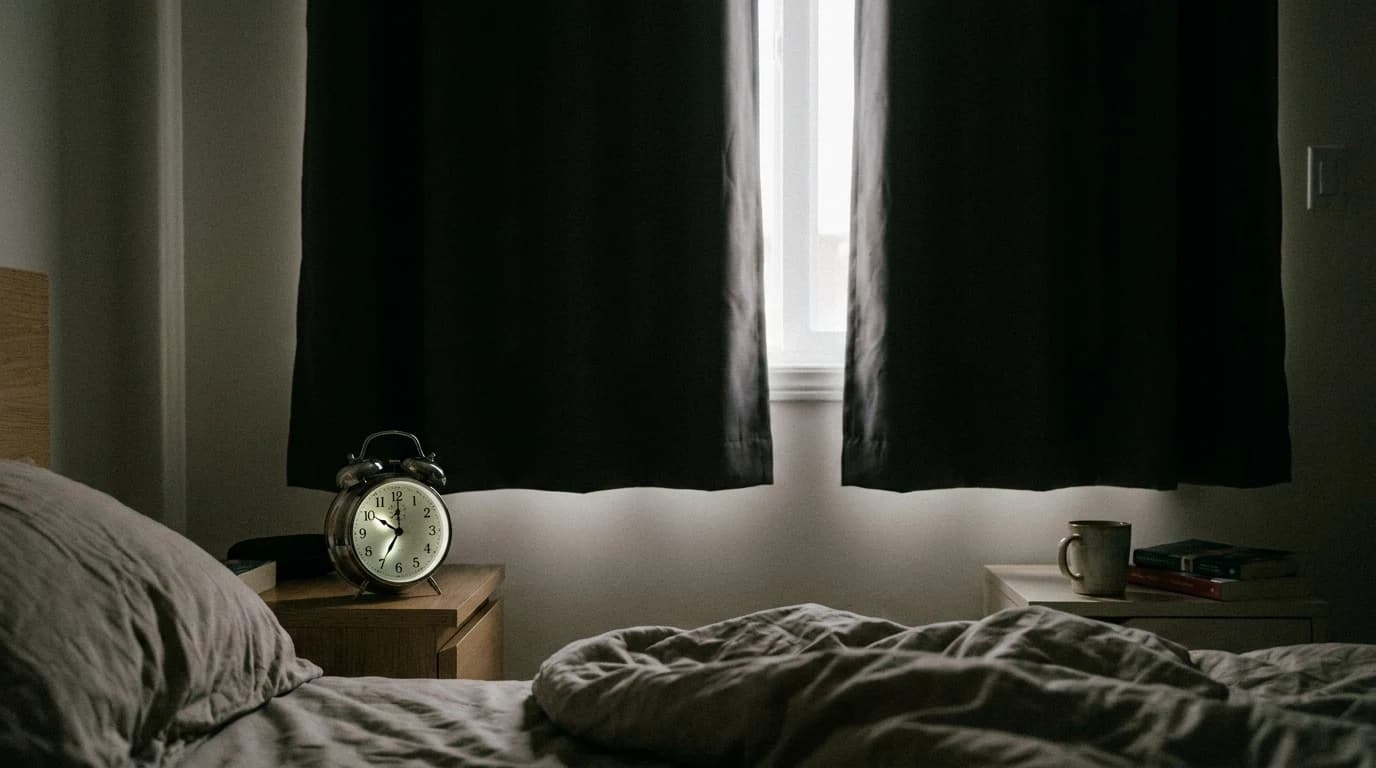
Nurses get this one wrong most often, usually for a good reason: the night-shift schedule already inverts everything else, so why not leave them on? Because the mechanism does not come to bed with you. Cleveland Clinic's cardiovascular specialist Douglas Joseph frames it as gravity — the benefit happens while you are up and moving, and lying down takes that force away. NHS inform is blunter: do not wear them to bed unless a clinician has told you to.
The only study on stockings actually sold as sleepwear agrees. Researchers tested them overnight on ten students and ten convenience-store cashiers, measured a minimal reduction in shank circumference against relatively high reported discomfort, and concluded that wearing them for sleep may not be effective against occupational oedema.
The exception, and it is not yours to self-diagnose. Cleveland Clinic notes that people with vein disease who have developed open sores are sometimes told to wear compression overnight to help those heal. That is a prescription, not a preference.
Signs they have been on too long, or are the wrong pair
A sock that fits badly is a tourniquet with a size chart. Cleveland Clinic lists the signals that mean stop and call a provider rather than push through:
- Pain — not the ache of a long shift, but pain the sock is causing.
- Tingling or numbness anywhere below the band.
- Skin changes: redness, irritation, or signs of infection.
- Swelling in the foot and toes, where a graduated sock applies the least pressure by design.
Two mechanical fixes come off the same page: never fold the top band over on itself, and never let the sock wrinkle or bunch. Both concentrate pressure into one line instead of grading it down the leg. A deep dent still in your skin long after the sock is off means the band is too tight for that calf.
Wash, rotate, replace
This section decides whether you are still wearing compression on shift six of six.
- Wash after every wear. MedlinePlus tells patients to wash daily in mild soap and water, rinse and air dry, keep at least two pairs so one is always drying, and replace them every three to six months so they keep their compression. SIGVARIS adds the mechanics: hand washing or a gentle machine cycle inside out, lukewarm water, no bleach, no fabric softener, no tumble dryer.
- Rotate more than the minimum. Two pairs is a floor, and NHS inform sets the same one — one on, one drying. Three or four is what a three-twelves week really takes.
- Put them on first thing — before you get out of bed, when the leg carries the least swelling it will carry all day.
- Replace on feel as well as on date. A pair that suddenly goes on easily, stops springing back at the ankle or looks stretched out is finished early; Cleveland Clinic's own advice is to replace socks once they are worn or stretched out.
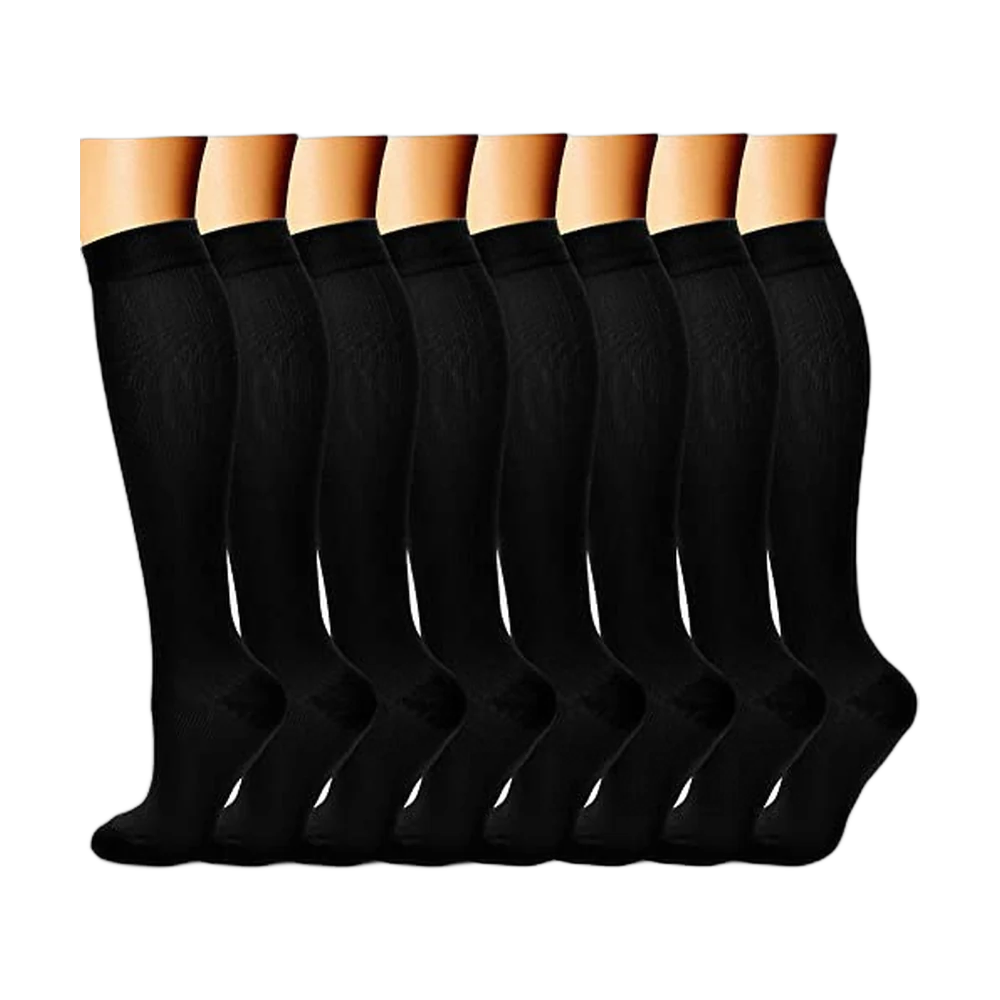
Two socks in our own compression comparison sit at the ends of that. CHARMKING, 8 pairs is the mild-band multipack that makes rotation a non-decision; Physix Gear Sport 20-30 mmHg is the firm tier for people a clinician has already pointed there. If the ache comes off the floor rather than out of your veins, that is a shoe and insole question instead.
All of that is a swelling-and-comfort answer for a healthy nurse on a hard floor, not a treatment plan. If you have diabetes, peripheral arterial disease, neuropathy, a known clot, or a vein someone has already commented on, the class and the hours are both their call, not a size chart's.
| Study | Who | What they wore, and for how long | What it reported |
|---|---|---|---|
| Human Factors, 2023 (randomised, real work shift) | 40 security employees on their regular 12-hour standing shift | Regular socks vs 15-20 mmHg vs 20-30 mmHg, worn for the whole shift | Significant lower-leg muscle fatigue, edema and discomfort after the shift in the regular-sock group; no significant change in either compression group. Benefits similar at both levels, so the authors say the lower level may be sufficient |
| Applied Ergonomics, 2025 (randomised cross-over) | 32 healthy adults plus 12 with chronic venous insufficiency, two hours standing | None vs class I (18-21 mmHg) vs class II (23-32 mmHg) | Both classes significantly reduced lower-leg swelling; least swelling with class II; comfort rated slightly better for class I, which the authors link to better long-term compliance |
| BMC Musculoskeletal Disorders, 2022 (cross-over) | 39 workers who stand more than eight hours a day with leg edema and pain | Stockings during work, with and without pneumatic compression after work | Stockings worn during work prevented the work-induced rise in leg volume and circumference, but did not improve leg pain measured immediately after the shift; the after-work intervention did |
| Healthcare, 2022 | 10 university students and 10 convenience-store cashiers | Stockings marketed as sleepwear, worn overnight | Reduction in shank circumference was minimal and reported leg discomfort and tightness relatively high; the authors conclude wearing them for sleep may not be effective for occupational edema |
| Cochrane Database of Systematic Reviews, 2021 | 2,918 airline passengers across 12 randomised trials, all flights over five hours | Graduated compression stockings vs none, for the duration of the flight | High-certainty evidence of a substantial reduction in symptomless DVT: 3 cases among stocking wearers against 47 without, of 2,637 with follow-up data. No significant adverse effects reported |
| Porto Biomedical Journal, 2020 (review) | Workers in jobs involving prolonged standing | Compression stockings vs none, during work | Concluded that compression reduces occupational lower-limb edema and its associated symptoms, and should be recommended to professionals at increased risk |
Products discussed in this article
Every item named above, with the NurseComforts Score and the price we last recorded. Prices at the affiliate retailers we link change constantly.
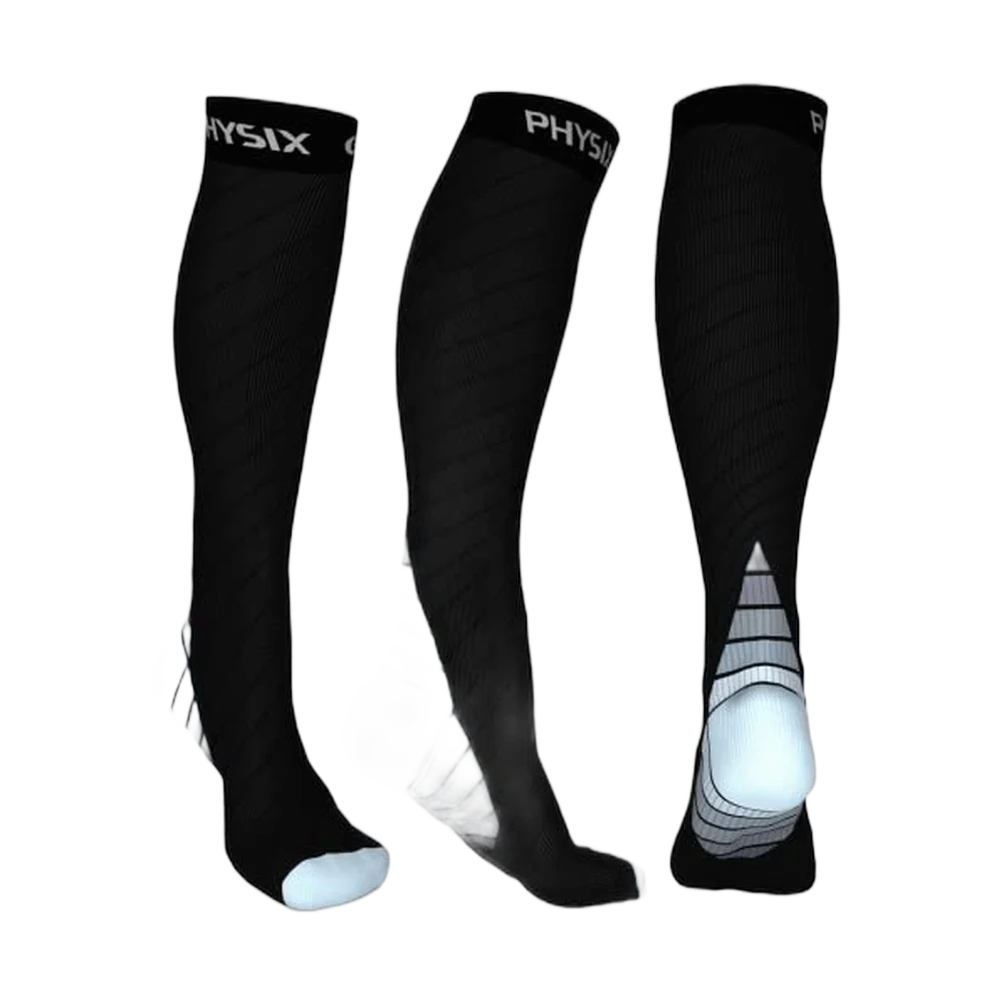
Physix Gear Sport 20-30 mmHg Compression Socks
78 · Score$18.82
Your next step
Know the schedule? Here is how to pick the class, the socks themselves, and what else the same twelve hours is doing to your legs.
Common questions
Can I sleep in compression socks after a night shift?
Should I wear compression socks on my days off?
Is 20-30 mmHg too much for a 12-hour shift?
How do I know when a pair has stopped working?
Research Sources
- Comparison of Physiological Effects Induced by Two Compression Stockings and Regular Socks During Prolonged Standing Work | Human Factors, 2023
- Influence of compression stockings with different compression classes on lower leg edema and perceived discomfort during a two-hour static standing exposure | Applied Ergonomics, 2025
- Comparison of intermittent pneumatic compression device and compression stockings for workers with leg edema and pain after prolonged standing | BMC Musculoskeletal Disorders, 2022
- Shank Circumference Reduction by Sleep Compression Stockings in University Students and Convenience Store Cashiers | Healthcare, 2022
- Compression stockings for preventing deep vein thrombosis in airline passengers | Cochrane Database of Systematic Reviews, 2021
- Occupational leg edema - use of compression stockings | Porto Biomedical Journal, 2020
- Compression stockings - morning application, daily washing and replacement every 3 to 6 months | MedlinePlus Medical Encyclopedia, US National Library of Medicine
- Compression stockings and socks - do not wear them to bed unless instructed, and keep a second pair for washing | NHS inform
- Compression Therapy - risks, minimising them, and when to call your provider | Cleveland Clinic
- Can You Sleep in Compression Socks? | Cleveland Clinic Health Essentials
- How to clean compression products | SIGVARIS