Our #1 Pick
The Pinnacle is the default first move for shift-long arch fatigue: a firm-but-flexible neutral arch shape, a deep heel cradle for motion control, and dual-layer cushioning rather than a single foam slab. It earns the mid-range pick because it is exact-fit, sized to your shoe size with no trimming, which removes the most common way people ruin an insole on day one. The tradeoff is that it is full-length and needs a shoe with a removable factory insole, so it will not go into a molded clog.
Key takeaways
- Structure beats softness. PowerStep's own guidance is to prioritize a firm arch and deep heel cup over memory foam.
- Know your arch height before you buy. The wrong profile is not a neutral outcome, it can feel worse than the stock insole.
- Pull the factory insole out and leave it out. Doubling up lifts your heel out of the counter and cancels the heel cup.
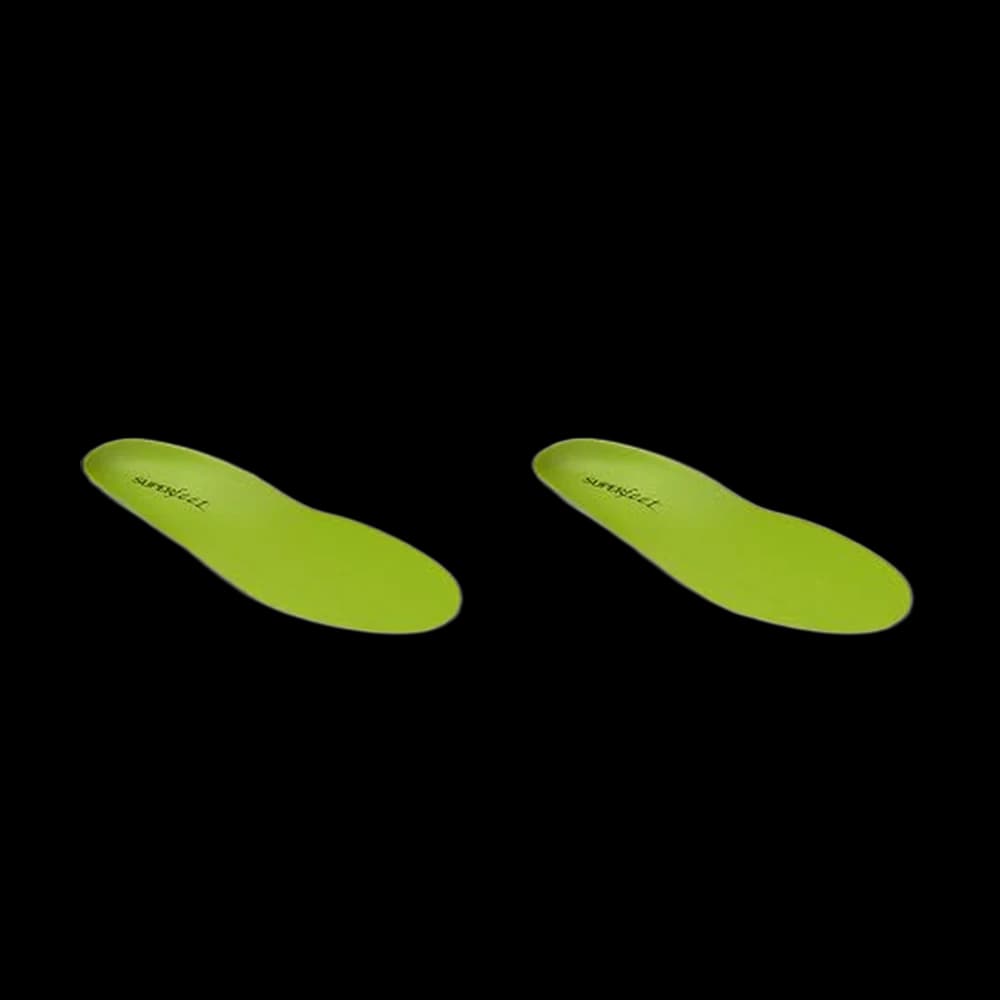
- Superfeet GREEN is now sold as All-Purpose Support High Arch. Same product, new name, and green always meant high arch.
- Clogs and work boots want a work-profile insole, not a thinner running insert forced into a deeper shoe.
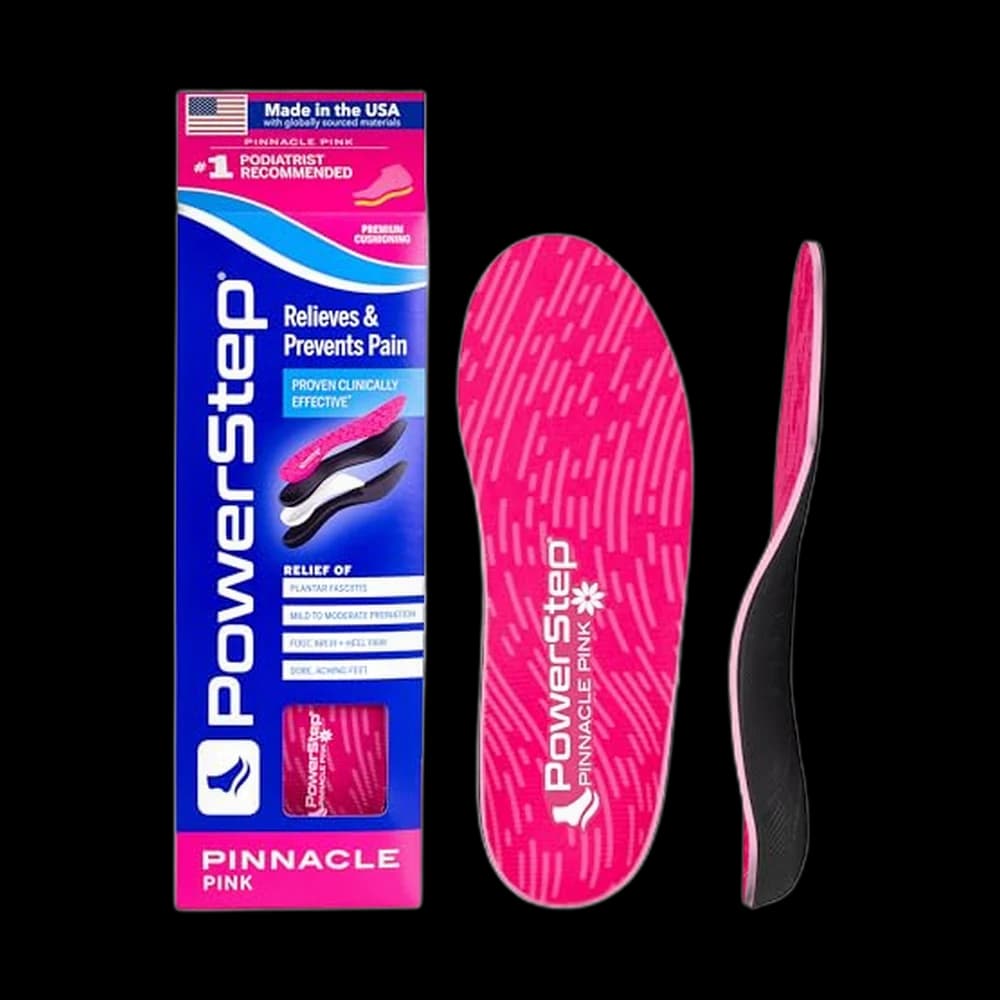
PowerStep Pinnacle Orthotic Insole
- Firm but flexible neutral arch support with built-in motion control
- Deep heel cradle for stability and mild-to-moderate pronation
- Dual-layer cushioning for shock absorption rather than a single foam layer
Firm-but-flexible arch support with a deep heel cradle and cushioning layered on top of the structure rather than instead of it, sized exactly to your shoe so there is no trimming to get wrong. It is the insole to try before you try anything else.
Side-by-side comparison
#1PowerStep Pinnacle Orthotic Insole Owner rating4.5(9,063) | #2Superfeet All-Purpose Support High Arch, Green Owner rating4.4(34,516) | #3Dr. Scholl's Work All-Day Superior Comfort Insole Owner rating4.5(60,838) | #4PowerStep Pinnacle Work Insole Owner rating4.4(3,107) | #5CURREX RunPro Insole Owner rating4.5(3,103) | #6Protalus M100 Original Insole Owner rating4.4(2,155) | |
|---|---|---|---|---|---|---|
|  |  |  |  |  | |
| NurseComforts Score | ||||||
| Verdict | The default first move for shift-long arch fatigue, and exact-fit sizing means you cannot cut it wrong. | The structure pick that still holds its shape a year in, provided your arch is genuinely high. | The cheapest way to find out whether your problem is cushioning or support, and two pairs at that. | The right replacement footbed for a clog or work boot, rather than a running insole forced into a deeper shoe. | Sold in three arch profiles, so you match your foot instead of compromising on one generic shape. | A different premise worth trying after two conventional orthotics have not worked. |
| Price | ~$49.95Buy on Amazon Main button: the women's (pink) version | ~$109.90Buy on Amazon Price checked Oct 10 | ~$25.78Buy on Amazon Main button: men's sizes | ~$44.99Buy on Amazon Price checked Oct 10 | ~$59.95Buy on Amazon Price checked Oct 10 | ~$34.95Buy on Amazon Price checked Oct 10 |
| Arch Profile | Neutral | High arch | Not stated; cushioning insole rather than a contoured profile | Neutral, contoured | Low, medium or high; this listing is medium | Not stated as a specific height; the manufacturer states it is suitable for both low and high arches |
| Support Level | Firm but flexible with deep heel cradle and dual-layer cushioning | Firm and structured, support rather than cushioning | Cushioning-focused gel and responsive foam | Firm but flexible with motion control and premium dual-layer cushion | Dynamic and flexible with a deep decoupled heel cup | Alignment-focused pad-style construction with cushioning and shock absorption; no firmness rating published |
| Full/Three-Quarter Length | Full length | Full length, trim to fit | - | Full length; requires a removable factory insole | Full length, trim to fit, zero heel drop | Full length replacement insole |
| Size Range | - | - | Trim to fit; this listing is the men's version, 2 pairs | - | - | - |
| Buyer sentiment | Quality Arch Support Comfort Pain Relief Buyers praise quality, arch support, comfort and pain relief. Mixed feedback on fit and value for money. Based on 2,991 user mentions | Quality Arch Support Foot Relief Functionality Buyers praise quality, arch support, foot relief and functionality. Mixed feedback on fit and comfort. Based on 16,942 user mentions | Quality Comfort Functionality Value for money Durability Buyers praise quality, comfort, functionality and value for money. Mixed feedback on foot relief and fit. Some flag durability. Based on 7,539 user mentions | Quality Comfort Effectiveness Arch Support Durability Arch Height Buyers praise quality, comfort, effectiveness and arch support. Some flag durability and arch height. Based on 905 user mentions | Quality Arch Support Comfort Fit Buyers praise quality, arch support, comfort and fit. Mixed feedback on value for money. Based on 699 user mentions | Effectiveness Arch Support Durability Value for money Buyers praise effectiveness, arch support and durability. Mixed feedback on comfort and fit. Some flag value for money. Based on 414 user mentions |
| Pros |
|
|
|
|
|
|
| Cons |
|
|
|
|
|
|
* Prices are approximate. Click Buy to see current pricing on Amazon.
If you spend your working day upright on a hard floor — a hospital unit, a kitchen line, a warehouse aisle, a shop floor, a job site — the insole in your shoe is doing more work than almost any other piece of equipment you own, and it is almost certainly the piece you have never replaced.
That matters because a good shoe with a flattened factory footbed is a $40 problem, not a $150 one. Nurses figure this out faster than most, because clog wearers treat footbed replacement as routine maintenance rather than a repair. Everyone else tends to buy new shoes.
The default pick is the PowerStep Pinnacle Orthotic Insole: firm-but-flexible arch supportarch supportThe height and firmness of the contoured section under the medial arch of a footbed or insole. 'Support' is not one thing: insoles are sold in low, neutral and high arch profiles, and a high-arch insole under a low-arch foot is the most common cause of the 'these hurt' review. Arch height is a fit question, not a quality ranking., a deep heel cradleheel cupThe moulded rear section of an insole or footbed that surrounds the heel. A deeper cup keeps the heel pad centred under the calcaneus and resists side-to-side motion; a shallow cup lets the heel spread and slide. Depth is the spec most commonly cited by insole makers and the one owners most often mention., dual-layer cushioning, and exact-fit sizing so there is no trimming to get wrong. If your arch is genuinely high, the Superfeet All-Purpose Support High Arch, Green is the more rigid, longer-lasting alternative. And if you honestly do not know whether your problem is cushioning or support, the cheapest way to find out is a gel insole and one week.
Our top picks
PowerStep Pinnacle Orthotic Insole — the default first move
Check price on Amazon →The Pinnacle is what to try before you try anything else. A firm-but-flexible neutral arch shape with built-in motion control, a deep heel cradle for stability, and dual-layer cushioning sitting on top of that structure rather than replacing it. The detail that earns it the top slot is the sizing: it is exact-fit, matched to your shoe size with no trimming, which eliminates the most common way people ruin an insole on day one. PowerStep also states it is made in the USA and HSA/FSA eligible.
The tradeoffs are practical. It is full-length, so it needs a shoe with a removable factory insole — it will not go into a molded clog. The arch is neutral only, so genuinely high arches will want a taller shape. And the full-length build adds volume, which can tighten a snug running shoe. Around $50.
Superfeet All-Purpose Support High Arch, Green — the structure pick
Check price on Amazon →This is the old Superfeet GREEN under its new name, and it is worth being clear about what it is: a structure insole, not a cushioning one. A sculpted deep heel cup and high-density closed-cell foam that hold their shape long after gel and soft foam inserts have gone flat. For clogs and firm work shoes, where the job is a footbed that does not pack out mid-season, that is exactly right. It is trim-to-fit, so it goes into a wider range of shoes than exact-fit orthotics, and this listing is a pack of two, which brings the per-pair cost down.
Two real limits. It is a high-arch profile, and a high arch under a neutral or low foot is worse than the stock insole you removed, not better. And it is deliberately firm with little cushioning, so it is not the answer for forefoot soreness. Around $110 for two pairs.
Dr. Scholl's Work All-Day Superior Comfort Insole — the diagnostic
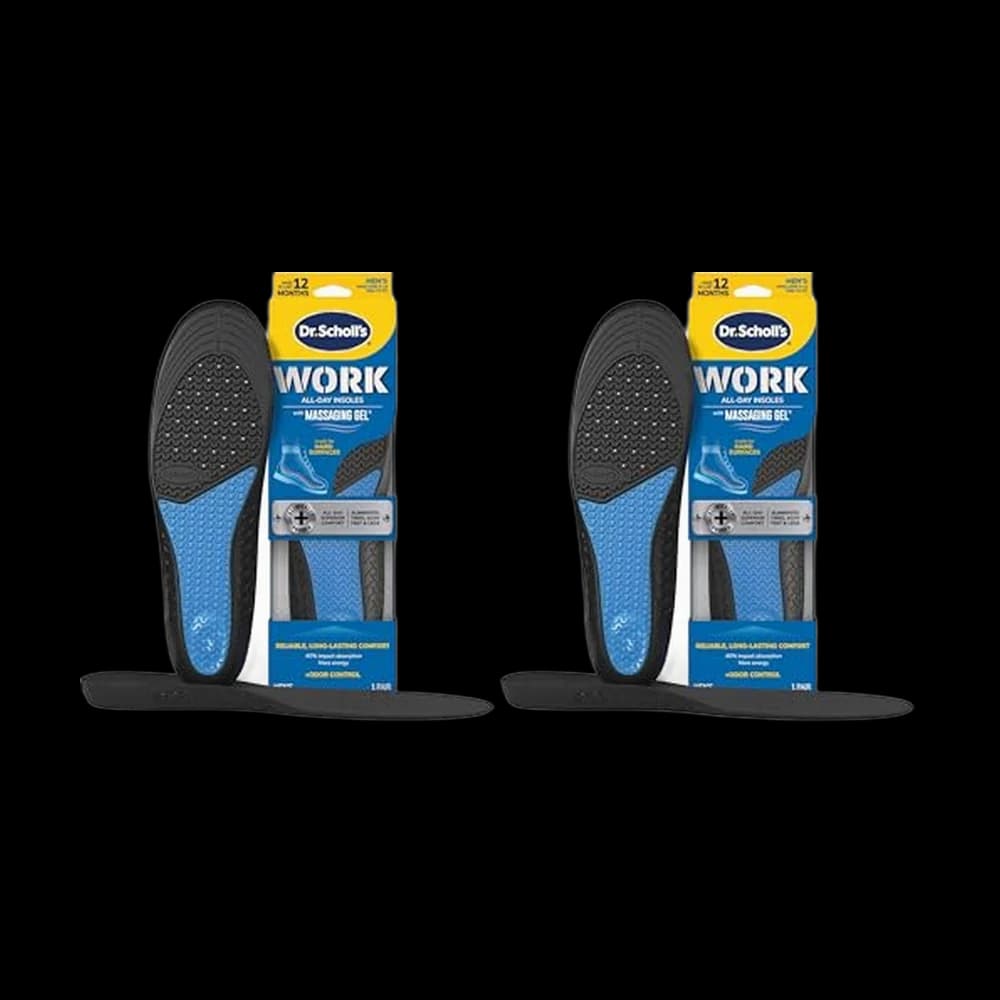
Check price on Amazon →This is the cheapest way to answer the question that decides your whole purchase: is your problem cushioning, or is it support? Extended Massaging Gel under the full foot, trim-to-fit for most work shoes and boots, with Polygiene StayFresh odor control in the top cover. A week in these tells you a great deal for very little money, and this listing is two pairs.
The honest limitation is the one to keep in front of you: gel cushions, it does not hold an arch, and it packs down faster than a structured orthotic. If your pain is arch-specific or heel-specific, this is a stopgap rather than a fix. This listing is also the men's version, so size carefully against the trim guide. Around $26.
PowerStep Pinnacle Work Insole — for clogs and work boots
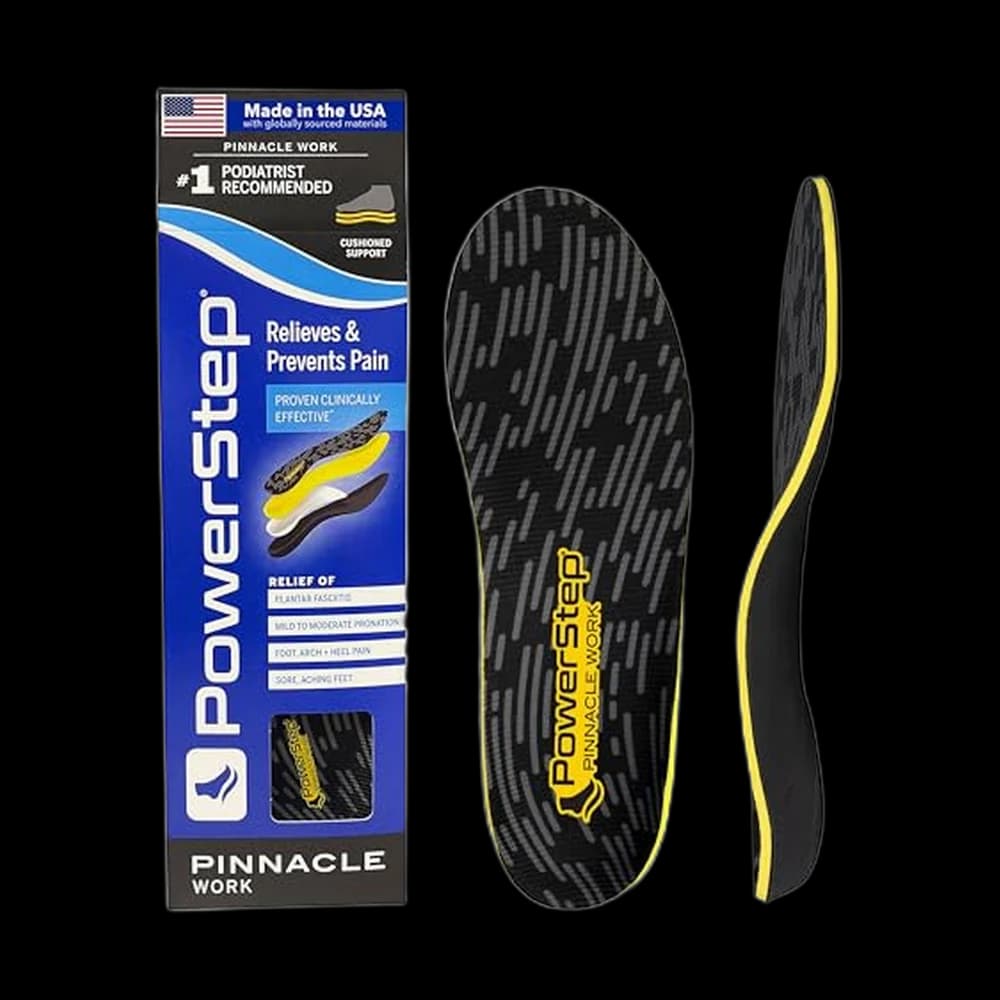
Check price on Amazon →The Work version of the Pinnacle is the one built for hard floors and deeper footwear: same firm-but-flexible neutral arch and deep heel cradle, with a premium dual-layer cushion PowerStep says is designed to bounce back rather than go flat. This is the replacement footbed for a clog or work shoe whose removable insole has given up, and buying it instead of a running insole is one of the easiest upgrades in this category.
The tradeoff is bulk. The thicker work profile will crowd the upper of a slim running shoe, and it still requires a shoe whose factory insole comes out. The listing does not mention a moisture-wickingmoisture-wickingA fabric finish or fibre structure that moves perspiration away from skin to the outer surface where it evaporates faster. Common on scrubs, socks and underscrubs. It is a comfort property, not a hygiene one, and the effect of a topical wicking finish diminishes with washing. top cover, so treat that as unconfirmed. Around $45.
CURREX RunPro Insole — when the arch height has always been wrong
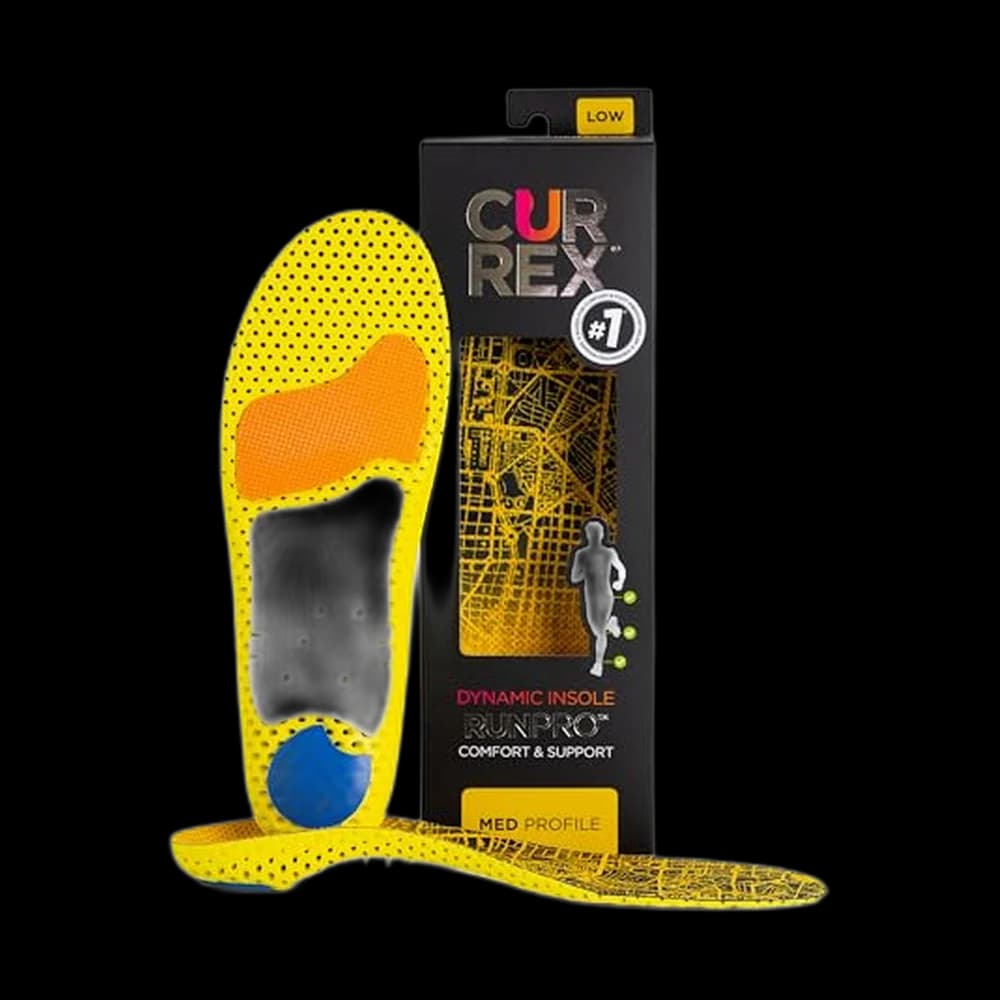
Check price on Amazon →RunPro is sold in low, medium and high arch profiles rather than one shape, and that is the entire argument for it. If generic insoles have always felt like the wrong height under your foot, this is the line that lets you match instead of compromise. It pairs a deep decoupled heel cup with PORON premium foam and a zero heel drop, so it does not change the geometry of the shoe it goes into, and it folds at the flex point rather than fighting your stride.
It is deliberately dynamic rather than rigid, so if what you want is firm correction, the Superfeet does a different job better. CURREX also states a replacement interval of 500-plus miles or 12 months. Around $60.
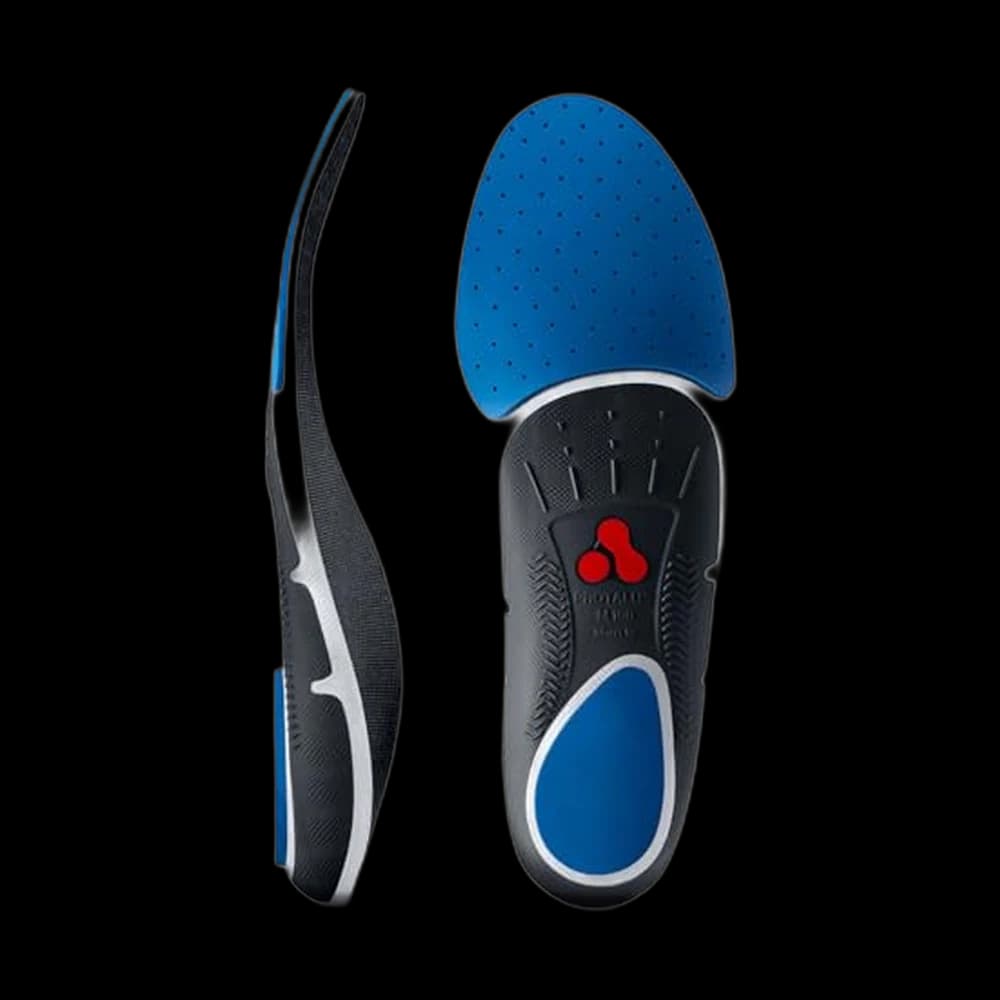
Protalus M100 Original Insole — the different premise
Check price on Amazon →The M100 starts from somewhere else: Protalus states its patented build is designed to improve alignment rather than only support the arch, and says it suits both low and high arches, which is unusual in a single SKU. That makes it a reasonable next step after two conventional orthotics have not worked for you — a real and common situation.
Treat the alignment claim as the manufacturer's premise to test rather than a settled result. Protalus publishes little detail on arch height, materials or support level, so it is harder to judge on paper than the proven picks. There is no good reason to start here. Around $35.
Structure beats softness
PowerStep's own guidance for nurses is blunt about this, and it generalizes to anyone on a hard floor: prioritize structure over softness, not memory foam.
A soft insole feels wonderful for a week and then compresses into a flat pad, usually right around the point in a shift when you need it most. What actually reduces fatigue over ten or twelve hours is a firm arch support that holds its shape, a deep heel cup that stabilizes the heel, and cushioning layered on top of that structure rather than instead of it.
Five of our six picks are structured orthotics with a defined heel cup. Exactly one is a cushioning-first gel insert, and it is on the list to answer a diagnostic question rather than to be the long-term answer. That split is deliberate, and it mirrors what a long standing shift actually rewards.
Know your arch before you spend
This is where money gets wasted, and it is the reason people end up with a drawer of half-used insoles. A high-arch insole under a low arch is uncomfortable and useless; the reverse is worse. Superfeet sells a high-arch model and CURREX sells three profiles precisely because arch height is not one-size-fits-all.
A wet-foot test on cardboard costs nothing and beats guessing. Getting looked at properly beats both. And if your pain is persistent and localized in one spot, a podiatrist is a better purchase than a fourth insert.
One naming trap worth flagging: Superfeet GREEN, the insole half the internet still recommends by color, is now sold as All-Purpose Support High Arch. Same product, new name. Anyone hunting the old name risks buying a lookalike — and "green" was never a spec anyway. It always meant the high-arch profile, which is the wrong shape for a lot of the people who bought it on the strength of the recommendation.
Fitting it without ruining the shoe
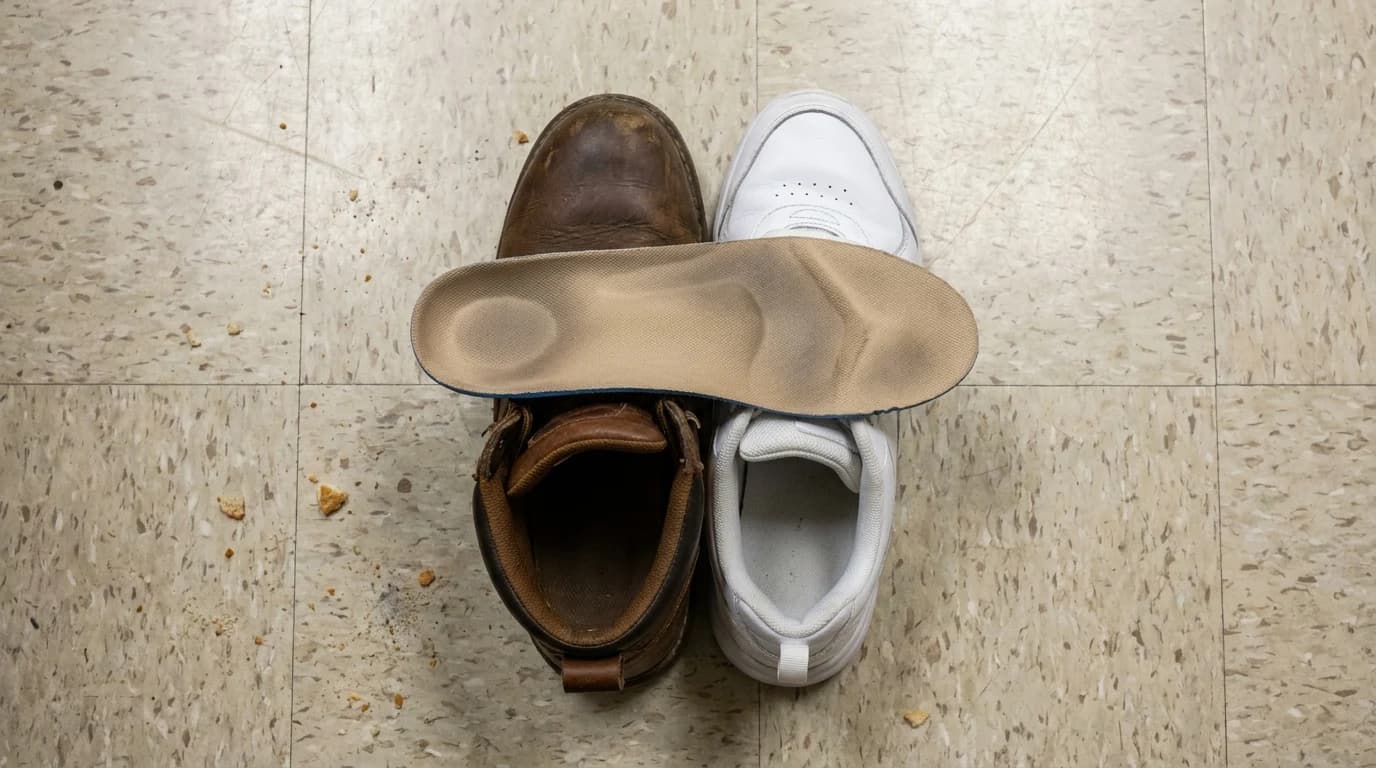
Pull the stock insole out first. If it does not come out, a full-length orthotic will jam your foot up into the upper and make the fit worse. If it does come out, note its thickness — a thick work insole in a slim running shoe crowds the toe boxtoe boxThe front section of a shoe surrounding the toes. Width and height here drive most comfort complaints on shift footwear, because feet swell over a twelve-hour shift and a toe box that fits at 7 a.m. can be tight by 5 p.m. Some brands publish width designations (D, 2E, 4E); many publish nothing.. Match volume, not just length.
Never leave the stock insole in underneath. Doubling up changes the volume of the shoe and lifts your heel out of the counter, undoing the heel cup you just paid for.
Trim carefully and once. Most trim-to-fit models want the old insole laid on top as a template. Cut a little shy and test. You cannot add material back.
Give it two weeks. A properly supportive insole often feels intrusive at first because it is holding your foot somewhere it has not been. Unfamiliarity is not a reason to stop. Genuine pain is. If it still hurts after two weeks, you have the wrong arch height, not the wrong brand.
And treat them as a consumable, the same way you treat the shoe. Firm insoles last considerably longer than gel, but nothing lasts forever. If you are replacing a footbed because a shoe stopped working, it is also worth checking whether the shoe itself is past its cushioning life — that is what our nursing shoes and clogs picks cover.
Cheaper alternative
PowerStep Pinnacle Orthotic Insole ($49.95) is our #1 pick here. If that is more than you want to spend, this is a cheaper option in the same category — our researched verdict on it is below.
Dr. Scholl's Work All-Day Superior Comfort Insole
This is the cheapest way to find out whether your problem is cushioning or support: extended Massaging Gel under the whole foot, trimmed to fit almost any work shoe or boot, with Polygiene StayFresh odor control in the top cover. It earns the budget slot because it costs a fraction of a structured orthotic and answers the diagnostic question in a week. The tradeoff is honest and important: gel cushions, it does not hold an arch, and it packs down faster than a structured orthotic, so if your pain is arch or heel-specific this is a stopgap rather than a fix.
Worth the upgrade
PowerStep Pinnacle Orthotic Insole ($49.95) is our #1 pick here. If your budget stretches further, this is a pricier option in the same category — our researched verdict on it is below.
Superfeet All-Purpose Support High Arch, Green
This is the old Superfeet GREEN under its new name, and it is the structure pick rather than the cushioning pick: a sculpted deep heel cup and high-density closed-cell foam that hold their shape long after gel and soft foam insoles have flattened. It earns the premium slot for exactly the job clogs and firm work shoes need, which is a footbed that does not pack out mid-season. The tradeoff is arch height: this is a high-arch profile, and putting a high arch under a neutral or low foot is worse than the stock insole, not better.
Your next step