Quick Answer
For most CNAs the best shoe is the Crocs On The Clock Work Clog, provided your facility allows clogs: it has an enclosed toe and heel, rinses clean after a shower day, Crocs states it is ASTM F3445-24 certified, and it costs a fraction of a premium sneaker. If clogs are banned or you want far more cushion, the HOKA Bondi 9 is the comfort pick where the floor rules allow a running shoe, and the Skechers Work Arch Fit 2.0 SR is the sneaker-shaped option where your employer wants an outsole the maker calls slip-resistant.
Crocs On The Clock$37.49
Buy on Amazon · $37.49HOKA Bondi 9$174.95
Road build, not the Bondi SR: HOKA states no slip-resistance rating, and the engineered-mesh upper cannot be wiped down. Check your unit's footwear policy first.
Fits: Regular, Wide and X-Wide: women's US 5–12 and men's US 7–16 in all three, per the Amazon listings
Buy on Amazon · $174.95Main button: women's sizes
Skechers Arch Fit 2.0 SR$100.00
Buy on Amazon · $100.00Key takeaways
- The Crocs On The Clock is the best fit for most CNAs: enclosed toe and heel, no holes, rinses under a tap, and Crocs names the ASTM standards it meets.
- CNA work is transfers, repositioning and shower days, so a closed heel and a washable upper matter more than the deepest foam.
- Choose the HOKA Bondi 9 for maximum cushion only where your unit allows a mesh running shoe with no slip rating.
- Open-back clogs and clogs with holes are the two styles most often banned on CNA floors. Check your facility policy before you buy.
- Two cheaper pairs rotated beat one expensive pair worn every shift: foam recovers between wears and wet shoes get a day to dry.
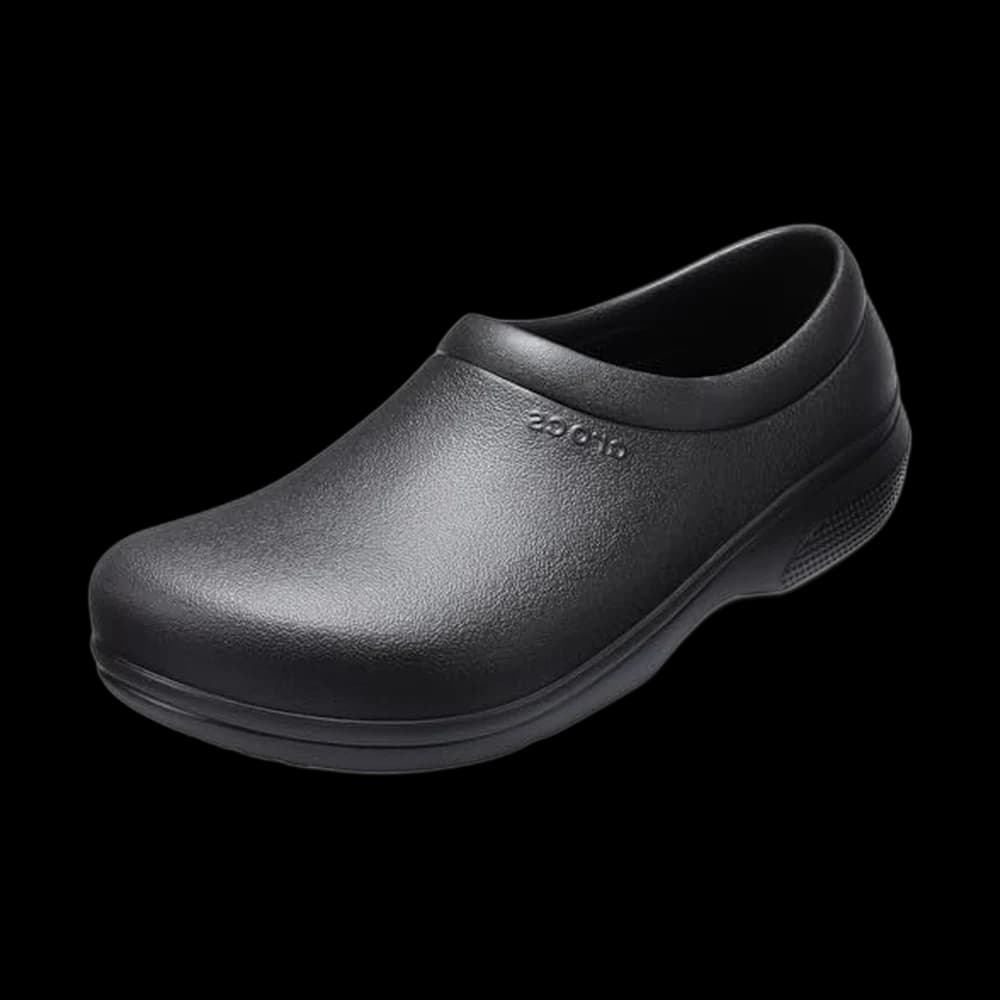
Crocs On The Clock Work Clog
- Listing cites ASTM F2913-24, ASTM F3445-24, EN ISO 20347:2012 OB and SRC certification
- Enclosed toe and heel meet typical workplace coverage requirements
- One-piece Croslite construction rinses clean under a tap, not just a wipe
An enclosed toe and heel, a one-piece body you can rinse after a shower day, and slip-resistance standards Crocs names on its own page, at a price a CNA can replace twice a year. Check that your facility allows clogs before you order.
Side-by-side comparison
#1Crocs On The Clock Work Clog Owner rating4.3(35,866) | #2HOKA Bondi 9 Owner rating4.5(3,217) | #3Skechers Work Arch Fit 2.0 SR Rosraine Owner rating3.8(13) | #4Klogs Naples Nursing Clog Owner rating4.4(338) | #5Brooks Ghost 18 Owner rating4.4(804) | |
|---|---|---|---|---|---|
|  |  |  |  | |
| NurseComforts Score | |||||
| Verdict | The washable, no-holes work clog that suits shower days and a CNA budget, if your facility allows clogs. | The most cushion on this list, for floors where a mesh running shoe is allowed. | A sneaker-shaped work shoe with a leather upper and an outsole Skechers calls slip-resistant. | A closed-back leather clog for CNAs who like the clog shape but cannot risk stepping out of it. | The lighter, balanced trainer for CNAs who cover a lot of ground, where mesh is allowed. |
| Price | ~$37.49Buy on Amazon Price checked Oct 10 | ~$174.95Buy on Amazon Main button: women's sizes | ~$100.00Buy on Amazon Price checked Oct 10 | ~$59.99Buy on Amazon Price checked Oct 10 | ~$133.99Buy on Amazon Main button: women's sizes |
| Closed heel | Yes, enclosed toe and heel | Yes, lace-up trainer | Yes, work shoe | Yes, closed back with side goring | Yes, lace-up trainer |
| Upper (cleanability) | One-piece Croslite foam; rinses under a tap | Engineered mesh; absorbs spills | Leather; wipes down | Full-grain leather; wipe with a soft cloth | Engineered air mesh; absorbs spills |
| Slip resistance (as stated) | Crocs Lock tread; ASTM F2913-24 tested, ASTM F3445-24 certified per Crocs | None stated; this is the road build, not the Bondi SR | Slip-resistant per Skechers; no test standard named on the listing | PURGrip treads per Klogs; no ASTM rating stated on the listing | None stated |
| Buyer sentiment | Appearance Work-Friendly Ease Of Cleaning Functionality Comfort Size Buyers praise appearance, work-friendly, ease of cleaning and functionality. Mixed feedback on fit and slip resistance. Some flag comfort and size. Based on 5,938 user mentions | Fit Comfort Arch Support Foot Relief Buyers praise fit, comfort, arch support and foot relief. Mixed feedback on value for money and size. Based on 1,775 user mentions | - | Comfort Versatility Arch Support Buyers praise comfort, versatility and arch support. Mixed feedback on fit and durability. Based on 143 user mentions | Fit Comfort Arch Support Appearance Buyers praise fit, comfort, arch support and appearance. Based on 625 user mentions |
| Pros |
|
|
|
|
|
| Cons |
|
|
|
|
|
* Prices are approximate. Click Buy to see current pricing on Amazon.
The best shoe for most CNAs is the Crocs On The Clock Work Clog, as long as your facility allows clogs: it has an enclosed toe and heel for transfers, it rinses clean after a shower day, and Crocs states it is ASTM F3445-24 certified, at a price you can replace twice a year. If clogs are banned where you work, or your feet need much more cushion, choose the HOKA Bondi 9 where a mesh running shoe is allowed, or the Skechers Work Arch Fit 2.0 SR Rosraine where your employer wants a leather shoe the maker calls slip-resistantslip-resistant outsoleAn outsole compound and tread pattern intended to keep traction on wet or contaminated floors. Testing is not uniform: some brands cite an ASTM or SATRA coefficient-of-friction result, most simply print the phrase on the box. Where a manufacturer names the standard we say so; where it only claims 'slip-resistant' with no standard behind it, that is all the claim is worth..
How we chose. We read each maker's own product page and listing, then weighed them against what a CNA shift actually involves. We do not test shoes, and we say where a claim is the manufacturer's.
Why CNA shoes are a different problem
Most "best nursing shoes" lists are written for a floor nurse who walks a hallway all day. A CNA's day is harder on footwear in three specific ways.
- Transfers and repositioning. The Bureau of Labor Statistics notes that nursing assistants frequently move patients and have one of the highest injury and illness rates of any occupation. When you pivot a resident from bed to chair, your heel needs to stay planted inside the shoe. That rules out open-back clogs for a lot of people.
- Shower days and fluids. Bathing residents, emptying commodes and cleaning up incontinence put water and worse on your feet. A mesh running shoe absorbs it and stays wet. A sealed upper wipes or rinses clean.
- Budget and wear rate. CNAs report walking huge distances per shift, and foam midsoles compress with every step. A shoe you can afford to replace on time beats a premium shoe you keep wearing after it has gone flat.
Then there is the dress code. Many facilities require closed-toe, closed-heel shoes, and many ban Crocs with vent holes. Read your handbook before you buy anything on this page.
Our picks
1. Crocs On The Clock Work Clog — best for most CNAs
Check price on Amazon →This is the shoe CNAs keep naming for shower days, and the product page explains why. Crocs describes an enclosed toe and heel that meets workplace standards, Crocs Lock slip-resistant treads, and certification to ASTM F3445-24 after ASTM F2913ASTM F2913A laboratory test method for measuring the coefficient of friction of footwear against a test surface (SATRA TM144 is the widely used European equivalent). A brand citing a specific test and result has given you something checkable; a brand printing only the words 'slip-resistant' has not. Lab results do not transfer directly to a wet unit floor.-24 testing. There are no holes on top, so it is the Crocs style that clears policies the classic clog does not. The whole shoe is one piece of Croslite foam, so it goes under a tap at the end of a bad shift.
The tradeoff is support. Croslite is light and soft but it packs out over months, and there is no removable footbed to refresh or swap for an orthotic. Forum users also mention that clogs run hot over a full twelve. Buy it as the shoe you rotate with something more structured, or replace it as soon as it stops springing back.
2. HOKA Bondi 9 — the most cushion
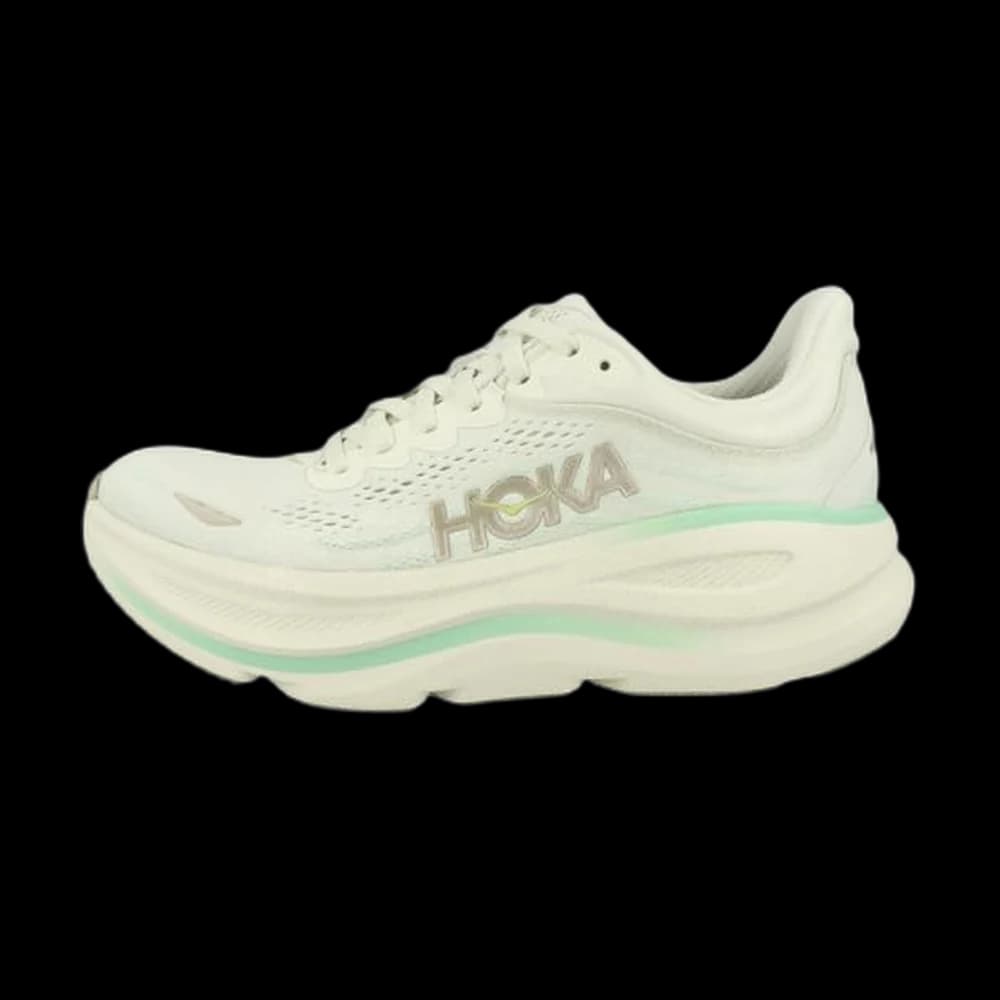
Check price on Amazon →No other pick here puts as much foam between your heel and the floor, and HOKA is the brand CNAs mention most when they talk about a shoe being worth the money. The rockerrocker soleA sole with a curved profile that rolls the foot forward through each step instead of flexing it. Common on nursing clogs and recovery shoes. Wearers who like them describe less forefoot fatigue on long shifts; wearers who dislike them describe a tippy feel that takes a week to adjust to. shape does some of the roll-through work your calves would otherwise do. HOKA sells separate men's and women's listings.
Be clear about what you are buying: this is the road version, not the Bondi SR work shoe. HOKA states no slip-resistance rating, and the engineered mesh upper soaks up anything you spill on it. It suits CNAs on units with dry floors and no slip-rating rule. On a shower-heavy long-term-care floor, it is the wrong shoe.
3. Skechers Work Arch Fit 2.0 SR Rosraine — slip-resistant, sneaker-shaped
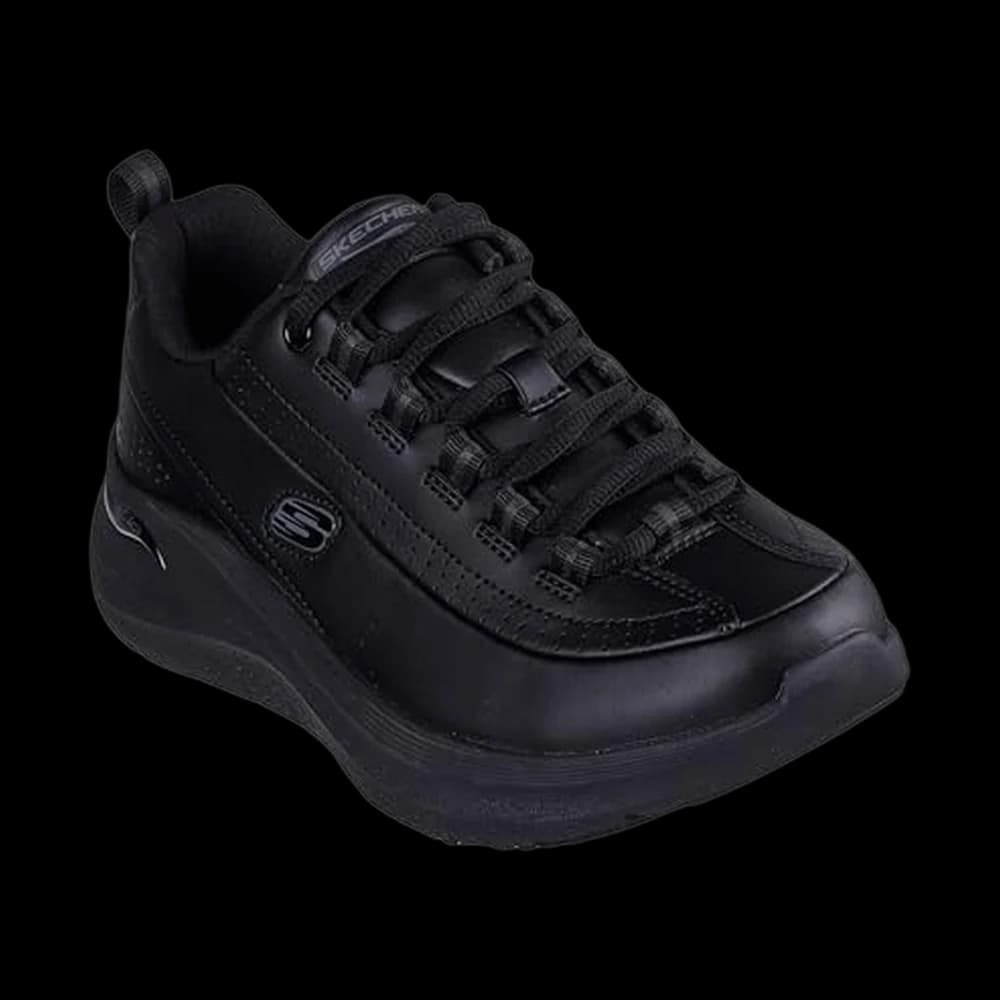
Check price on Amazon →If your employer checks for a slip-resistant work shoe and you do not want a clog, this is the most practical answer we list. The listing describes a slip-resistant outsole and electrical hazard protection, the leather upper wipes down, and the Arch Fit footbed contours rather than lying flat. It costs well under the premium trainers.
The honest limits: the cushioning is thinner than a HOKA or Brooks, so it packs out sooner, and this particular listing has a small number of reviews so far. Skechers slip-on work shoes come up often in CNA threads, but treat fit on this exact model as something to confirm on arrival.
4. Klogs Naples Nursing Clog — the closed-back clog
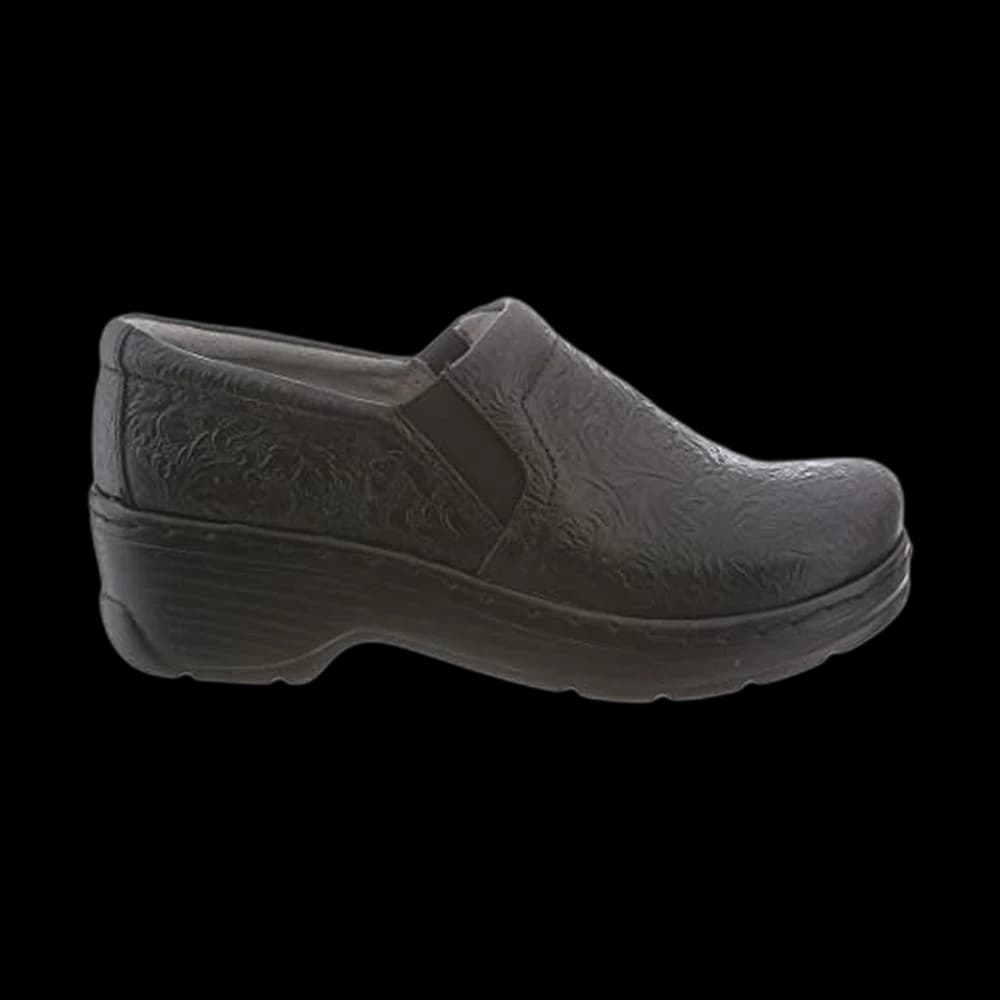
Check price on Amazon →The Naples is for CNAs who like a clog but worry about stepping out of one mid-transfer. Dual elastic side goring closes the back, so the heel stays put. Klogs lists PURGrip slip-resistant treads on a polyurethane outsole and a TRUComfort insole with a deep heel cupheel cupThe moulded rear section of an insole or footbed that surrounds the heel. A deeper cup keeps the heel pad centred under the calcaneus and resists side-to-side motion; a shallow cup lets the heel spread and slide. Depth is the spec most commonly cited by insole makers and the one owners most often mention. and arch supportarch supportThe height and firmness of the contoured section under the medial arch of a footbed or insole. 'Support' is not one thing: insoles are sold in low, neutral and high arch profiles, and a high-arch insole under a low-arch foot is the most common cause of the 'these hurt' review. Arch height is a fit question, not a quality ranking.. The leather wipes clean with a soft cloth.
Fit is the gamble. Sizing is the most common complaint about this line, and width options are limited, so order early enough to exchange.
5. Brooks Ghost 18 — the lighter trainer
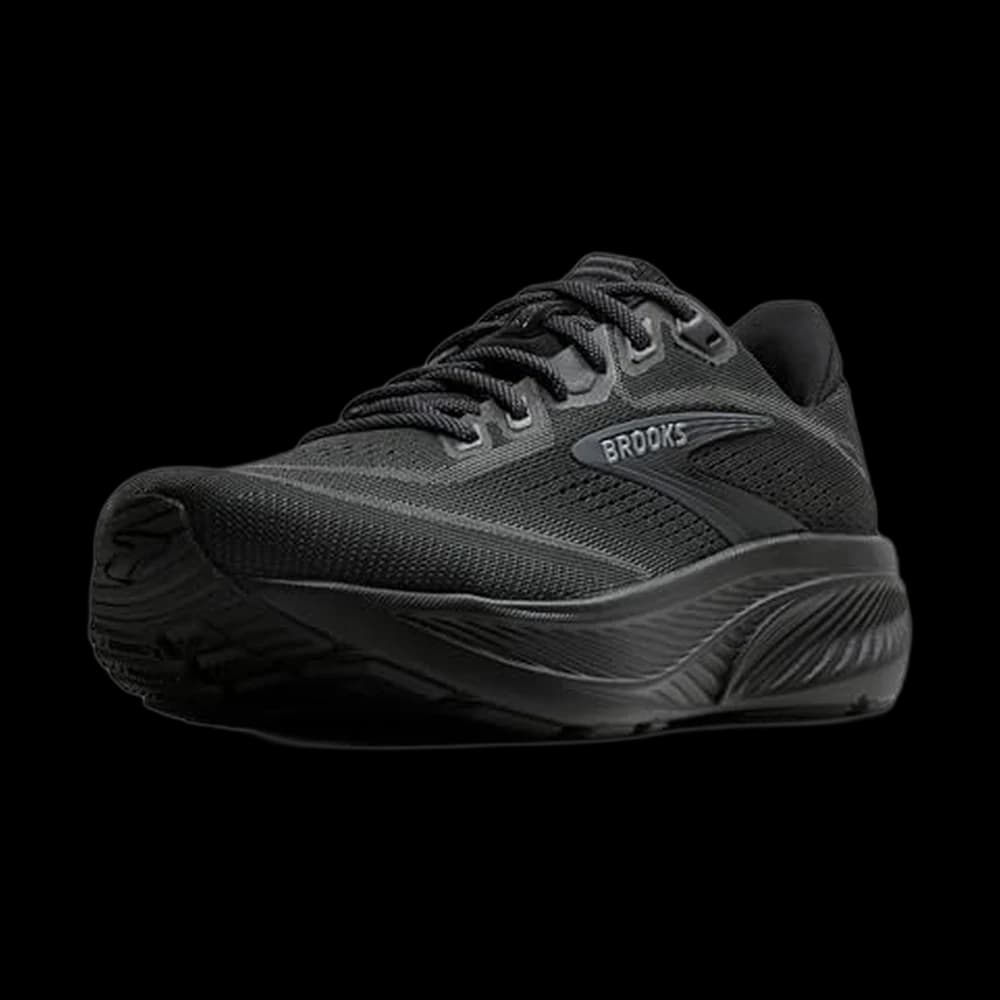
Check price on Amazon →The Ghost is the balanced alternative to the Bondi: lighter, steadier and closer to the ground, with the APMA Seal of Acceptance listed. It suits CNAs on large facilities who cover more ground than they stand. Like the Bondi, it is a mesh road shoe, Brooks states no slip-resistance rating, and it will not wipe clean. Our Bondi vs Ghost comparison goes deeper on the choice between the two.
What to skip
- Open-back clogs on transfer-heavy units. The Dansko XP 2.0 is a strong nursing clog, and our clog guide explains why, but an open back is a poor shoe to pivot a resident in.
- Vented Crocs. Comfortable, cheap and banned in many buildings because fluids and dropped sharps can reach your foot.
- Mesh shoes as your only pair on a shower floor. Keep them for dry shifts and rotate.
- A fluid-resistant shoe with a thin footbed and no insole budget. The Clove Classic is built for wipe-down cleaning, but the footbed is modest, so plan on adding an insole.
Make any pair last the shift
Rotate two pairs if you work consecutive shifts. Foam recovers between wears and a damp shoe gets a full day to dry. Many CNAs pair their shoes with compression socks for leg fatigue, and a supportive insole can add structure to a soft clog or a worn trainer, as long as the shoe has a removable footbed. For general standing comfort beyond healthcare, see our shoes for standing all day guide.
The short version
| If you | Buy | Why |
|---|---|---|
| Work a shower-heavy floor and clogs are allowed | Crocs On The Clock | Enclosed, rinseable, ASTM certification stated by Crocs |
| Want maximum cushion on dry floors | HOKA Bondi 9 | Deepest foam here; no slip rating |
| Need a slip-resistant shoe that looks like a sneaker | Skechers Arch Fit 2.0 SR | Leather upper, slip-resistant per Skechers |
| Want a clog that will not slip off in a transfer | Klogs Naples | Closed back with side goring |
| Cover a lot of ground on dry floors | Brooks Ghost 18 | Lighter and steadier than a max-stack shoe |
Registered nurses on the same units can start with our nursing shoes guide, which ranks the same shoes for a floor nurse's day.