Our #1 Pick
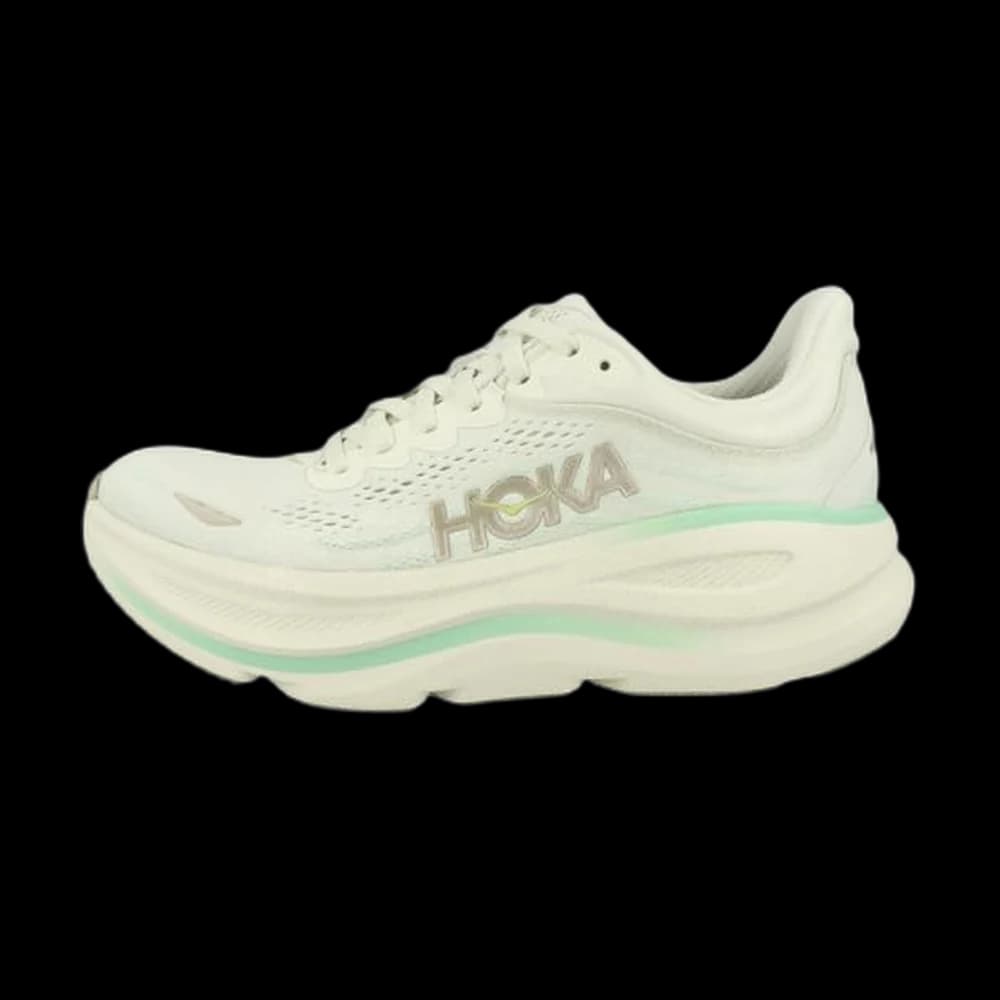
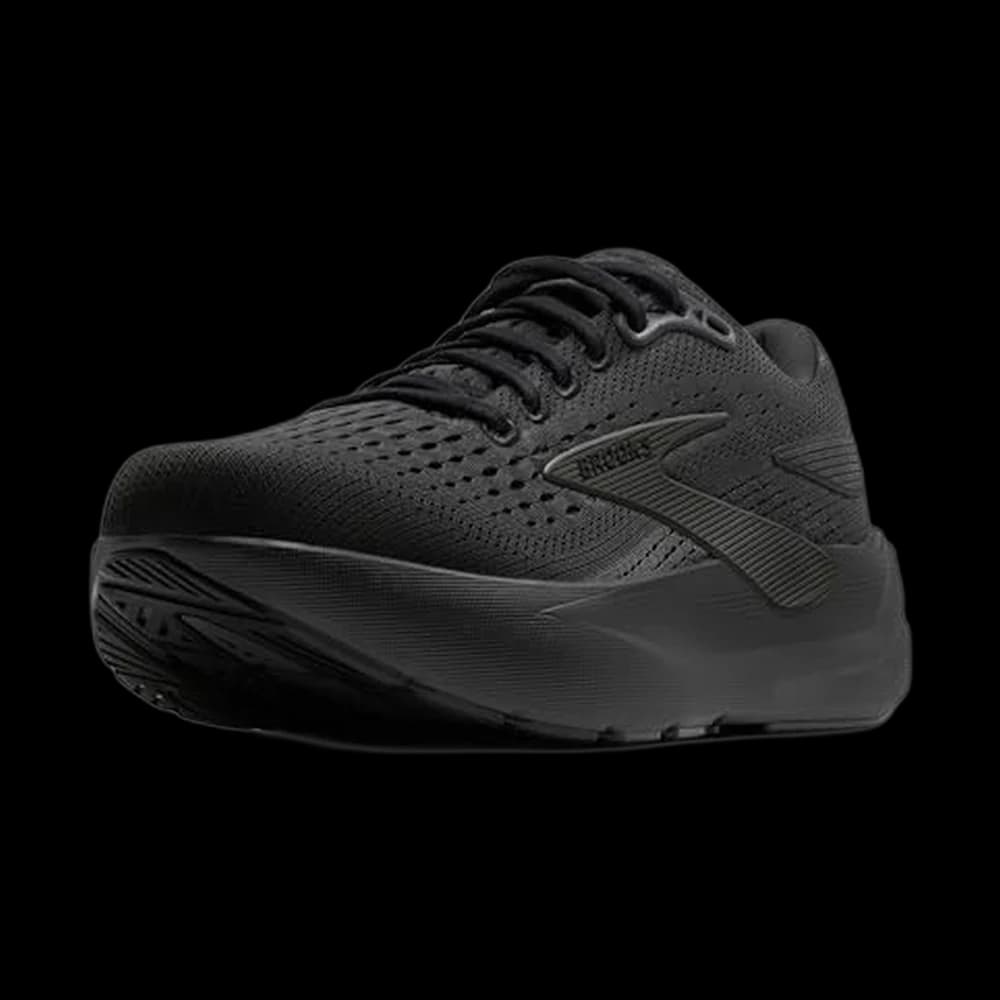
The Bondi is HOKA's maximum-cushion road shoe, and this is the standard Bondi 9 build: engineered mesh upper, textile lining, and the thickest foam stack HOKA puts under a daily trainer. It earns the top cushioning slot here because nothing else in this category puts that much material between your heel and hospital tile, and HOKA lists it at 9.3 oz in the women's build. The honest tradeoff is that this is not the Bondi SR work version: the mesh upper soaks rather than wipes, and the road outsole carries no slip-resistance certification, so check your unit's footwear policy before you commit.
Road build, not the Bondi SR: HOKA states no slip-resistance rating, and the engineered-mesh upper cannot be wiped down. Check your unit's footwear policy first.
Fits: Regular, Wide and X-Wide: women's US 5–12 and men's US 7–16 in all three, per the Amazon listings
Key takeaways
- The HOKA Bondi 9 carries the deepest foam stack here, but it is the road build, not the slip-resistant Bondi SR.
- Only two of our seven shortlisted shoes have a work-rated slip-resistant outsole, and only two have a wipe-clean upper. The rest are running shoes nurses adopted.
- Midsole foam is a consumable. It usually stops working two to three seasons before the shoe looks worn out.
- Size for hour ten, not hour one. Feet swell across a shift, and width problems often get misread as cushioning problems.
- Two rotated pairs around $100 beat one $160 pair worn every day, because foam needs a day off and wet shoes need longer.
HOKA Bondi 9
- Maximum-cushion HOKA platform, the deepest foam stack among the shoes here
- HOKA lists the women's Bondi 9 at 9.3 oz, light for how much foam is underfoot
- Engineered mesh upper breathes well on a warm unit, unlike leather work shoes
Nothing else on this shortlist puts as much foam between your heel and hospital tile, and the rocker shape keeps you moving late in a twelve. Just confirm your unit does not require a rated slip-resistant outsole before you order, because this is the road build.
Fits: Regular, Wide and X-Wide: women's US 5–12 and men's US 7–16 in all three, per the Amazon listings
Side-by-side comparison
#1HOKA Bondi 9 Owner rating4.5(3,217) | #2Clove Classic Healthcare Sneaker Owner rating3.4(16) | #3Brooks Ghost 18 Owner rating4.4(804) | #4New Balance Fresh Foam X 1080v15 Owner rating4.0(158) | #5Skechers Work Arch Fit 2.0 SR Rosraine Owner rating3.8(13) | #6Brooks Ghost Max 3 Owner rating4.3(3,375) | |
|---|---|---|---|---|---|---|
|  |  |  |  |  | |
| NurseComforts Score | ||||||
| Verdict | The deepest foam stack in the category, as long as your unit does not require a rated slip-resistant outsole. | The only pick here where wiping the shoe clean is the design premise rather than a side effect. | The value pick among the running shoes, and the balanced all-rounder if you cover ground all shift. | The plush pick for wide or swelling-prone feet, provided you confirm the width on the exact colorway. | The honest budget answer, and the only shoe here that is both wipeable and stated by its maker to be slip-resistant. | Max-cushion rocker ride at an outgoing-model price, while sizes last. |
| Price | ~$174.95Buy on Amazon Main button: women's sizes | ~$160.00Buy on Amazon Price checked Oct 10 | ~$133.99Buy on Amazon Main button: women's sizes | ~$169.95Buy on Amazon Main button: women's sizes | ~$100.00Buy on Amazon Price checked Oct 10 | ~$94.95Buy on Amazon Main button: women's sizes |
| Upper Material | Engineered mesh with textile lining | Fluid-resistant Clarino vegan leather with neoprene collar | Engineered air mesh | Molded mesh | Breathable leather | Engineered mesh with a soft textile overlay |
| Outsole / Slip Resistance | Durabrasion rubber road outsole; no slip-resistance certification stated | Slip-resistant with fluid-channeling tread, per the manufacturer | RoadTack rubber with recycled silica; no slip-resistance rating stated | NDurance rubber in high-wear areas; no slip-resistance rating stated | Slip-resistant outsole with electrical hazard protection per the listing | Road running outsole; no slip-resistance rating stated |
| Weight | 9.3 oz, women's, per HOKA | - | - | - | Not stated | 10.0 oz women's, 11.2 oz men's, per Brooks |
| Closure | - | Elastic no-tie laces | Lace-up | Lace-up | - | - |
| Buyer sentiment | Fit Comfort Arch Support Foot Relief Buyers praise fit, comfort, arch support and foot relief. Mixed feedback on value for money and size. Based on 1,775 user mentions | - | Fit Comfort Arch Support Appearance Buyers praise fit, comfort, arch support and appearance. Based on 625 user mentions | Stability Cushioning Lightweight Versatility Buyers praise stability, cushioning, lightweight and versatility. Mixed feedback on fit and comfort. Based on 129 user mentions | - | Fit Comfort Arch Support Cushioning Durability Buyers praise fit, comfort, arch support and cushioning. Mixed feedback on value for money. Some flag durability. Based on 2,528 user mentions |
| Pros |
|
|
|
|
|
|
| Cons |
|
|
|
|
|
|
* Prices are approximate. Click Buy to see current pricing on Amazon.
Hospital floors are concrete with a thin sheet of vinyl on top. There is no give in them at all, which means every bit of shock absorption between your heel and that slab has to come from the shoe you chose in a hurry three seasons ago. That is the whole problem with shopping for nursing shoes: the thing that separates a good pair from an expensive mistake does not show up in the store, it shows up at hour ten.
For most floor nurses the pick is the HOKA Bondi 9. It carries the deepest foam stack of anything we shortlisted, and the rockerrocker soleA sole with a curved profile that rolls the foot forward through each step instead of flexing it. Common on nursing clogs and recovery shoes. Wearers who like them describe less forefoot fatigue on long shifts; wearers who dislike them describe a tippy feel that takes a week to adjust to. geometry quietly does some of the roll-through work your calves would otherwise be doing at 3 a.m. It comes with one honest caveat that a lot of write-ups skip: the standard Bondi 9 is the road build, not the slip-resistantslip-resistant outsoleAn outsole compound and tread pattern intended to keep traction on wet or contaminated floors. Testing is not uniform: some brands cite an ASTM or SATRA coefficient-of-friction result, most simply print the phrase on the box. Where a manufacturer names the standard we say so; where it only claims 'slip-resistant' with no standard behind it, that is all the claim is worth. work version, so its mesh upper soaks rather than wipes and it carries no slip-resistance rating. If your unit has a footwear policy, read it before you order.
If your unit does have that policy, or your floor is genuinely wet more often than not, the Skechers Work Arch Fit 2.0 SR Rosraine is the honest answer at roughly half the price. And if the problem you are actually solving is contamination rather than cushioning, the Clove Classic Healthcare Sneaker is the only shoe here designed around being wiped down.
Our top picks
1. HOKA Bondi 9 — the most cushioning under your heel
Check price on Amazon →The Bondi is HOKA's maximum-cushion daily trainer, and this is the standard build: engineered mesh upper, textile lining, Durabrasion rubber placed at the high-wear zones. Nothing else in this category puts that much material between your foot and the tile, and HOKA lists the women's build at 9.3 oz, which is light for the amount of foam involved. The Meta-Rocker shape encourages you forward instead of asking your calves to push off from flat.
The tradeoff is real and worth stating plainly. This is not the Bondi SR work version. The mesh breathes beautifully on a warm unit and absorbs whatever lands on it permanently. There is no slip-resistance certification on the road outsole. People who like a shoe close to the ground also tend to find tall stack heights tippy for the first week. Around $175.
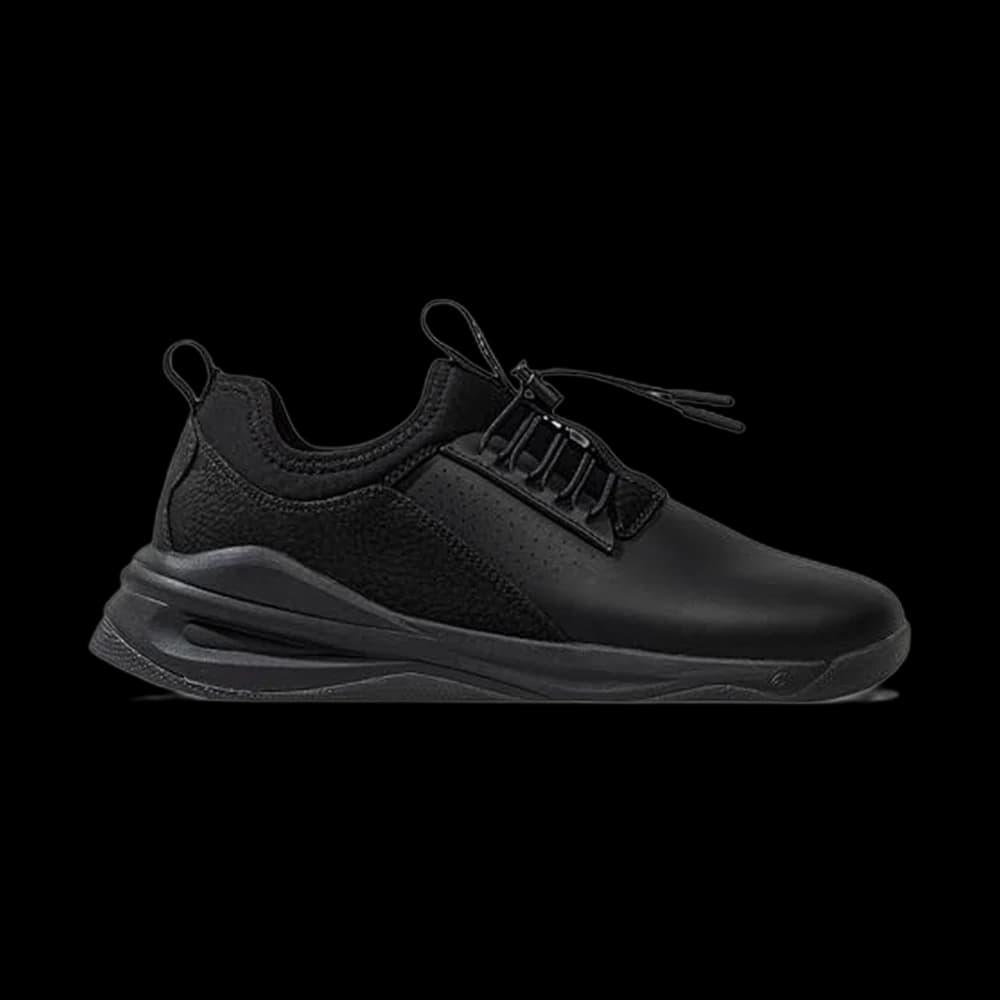
2. Clove Classic Healthcare Sneaker — built for contamination, not for running
Check price on Amazon →Clove designed this shoe for one job and it shows everywhere. The upper is fluid-resistantfluid resistantA surface or finish that sheds liquid rather than absorbing it, used on shoe uppers, scrubs and bags. It describes how a spill behaves on contact - it is not a barrier rating, not a sterility claim, and not a substitute for whatever your facility's exposure policy requires. Clarino vegan leather with hydrophobic stitching. The ankle collar is neoprene, so it takes the same wipes already sitting on your unit. The laces are fluid-repellent elastic no-tie, which means you never handle a lace that has spent twelve hours on a hospital floor. The outsole is slip-resistant with tread that channels fluid away, per the manufacturer, and it is squeak-free, which matters more on a quiet night shift than it sounds like it should.
The tradeoff is underfoot. The stock footbed is deliberately modest so it can be swapped, and plenty of wearers do exactly that, which is an extra cost on top of an already premium price. The all-black synthetic also runs warmer than mesh. Around $160.
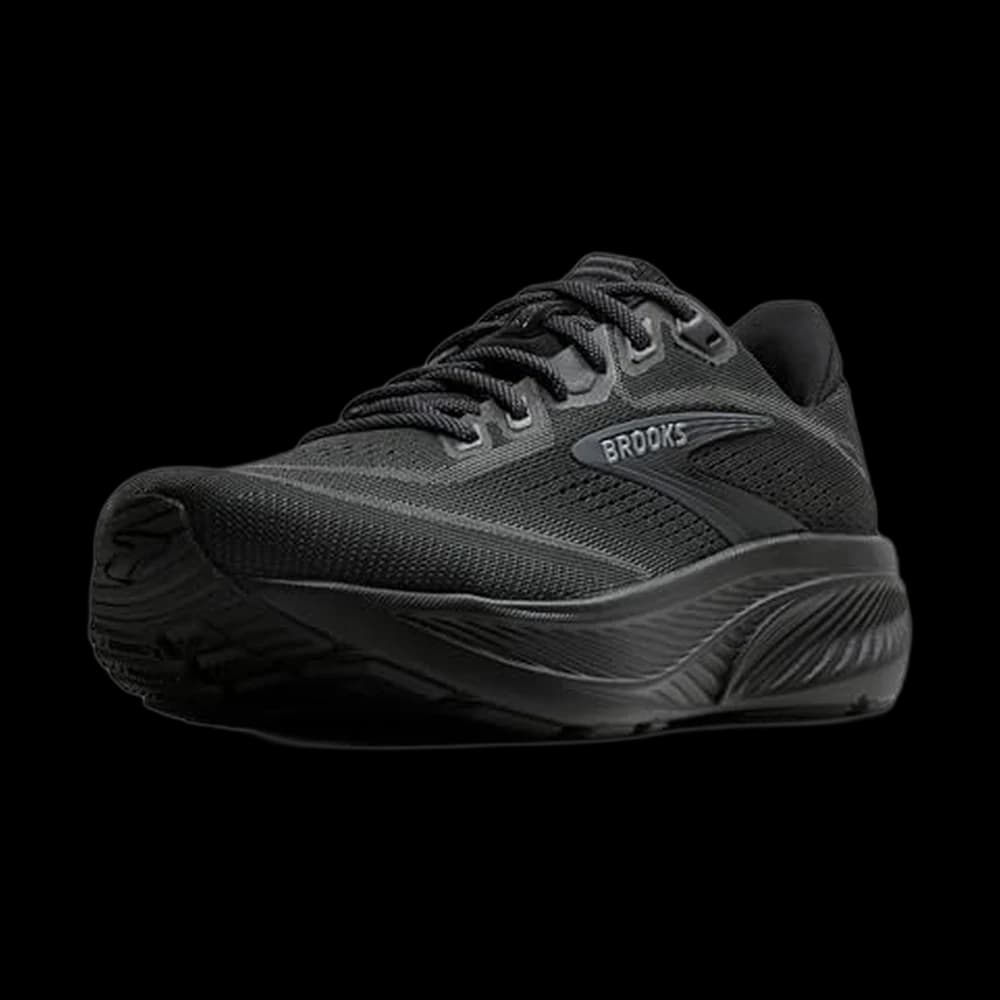
3. Brooks Ghost 18 — the one that moves with you
Check price on Amazon →The Ghost is the neutral daily trainer nurses keep quietly re-buying, and the Ghost 18 is the current generation: the same nitrogen-infused DNA LOFT v3 midsole as the Ghost 17 it replaced, plus an Ortholite X-60 sockliner and a redesigned flat-knit tongue. What earns it a slot is ride quality rather than protection: Brooks describes a secure heel with a dynamic forefoot and a 10mm drop, so it fits units where you cover ground all shift rather than standing in one room. Brooks also lists it as carrying the APMA Seal of Acceptance and PDAC A5500 diabetic certification, which is more third-party paperwork than most shoes in this category have.
Same caveat as the HOKA: the engineered air mesh upper is built for road running, so it does not wipe down and it carries no slip-resistance rating. Around $135, still the value pick among the running shoes. Men's and women's sizes sit on separate listings, and we link both.
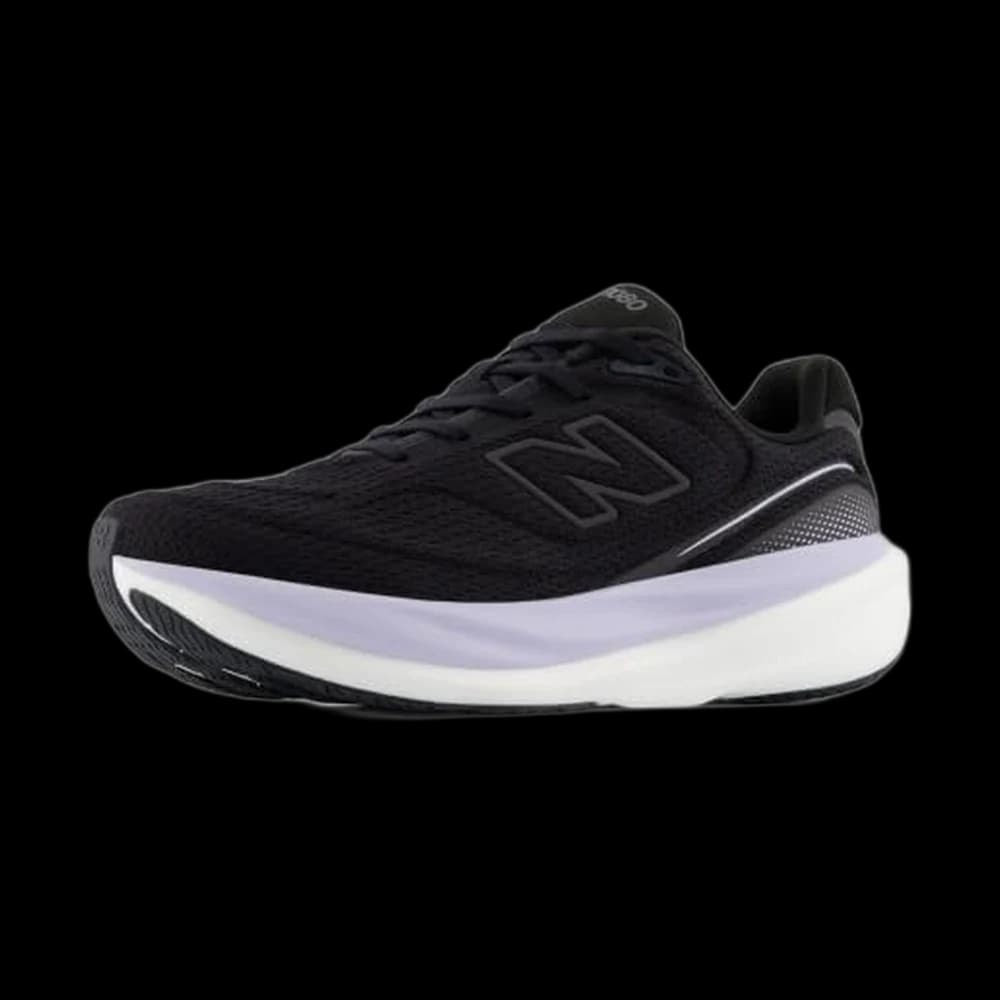
4. New Balance Fresh Foam X 1080v15 — for wide and swelling-prone feet
Check price on Amazon →The 1080 is New Balance's plushest daily trainer, and the current v15 swaps in the new Infinion cushioning with a molded mesh upper that flexes as your foot changes shape across the back half of a shift. The reason nurses keep landing here is the 1080 family's width history: for a lot of wide feet it is the only max-cushion shoe that actually fits, and fit problems get misdiagnosed as cushioning problems constantly.
Confirm the exact width on the listing before you order, because availability varies by colorway. It is also a road build with no slip-resistance rating, and being newly released it rarely discounts. Around $170, the top of this band.
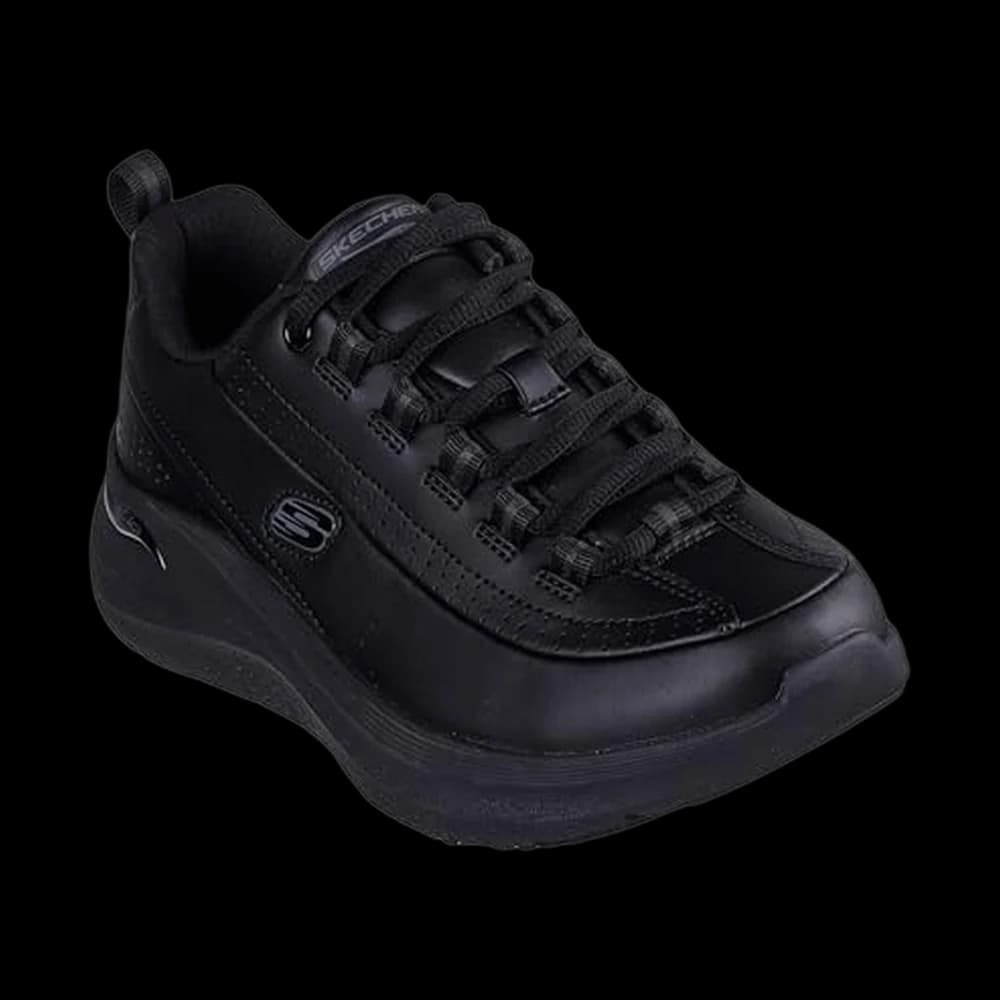
5. Skechers Work Arch Fit 2.0 SR Rosraine — wipeable, and slip-resistant per Skechers, at half the price
Check price on Amazon →This is the budget answer that does not feel like a compromise on the things a hospital actually cares about. A slip-resistant work outsole, as Skechers states it — no independent test standard is named on the listing. A breathable leather upper that wipes down. Electrical hazard protection stated on the listing. The Arch Fit footbed gives real contour rather than a flat sheet of foam.
The tradeoff is depth: the stack is thinner than the premium trainers and it packs out sooner, so plan on replacing it more often. It is also not the shoe to reach for first if you have diagnosed plantar fasciitis or chronic heel pain. Around $100.
6. Brooks Ghost Max 3 — rocker cushioning at an outgoing-model price
Check price on Amazon →The Ghost Max is Brooks' max-cushion shoe: a high stack of nitrogen-infused DNA Loft v3 foam on a broad base, a GlideRoll rocker and a 6mm drop, per Brooks, which also lists it as best for orthotics and as carrying the APMA Seal of Acceptance. The reason it is on this list now is price. Brooks has replaced it with the Ghost Max 4, so the Ghost Max 3 sells for around $100 from running-specialty sellers, and for a nurse who wants rocker-style cushioning without paying Bondi money, that is the cheapest way in.
The catches are the usual road-shoe ones, a mesh upper that will not wipe clean and no slip-resistance rating, plus the obvious one for an outgoing model: colours, sizes and widths are thinning out, so check your exact size before you plan around it. The women's listing offers regular, wide and extra-wide, and Brooks makes the men's in D, 2E and 4E up to US 15.
The HOKA Clifton 11 rounds out the shortlist for anyone who liked HOKA cushioning but found the Bondi clunky — HOKA lists the women's Clifton 11 at 8.34 oz with an 8mm drop, roughly an ounce lighter, with the same road-shoe caveats about the mesh upper and the missing slip rating.
Quick answers for your shift, feet and budget
These are the questions nurses ask right after "which shoe": one answer each, with the pick, and a link where a whole page goes deeper.
For 12-hour shifts
If your twelve is mostly standing, the HOKA Bondi 9 is the pick; if it is mostly walking, the Brooks Ghost 18 is lighter on the wallet and moves better. If you want rocker cushioning for about $100, the outgoing Brooks Ghost Max 3 is the cheapest way in while sizes last. Our HOKA Bondi 9 vs Brooks Ghost 18 comparison settles that split for your unit.
For wide feet
Start with the New Balance Fresh Foam X 1080v15, because the 1080 family is the max-cushion line wide-footed nurses most often say actually fits, and confirm the width on the listing for your size before you order. Our guide to nursing shoes for wide feet covers width sizing in more depth.
For plantar fasciitis or heel pain
Heel pain that keeps coming back is a conversation with a podiatrist or your own clinician first; on the gear side, nurses with sore heels most often reach for a max-cushion rocker shoe like the Bondi 9 plus a supportive insole, though forum reports cut both ways and some blame HOKA for a flare. The Skechers Work Arch Fit 2.0 SR is not the one to start with here. See our nursing shoes for plantar fasciitis page and the insoles for standing all day comparison.
For men
The same shortlist applies: the Bondi 9, the Ghost 18, the Ghost Max 3 and the 1080v15 each sell men's sizes on a separate listing, and the link under each buy button opens it. The Skechers Rosraine is a women's shoe, but Skechers makes a men's Work Arch Fit 2.0 SR as its own style, which is the slip-resistant sneaker we point men to. Our best nursing shoes for men page sorts the men's side by width and fit.
On a budget
The Skechers Work Arch Fit 2.0 SR Rosraine at around $100 is the cheapest pick here that both wipes clean and is slip-resistant per Skechers; under $40, the washable Crocs On The Clock Work Clog from our nursing clogs guide is the low-regret answer.
Where your unit requires a slip-resistant shoe
Pick the Skechers Work Arch Fit 2.0 SR Rosraine or the Clove Classic Healthcare Sneaker, the two shoes on this shortlist whose makers state a slip-resistant outsole; in men's sizes, Skechers sells the Work Arch Fit 2.0 SR as a separate men's style. The HOKA, Brooks and New Balance picks are road builds with no stated rating.
The 2026 models on this list
Every pick here is the current generation as of this update except one. The Bondi 9, the Ghost 18 (which replaced the Ghost 17 and keeps its DNA LOFT v3 midsole), the Clifton 11, the 1080v15 and the Skechers Work Arch Fit 2.0 are current; the Brooks Ghost Max 3 has been replaced by the Ghost Max 4, and we list it deliberately for its lower price while stock lasts. If a shoe review still recommends the Ghost 17 or an older 1080, the advice carries over; the listing you can buy has moved on.
For CNAs, techs and other floor staff
The physics are the same for anyone on vinyl over concrete, so the same picks apply; the best shoes for CNAs page weighs them for a CNA's lifting, walking and budget, and our shoes for standing all day guide covers other jobs.
What actually decides this, in order
Cushioning that lasts, not cushioning that feels good on day one. Every cushioned shoe feels wonderful for ninety seconds on a carpeted sales floor. Foam is a consumable. Most people working full-time shifts get two to three seasons of real support out of a pair, and the shoe looks completely fine long after it has stopped working. If your feet started hurting again and you cannot say why, check the age of the shoe before you blame your feet.
Slip resistance is a rated feature, not a vibe. A running shoe outsole is tuned for dry asphalt. A work-rated outsole is tested against wet and greasy floors. Of the seven shoes on our shortlist, only two carry a work-rated slip-resistant outsole and only two have a wipe-clean fluid-resistant upper. The other five are road-running shoes that nurses adopted. That is not a criticism, it is just a thing to know before you assume a $160 shoe covers you.
Fluid resistance and cleanability. This is where healthcare-specific brands genuinely earn their place, and it is a policy question as much as a comfort one. A mesh upper cannot be decontaminated. If you work somewhere that lands in your shoes regularly, that stops being a preference.
Then fit, and be honest about it. Feet swell across a shift; most people are effectively a half size larger at hour ten than at hour one. Size for the end of the shift, not the start. If you have never been fitted for width, do that before you spend another dollar chasing cushioning — a lot of "this shoe hurts" is a width problem wearing a cushioning costume.
About that APMA Seal
You will see the APMA Seal of Acceptance on a lot of nursing-shoe marketing, and it is worth knowing exactly what it is. APMA's own FAQ states in plain words that the Seal is not an endorsement. It means a company submitted samples and documentation and a panel of member podiatric physicians — a confidential panel — agreed the product promotes good foot health. That is genuinely useful information. It is also a lower bar than the badge visually implies, and it says nothing about slip resistance or cleanability.
Two pairs beat one expensive pair
The cheapest upgrade available to you is not a better shoe, it is a second shoe. Foam needs roughly a day to decompress, and a soaked shoe needs longer than that to dry. Two rotated pairs in the $80 to $100 range will outlast one $160 pair worn every day, and you will always have a dry shoe waiting. If a premium pair is already in your rotation, buy the cheap second pair before you buy the premium replacement.
Two other things do more for tired legs than an upgrade from good shoes to slightly better shoes: compression socks under whatever you are already wearing, and a proper insole in a shoe whose stock footbed is thin. And if you have never gotten along with lace-up sneakers at all, the nursing clogs category is a genuinely different answer rather than a worse one.
Complete the setup
For the hours off the unit, compare recovery slides. If your work shoes stay damp between shifts, our shoe dryer comparison explains capacity and heat-control differences; check your footwear care instructions first.
Cheaper alternative
HOKA Bondi 9 ($174.95) is our #1 pick here. If that is more than you want to spend, this is a cheaper option in the same category — our researched verdict on it is below.
Brooks Ghost 18
The Ghost is the neutral daily trainer nurses keep re-buying, and the Ghost 18 is the current generation, replacing the Ghost 17. It keeps the nitrogen-infused DNA LOFT v3 midsole and adds an Ortholite X-60 sockliner and a redesigned flat-knit tongue. It earns its rank as the balanced all-rounder rather than the deepest cushion: Brooks describes a secure heel with a dynamic forefoot and a 10mm drop, so it suits units where you cover ground instead of standing in one room. Brooks also lists it as carrying the APMA Seal of Acceptance and PDAC A5500 diabetic certification, which is more third-party paperwork than most shoes here have. The tradeoff is the upper, which is engineered air mesh built for road running, so it does not wipe down and carries no slip-resistance rating.
Your next step