Quick Answer
The Bondi 9 is the standing shoe and the Ghost 18 is the walking shoe. Bondi if you want the deepest foam stack and can pay premium money for it; Ghost if you cover ground, want a lighter, more balanced shoe, and would rather spend a tier less. The Ghost 18 replaced the Ghost 17 with the same DNA LOFT v3 midsole, so this answer holds for either. Neither listing states a slip-resistance rating, so check your unit's footwear policy before you order either.
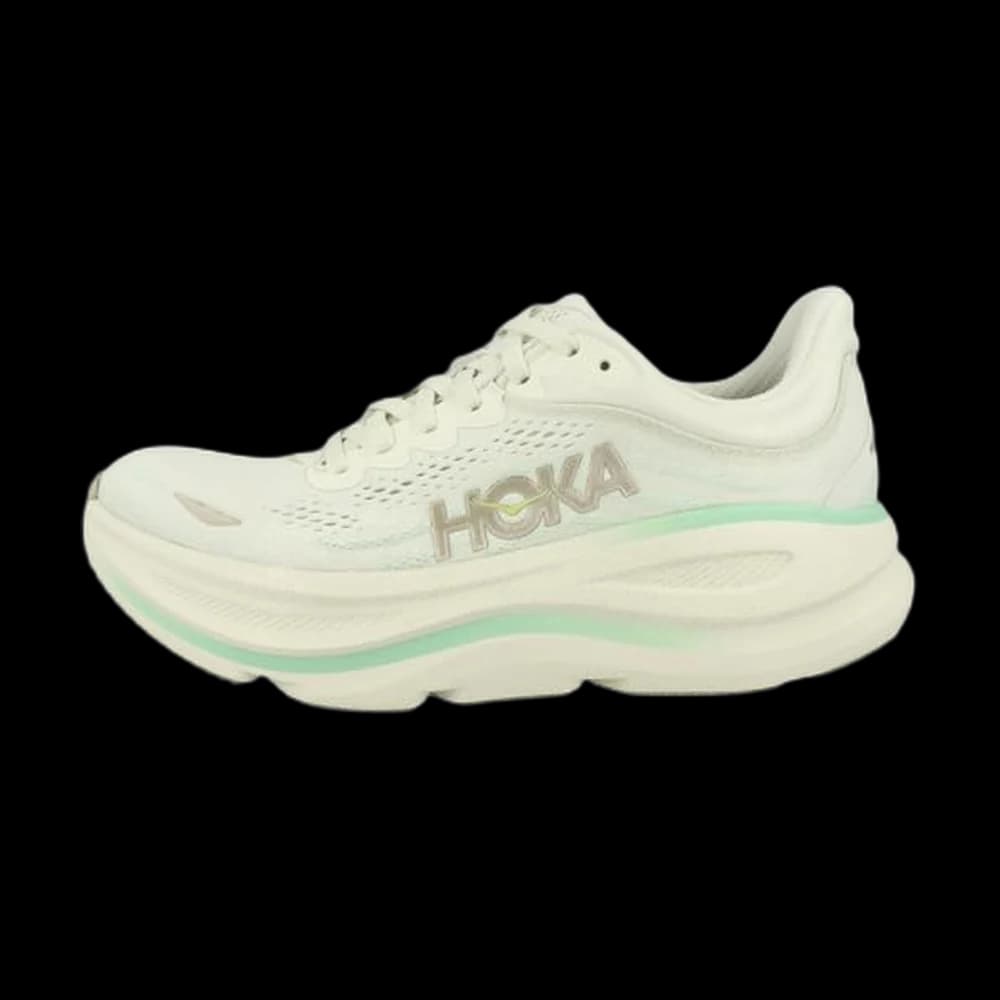
HOKA Bondi 9$174.95
Road build, not the Bondi SR: HOKA states no slip-resistance rating, and the engineered-mesh upper cannot be wiped down. Check your unit's footwear policy first.
Fits: Regular, Wide and X-Wide: women's US 5–12 and men's US 7–16 in all three, per the Amazon listings
Buy on Amazon · $174.95Main button: women's sizes
Brooks Ghost 18$133.99
Road build: Brooks states no slip-resistance rating, and the air-mesh upper cannot be wiped down. Check your unit's footwear policy first.
Fits: Narrow, Regular, Wide and X-Wide: women's US 5–13 and men's US 7–15, per the Amazon listings
Buy on Amazon · $133.99Main button: women's sizes
Nursing Shoes & Sneakers · Head-to-head
 HOKA Bondi 9$174.9575 · Score
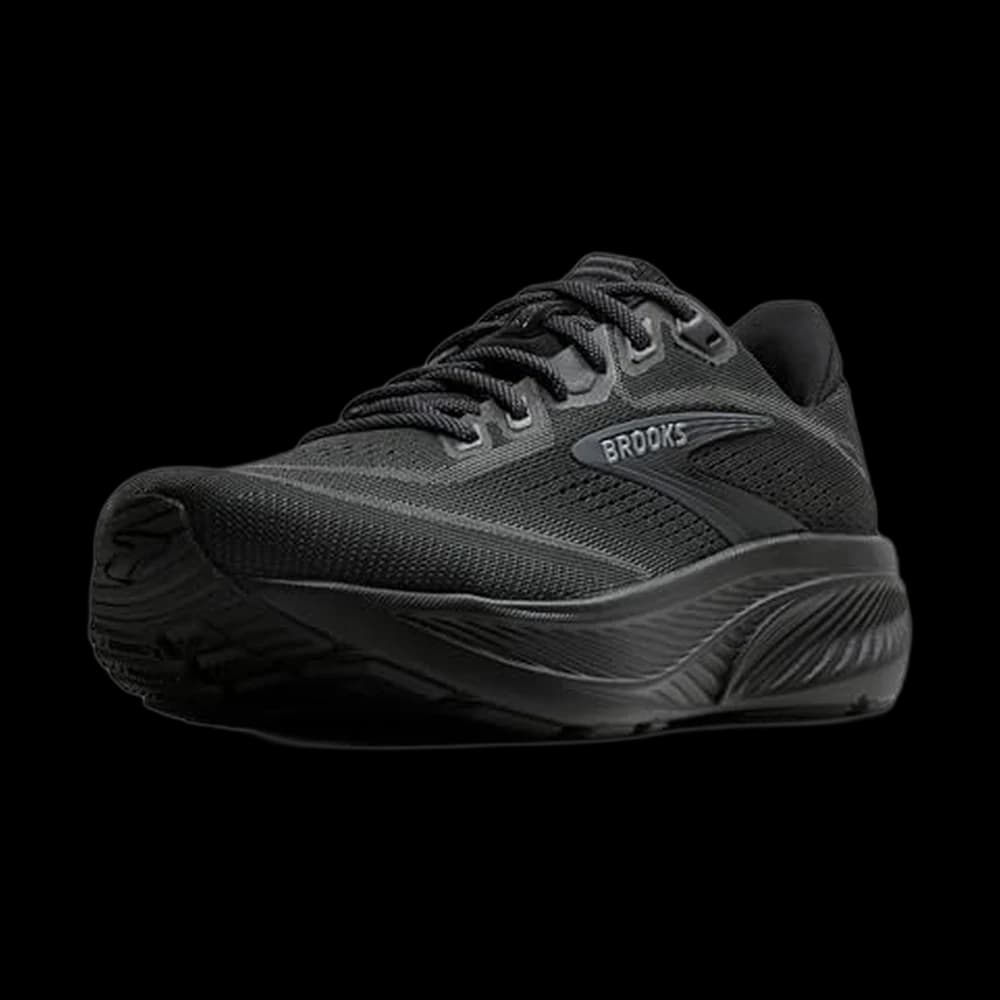 Brooks Ghost 18$133.9975 · Score
Main button: women's sizes
Main button: women's sizes
A tick marks the side that wins a row outright on the numbers. Rows where “better” depends on the nurse — upper material, closure, chestpiece type — or where neither product states the property carry no tick at all.
Key takeaways
- Different problems, not different quality. The Bondi 9 maximises the foam between your heel and the floor for a mostly-standing shift; the Ghost 18 is a balanced daily trainer for a mostly-walking one.
- The Ghost 18 replaced the Ghost 17. It keeps the same DNA LOFT v3 midsole and adds an Ortholite X-60 sockliner and a new flat-knit tongue, so everything the Ghost 17 was bought for carries over.
- Neither is a work shoe. The Bondi 9 here is the road build, not the slip-resistant Bondi SR, and neither listing states a slip-resistance rating - only two of the six shoes we shortlisted in this category do.
- The Ghost carries the paperwork. Brooks lists the APMA Seal of Acceptance and PDAC A5500; the Bondi's listing carries neither.
- The APMA Seal is not an endorsement - APMA's own FAQ says so. It means samples and documentation passed a confidential panel of member podiatrists, and it lasts up to three years.
- Both uppers are mesh, so both absorb rather than wipe. If fluid on your shoes is the recurring problem, the answer is a wipeable nursing sneaker or a washable clog, not either of these.
For nurses, the HOKA Bondi 9 is the better shoe if your twelve-hour shift12-hour shiftThe three-shifts-per-week pattern common in hospital nursing, and the interval most of our footwear, sock and hydration scoring is framed around. It matters for gear because foot swelling, foam compression and insulation hold time all behave differently over twelve hours than over eight. is mostly standing, and the Brooks Ghost 18 is the better shoe if it is mostly walking or you would rather spend about $40 less. The Ghost 18 is the successor to the Ghost 17 and keeps its DNA LOFT v3 midsole, so the same answer applies to either generation. Neither shoe states a slip-resistance rating, so if your unit enforces a footwear policy, the answer is a work shoe instead.
The verdict for your shift, at a glance
| Your situation | Pick | Why |
|---|---|---|
| Mostly standing: med room, OR board, a station | HOKA Bondi 9 | The deepest foam stack we shortlisted, plus a rocker that does some of the roll-through |
| Mostly walking: long med-surg floor, home health | Brooks Ghost 18 | A balanced trainer with a 10mm drop, built to keep you moving |
| Want two pairs to rotate | Brooks Ghost 18 | A tier cheaper, so a second pair is realistic |
| Liked the Ghost 17 | Brooks Ghost 18 | Same DNA LOFT v3 midsole; the changes are the sockliner and tongue |
| Want APMA or PDAC A5500 paperwork | Brooks Ghost 18 | Brooks lists both; the Bondi listing carries neither |
| Unit requires a rated slip-resistant outsole | Neither | A slip-resistant work shoe from our nursing shoe guide |
| Fluids on your shoes are the real problem | Neither | Both uppers are mesh; a wipeable sneaker or a washable clog |
Both shoes sell women's and men's sizes on separate listings; the buy buttons above open the women's listing and the link beneath each opens the men's.
Ask a floor full of nurses what they wear and two names come back more than any others: a HOKA, usually the Bondi, and the Brooks Ghost. On paper they look like the same purchase - a cushioned neutral running shoe, worn twelve hours at a time on vinyl laid over concrete. They are not the same purchase. One is built to put as much material as possible between your heel and the floor. The other is built to keep you moving over it. Which of those two problems you actually have is the whole decision.
The short answer
1. HOKA Bondi 9 — for shifts that are mostly standing
Check price on Amazon →Take the Bondi 9 if your shift is mostly standing - a med room, an OR board, a station where you cover the same twenty feet four hundred times. It carries the deepest foam stack of anything we shortlisted in this category, and our NurseComforts Score rates its twelve-hour cushioning higher than the Ghost's by a clear margin.
2. Brooks Ghost 18 — for shifts that are mostly walking
Check price on Amazon →Take the Ghost 18 if your shift is mostly walking - a long med-surg floor, home health, anywhere you are covering ground rather than standing in one room. It costs meaningfully less, it carries more third-party paperwork than anything else in the category, and Brooks builds it as a balanced trainer rather than a max-stack cradle.
Neither, if your unit enforces a footwear policy
Take neither if your unit enforces a footwear policy. That is not a hedge, it is the most important sentence on this page, and we come back to it below.
Where the money goes
The Bondi 9 sits in the premium band for nursing shoes - the same money as a top-tier leather clog. The Ghost 18 sits a tier down, in the range most nurses describe as "replaceable twice a year without thinking about it."
That gap shows up in our score. The two shoes land within a point of each other overall, but the Ghost's value sub-score runs well ahead of the Bondi's, and the Bondi's cushioning sub-score runs well ahead of the Ghost's. That is the trade in one line: you are buying foam depth, or you are buying a second pair sooner.
Cushioning: stack height versus ride
The Bondi is HOKA's maximum-cushion road shoe, and this listing is the standard Bondi 9 build - engineered mesh upper, textile lining, and the thickest foam stack HOKA puts under a daily trainer. HOKA lists the women's build at 9.3 oz, which is light for the amount of material involved, and the rockerrocker soleA sole with a curved profile that rolls the foot forward through each step instead of flexing it. Common on nursing clogs and recovery shoes. Wearers who like them describe less forefoot fatigue on long shifts; wearers who dislike them describe a tippy feel that takes a week to adjust to. geometry does some of the roll-through work your calves would otherwise be doing at 3 a.m. Durabrasion rubber is placed at the high-wear zones, so the outsole tends to outlast the foam.
The Ghost 18 approaches the same shift from the other end. It replaced the Ghost 17 and keeps its nitrogen-infused DNA LOFT v3 midsole, which Brooks says is tuned for soft landings and responsive toe-offs, and adds an Ortholite X-60 sockliner for step-in comfort. Brooks describes a secure heel with a dynamic forefoot and states a 10mm drop and 9.2 oz for the women's shoe - a tenth of an ounce under the Bondi, so weight is not what separates them. The RoadTack rubber outsole is compounded with recycled silica and built for durability rather than race weight.
If you have ever put on a max-stack shoe and felt tippy, that sensation is the real difference here, and it is not a defect in either shoe.
The uppers, and the part shopping guides skip
Both of these are mesh. The Bondi runs engineered mesh with a textile lining; the Ghost 18 runs a two-tone engineered air mesh with a new flat-knit tongue. Both breathe well on a warm unit. Neither wipes clean.
That matters more than the marketing suggests, and it is the loudest recurring theme in the nursing threads: a mesh runner soaks when a patient spills or leaks on you, which is what pushes people toward wipeable leather, clogs or work-specific models in the first place. Our cleanability sub-scores put the Bondi slightly ahead of the Ghost, but "slightly ahead" here means slightly less bad. If contamination is your actual problem, neither of these two shoes is the answer, and a fluid-resistantfluid resistantA surface or finish that sheds liquid rather than absorbing it, used on shoe uppers, scrubs and bags. It describes how a spill behaves on contact - it is not a barrier rating, not a sterility claim, and not a substitute for whatever your facility's exposure policy requires. nursing sneaker or a washable clog is.
Neither one is a work shoe
This is the caveat that gets dropped from most comparisons of these two shoes, so we will be blunt about it.
The Bondi 9 on this listing is the road build, not the slip-resistantslip-resistant outsoleAn outsole compound and tread pattern intended to keep traction on wet or contaminated floors. Testing is not uniform: some brands cite an ASTM or SATRA coefficient-of-friction result, most simply print the phrase on the box. Where a manufacturer names the standard we say so; where it only claims 'slip-resistant' with no standard behind it, that is all the claim is worth. Bondi SR, and its listing states no slip-resistance certification. The Ghost 18's listing states no slip-resistance rating either. Across the shoes we shortlist for this category, only the two Skechers work sneakers and the Clove carry a slip-resistant outsole as their makers state it, and none of them is on this page.
If your unit's footwear policy requires a rated outsole, read the policy before you order, not after. A slip-resistant work shoe at half the price is a better purchase than a premium trainer you are not allowed to wear.
The paperwork: what APMA and PDAC A5500 actually mean
The Ghost 18 is the unusual one here. Brooks lists it as carrying the APMA Seal of Acceptance and PDAC A5500 diabetic certification, which is more third-party documentation than almost anything else in this category has. Both are worth understanding rather than trusting on sight.
The APMA Seal of Acceptance is not an endorsement, and APMA says so in those words in its own Seal Program FAQ. A company submits an application, product samples, a processing fee and documentary evidence on composition, safety, efficacy and quality control; a review panel of member podiatrists evaluates it against the category's criteria and checks that the claims are substantiated. Products that are primarily cosmetic, unsubstantiated, or that do not allow normal foot function are rejected. Accepted products hold the Seal for up to three years and can renew. That is a real process - it is just a lower bar than a badge on a shoe box implies.
PDAC A5500 is a coding verification, not a clinical claim. A5500 is the billing code for a depth-inlay shoe under Medicare's Therapeutic Shoes for Persons with Diabetes benefit, and a PDAC verification means the model has been coded to it. Whether you or a patient can actually bill it is decided by a prescriber and a plan, never by the shoe.
The Bondi 9's listing carries neither mark. That is not evidence against the shoe; HOKA simply does not put the Ghost's paperwork on this model.
What buyers actually report
Both shoes sit high on owner ratings. The Bondi has far more reviews behind its average, because the Ghost 18 is newer, so its score is built on hundreds of reviews rather than thousands. Amazon's own review-summary data has buyers praising fit, comfort and arch supportarch supportThe height and firmness of the contoured section under the medial arch of a footbed or insole. 'Support' is not one thing: insoles are sold in low, neutral and high arch profiles, and a high-arch insole under a low-arch foot is the most common cause of the 'these hurt' review. Arch height is a fit question, not a quality ranking. on both. The interesting part is where each is mixed: the Bondi draws mixed feedback on value for money, while the Ghost 18's early reviews are positive across the board, including on cushioning.
That maps almost exactly onto the nursing threads. HOKA, mainly the Bondi and Clifton, is the most-named shoe in r/nursing, r/Nurses and r/NursingStudent, but those threads are an argument rather than a consensus - plenty of nurses report shin splints, a too-bouncy unstable feel, or a plantar fasciitis flare from the same models that others swear by. Brooks, New Balance, ASICS, Altra and traditional clogs all keep committed holdouts. The advice that recurs regardless of brand is to get fitted at a running store with a gait assessment and a generous return window, because foot shape decides this and someone else's favourite shoe transfers badly.
Ghost 17 vs Ghost 18: does the generation matter for nurses?
Not much, and that is good news. Brooks built the Ghost 18 on the same nitrogen-infused DNA LOFT v3 midsole as the Ghost 17, then added an Ortholite X-60 sockliner and a redesigned flat-knit tongue. If the Ghost 17 worked for your feet, the Ghost 18 keeps the part that did the work. Brooks' own pages list the specs; what they cannot tell you is whether a 10mm-drop balanced trainer suits a shift spent standing in one room, which is the decision this page is about.
Wide feet, heel pain and men's sizes
- Wide feet. Neither shoe is a width specialist on this shortlist; confirm the width option on the listing for your size before ordering. If neither fits, the New Balance Fresh Foam X 1080v15 in our nursing shoe guide is the max-cushion pick wide-footed nurses most often land on, and our wide-feet nursing shoe guide goes further.
- Plantar fasciitis or heel pain. Start with your clinician, not a shoe. Gear-wise, nurses with sore heels more often try the Bondi 9 for its stack and rocker, but the nursing threads also include people who blame a HOKA for a flare, so buy from a seller with a generous return window. More in our nursing shoes for plantar fasciitis page.
- Men. Both shoes come in men's sizes on separate listings, linked under each buy button. Our men's nursing shoe guide compares the men's side.
- CNAs and techs. The standing-versus-walking split works the same for any floor job; see our shoes for CNAs page for a budget-weighted take.
What about the Brooks Ghost Max 3?
If you like Brooks but want Bondi-style cushioning, the Ghost Max is the Brooks to look at rather than the Ghost. The Brooks Ghost Max 3 has, per Brooks, a high stack of DNA Loft v3 foam on a broad base with a GlideRoll rocker and a 6mm drop, close to the Bondi's 5 mm, and Brooks lists it as carrying the APMA Seal. It is now the outgoing model, replaced by the Ghost Max 4, which is why it sells for around $100, less than either shoe on this page. The caveats are the same: a mesh upper and no slip-resistance rating. It is the sixth pick in our nursing shoe guide.
Who should buy which
Buy the Bondi 9 if you stand more than you walk, you want the deepest cushioning available, tall stack heights do not make you feel unstable, and your unit has no footwear policy.
Buy the Ghost 18 if you walk more than you stand, you want a lighter, more balanced shoe, you would rather replace shoes more often than pay premium money once, or the APMA and PDAC listings matter to you or your patients.
Buy neither if your floor is genuinely wet, your unit requires a rated outsole, or your recurring problem is fluid on your shoes rather than fatigue in your feet.
One practical note: men's and women's sizes of both shoes sit on separate retailer listings. The buttons on this page open the women's listing, and the link beneath each one opens the men's.
Your next step