Quick Answer
Start with a deeply cushioned shoe such as the HOKA Bondi 9 and an arch-support insole. If your calves are tight or a low-drop shoe has aggravated your heel before, try the Brooks Ghost 18 first, which Brooks states has a 10 mm drop to the Bondi's 5 mm. If you wear custom orthotics and like clogs, the Dansko XP 2.0 takes them. No shoe treats plantar fasciitis, so see a podiatrist if the pain is new, worsening or not settling.
HOKA Bondi 9$174.95
Road build, not the Bondi SR: HOKA states no slip-resistance rating, and the engineered-mesh upper cannot be wiped down. Check your unit's footwear policy first.
Fits: Regular, Wide and X-Wide: women's US 5–12 and men's US 7–16 in all three, per the Amazon listings
Buy on Amazon · $174.95Main button: women's sizes
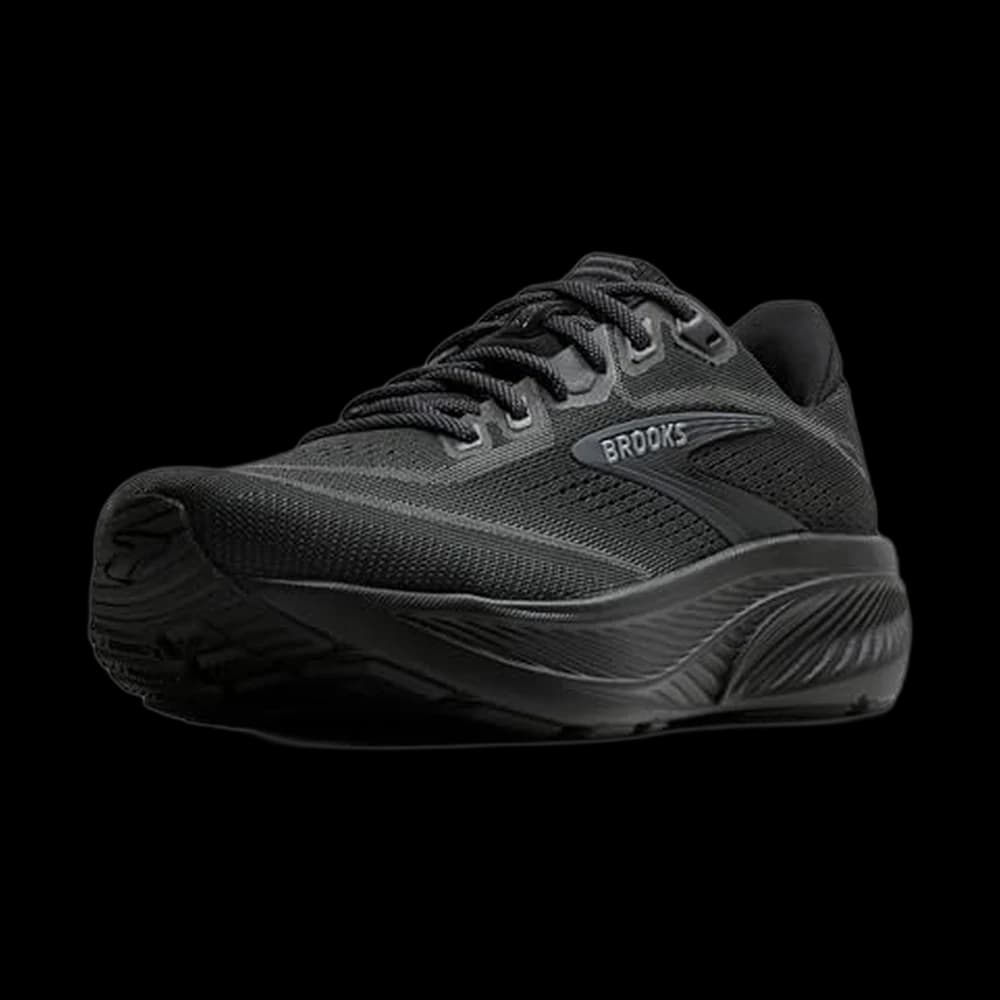
Brooks Ghost 18$133.99
Road build: Brooks states no slip-resistance rating, and the air-mesh upper cannot be wiped down. Check your unit's footwear policy first.
Fits: Narrow, Regular, Wide and X-Wide: women's US 5–13 and men's US 7–15, per the Amazon listings
Buy on Amazon · $133.99Main button: women's sizes
Key takeaways
- No shoe treats plantar fasciitis. OrthoInfo says thick, cushioned soles can reduce pain with standing while the actual treatment works.
- The HOKA Bondi 9 has the most cushioning we list, but its 5 mm drop does not suit everyone with tight calves.
- The Brooks Ghost 18, at a stated 10 mm drop, is the safer first try if a low-drop shoe has aggravated your heel.
- Arch support matters as much as foam, so buy a shoe whose insole comes out.
- See a podiatrist if heel pain is new, getting worse, or not settling after a few months.
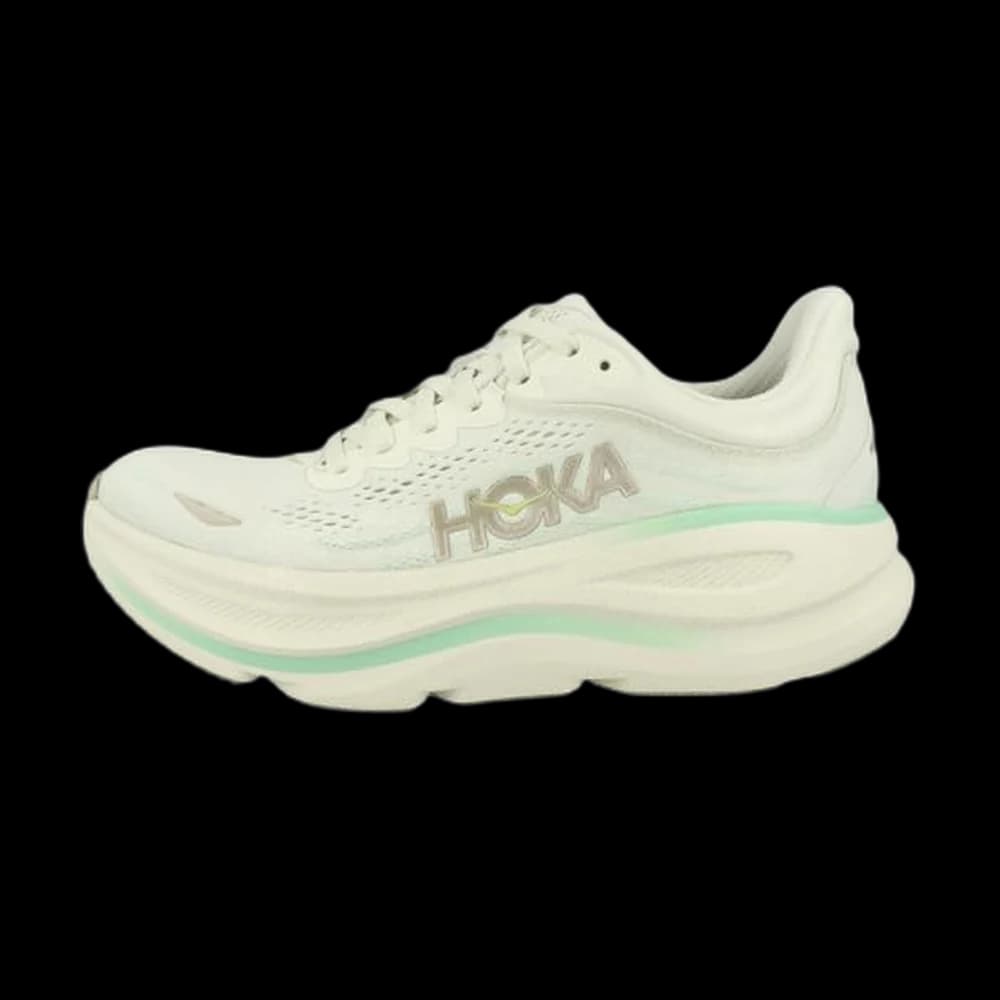
HOKA Bondi 9
- Maximum-cushion HOKA platform, the deepest foam stack among the shoes here
- HOKA lists the women's Bondi 9 at 9.3 oz, light for how much foam is underfoot
- Engineered mesh upper breathes well on a warm unit, unlike leather work shoes
The deepest cushioning we list, which is the footwear property OrthoInfo ties to less pain when standing, in regular, wide and extra-wide. Pair it with an arch-support insole, and if your calves are tight or a low-drop shoe has hurt before, start with the Brooks Ghost 18 instead.
Fits: Regular, Wide and X-Wide: women's US 5–12 and men's US 7–16 in all three, per the Amazon listings
Side-by-side comparison
#1HOKA Bondi 9 Owner rating4.5(3,217) | #2Brooks Ghost 18 Owner rating4.4(804) | #3HOKA Clifton 11 Owner rating4.5(17) | #4Dansko XP 2.0 Clog Owner rating4.4(14,743) | #5PowerStep Pinnacle Orthotic Insole Owner rating4.5(9,063) | |
|---|---|---|---|---|---|
|  |  |  |  | |
| NurseComforts Score | |||||
| Verdict | The most heel cushioning we list, in three widths, as long as a 5 mm drop suits your calves. | The higher-drop alternative for tight calves, in four widths, and the cheaper of the two trainers. | A lighter HOKA with a middle 8 mm drop, for nurses who find the Bondi clunky. | The clog for nurses who wear custom orthotics: Dansko says the removable footbed takes most of them. | The over-the-counter arch support to try first, in any shoe whose insole comes out. |
| Price | ~$174.95Buy on Amazon Main button: women's sizes | ~$133.99Buy on Amazon Main button: women's sizes | ~$155Buy on Amazon Main button: women's sizes | ~$164.95Buy on Amazon Main button: women's sizes | ~$49.95Buy on Amazon Main button: the women's (pink) version |
| Heel-to-toe drop | 5 mm (HOKA) | 10 mm (Brooks) | 8 mm (HOKA) | Clog with a 1.7 in heel (Dansko) | Not applicable (insole) |
| Insole / orthotic | Removability not stated by HOKA; check before planning on an orthotic | Ortholite X-60 sockliner; removability not stated on the listing | Open-cell sockliner; removability not stated | Removable; accommodates most standard and custom orthotics (Dansko) | Full length, neutral arch, deep heel cradle; replaces the factory insole |
| Widths | Regular, Wide, X-Wide; women's US 4-12, men's US 7-16 (HOKA) | Women's 2A-2E, US 5-13; men's B-4E, US 7-15 (Brooks) | Regular, Wide, X-Wide; women's US 4-12, men's US 7-16 (HOKA) | Women's Regular and Wide on the style we link; men's Regular (Dansko) | Sized by shoe size |
| Buyer sentiment | Fit Comfort Arch Support Foot Relief Buyers praise fit, comfort, arch support and foot relief. Mixed feedback on value for money and size. Based on 1,775 user mentions | Fit Comfort Arch Support Appearance Buyers praise fit, comfort, arch support and appearance. Based on 625 user mentions | - | Appearance Comfort Arch Support Work-Friendly Durability Buyers praise appearance, comfort, arch support and work-friendly. Mixed feedback on fit and value for money. Some flag durability. Based on 5,785 user mentions | Quality Arch Support Comfort Pain Relief Buyers praise quality, arch support, comfort and pain relief. Mixed feedback on fit and value for money. Based on 2,991 user mentions |
| Pros |
|
|
|
|
|
| Cons |
|
|
|
|
|
* Prices are approximate. Click Buy to see current pricing on Amazon.
For a nurse with plantar fasciitis, the best starting point is a deeply cushioned shoe such as the HOKA Bondi 9 worn with an arch-support insole, unless you have tight calves or a low heel-to-toe drop has aggravated your heel before; then the Brooks Ghost 18, with Brooks' stated 10 mm drop, is the better first try. No shoe treats plantar fasciitis, and if the pain is new, severe or not settling, the person to see is a podiatrist.
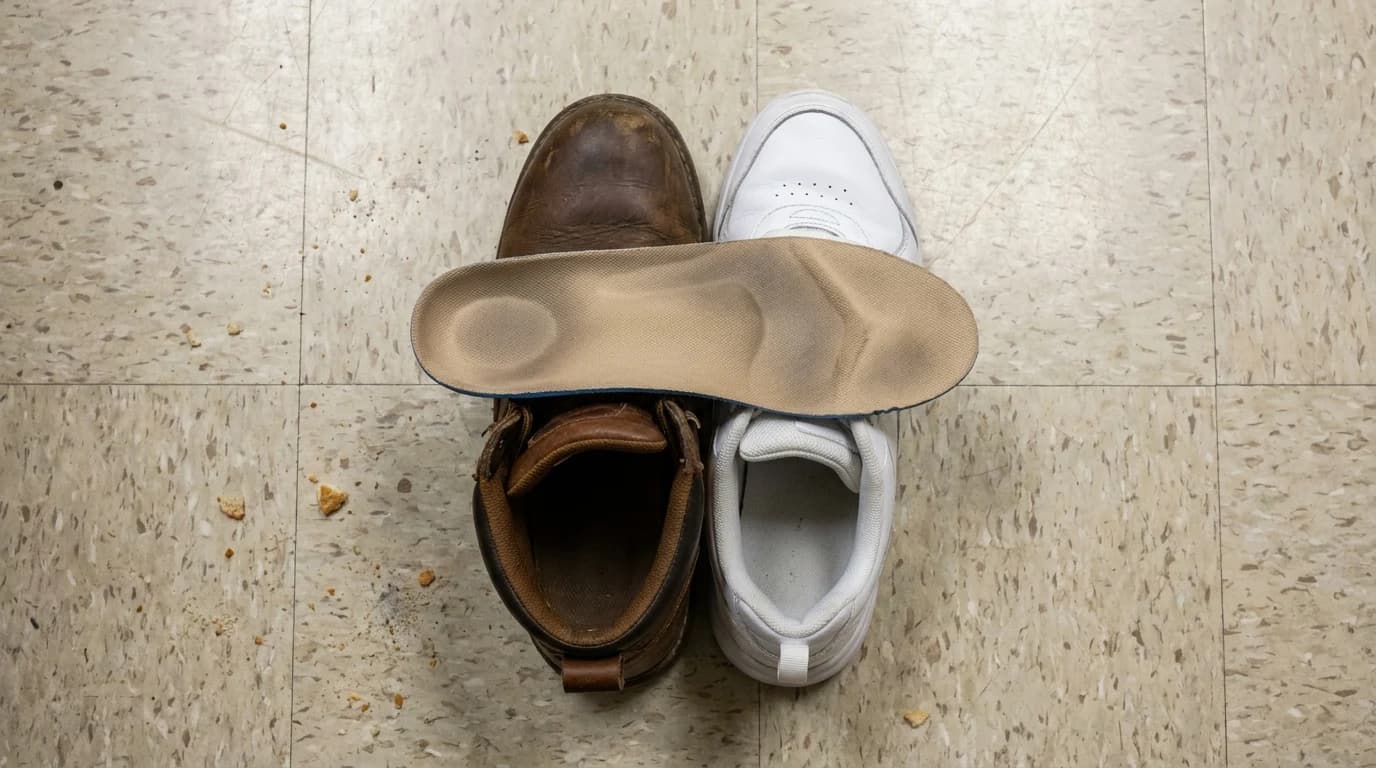
That last point is not boilerplate. Heel pain has more than one cause, and Mayo Clinic notes that a clinician may order imaging to rule out problems such as a stress fracture. What a shoe can do is make standing less painful while the actual treatment works. The American Academy of Orthopaedic Surgeons' OrthoInfo page says it plainly: shoes with thick soles and extra cushioning can reduce pain with standing and walking, and old shoes should be replaced before they wear out. Mayo Clinic lists healthcare workers among the people at higher risk, because of the hours spent standing and walking on hard floors.
So the shopping question is narrower than most lists make it: which shoe gives your heel the most cushioning, carries an arch supportarch supportThe height and firmness of the contoured section under the medial arch of a footbed or insole. 'Support' is not one thing: insoles are sold in low, neutral and high arch profiles, and a high-arch insole under a low-arch foot is the most common cause of the 'these hurt' review. Arch height is a fit question, not a quality ranking., and suits your calves.
Our top picks
1. HOKA Bondi 9 — the most cushioning under the heel
Check price on Amazon →HOKA's maximum-cushion trainer has the deepest foam stack we list, which is the property OrthoInfo describes. HOKA states a 5 mm heel-to-toe drop and makes it in regular, wide and extra-wide, women's US 4 to 12 and men's US 7 to 16.
The low drop is the thing to watch. A shoe with less heel lift leaves your calf and Achilles more stretched while you stand, and the American Orthopaedic Foot & Ankle Society lists tight calf muscles among the risk factors for plantar fasciitis. In nursing forums the Bondi is credited with relief by many and blamed for a flare by some. It is also the road build, not the slip-resistantslip-resistant outsoleAn outsole compound and tread pattern intended to keep traction on wet or contaminated floors. Testing is not uniform: some brands cite an ASTM or SATRA coefficient-of-friction result, most simply print the phrase on the box. Where a manufacturer names the standard we say so; where it only claims 'slip-resistant' with no standard behind it, that is all the claim is worth. Bondi SR, with a mesh upper that will not wipe clean. Around $175.
2. Brooks Ghost 18 — more heel lift, for tight calves
Check price on Amazon →Brooks states a 10 mm drop for the Ghost 18, twice the Bondi's, with nitrogen-infused DNA LOFT v3 foam and an Ortholite X-60 sockliner. The listing also states it carries the APMA Seal of Acceptance and PDAC A5500 diabetic certification. It has less cushioning than the Bondi and a more conventional feel underfoot, which makes it the one to try first if you know your calves are tight or a low-drop shoe has hurt before.
Brooks makes it in four widths, women's 2A to 2E and men's B to 4E, so there is room for a thick insert in a wider fit. The same road-build caveats apply: mesh upper, no slip rating. Around $135, the cheaper of the two.
3. HOKA Clifton 11 — the lighter middle ground
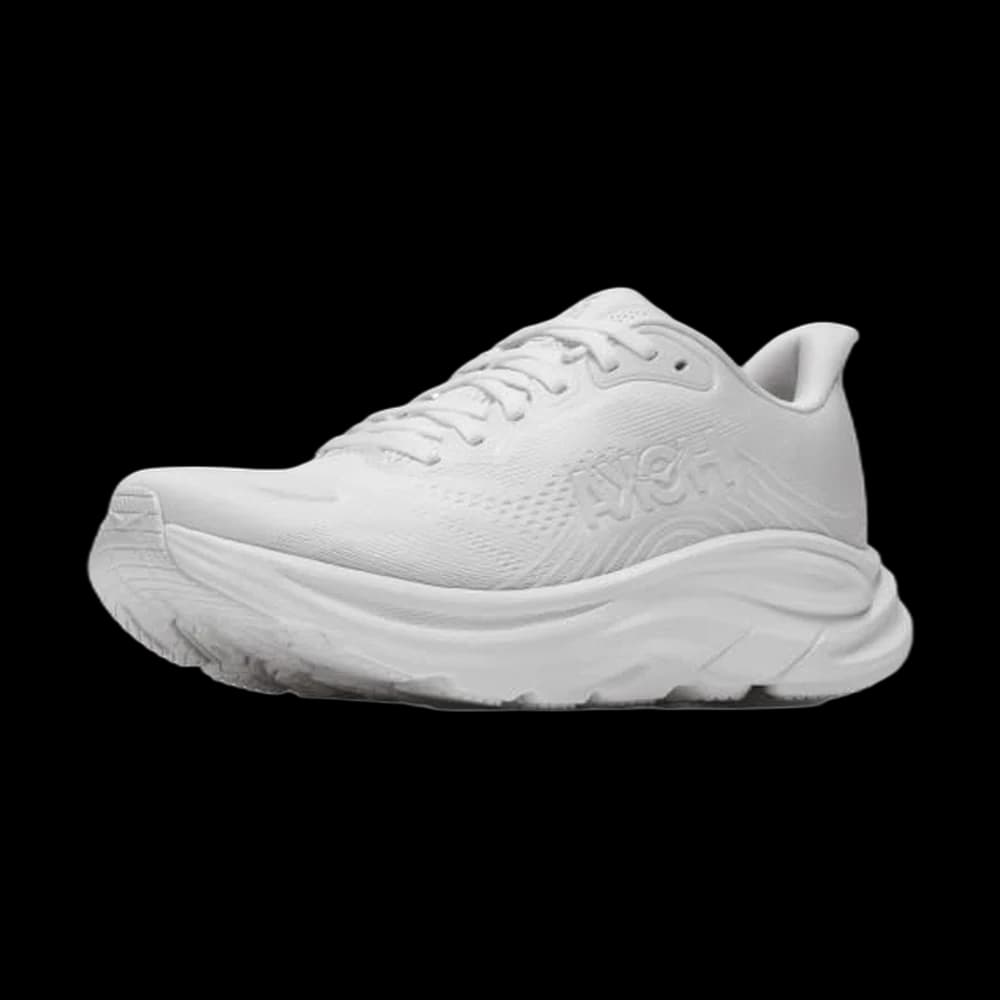
Check price on Amazon →If the Bondi feels clunky but you like HOKA's rockerrocker soleA sole with a curved profile that rolls the foot forward through each step instead of flexing it. Common on nursing clogs and recovery shoes. Wearers who like them describe less forefoot fatigue on long shifts; wearers who dislike them describe a tippy feel that takes a week to adjust to., the Clifton 11 sits between the two: HOKA states an 8 mm drop and lists it in regular, wide and extra-wide. It has less foam than the Bondi and the same road-build caveats. Around $154.
The outgoing Brooks Ghost Max 3 sits in similar territory from Brooks: a high-stack, rocker-shaped shoe on a broad base with a 6 mm drop, which Brooks lists as best for orthotics. It has been replaced by the Ghost Max 4, so it sells for around $100 while sizes last, with the same road-build caveats.
4. Dansko XP 2.0 Clog — if you wear custom orthotics
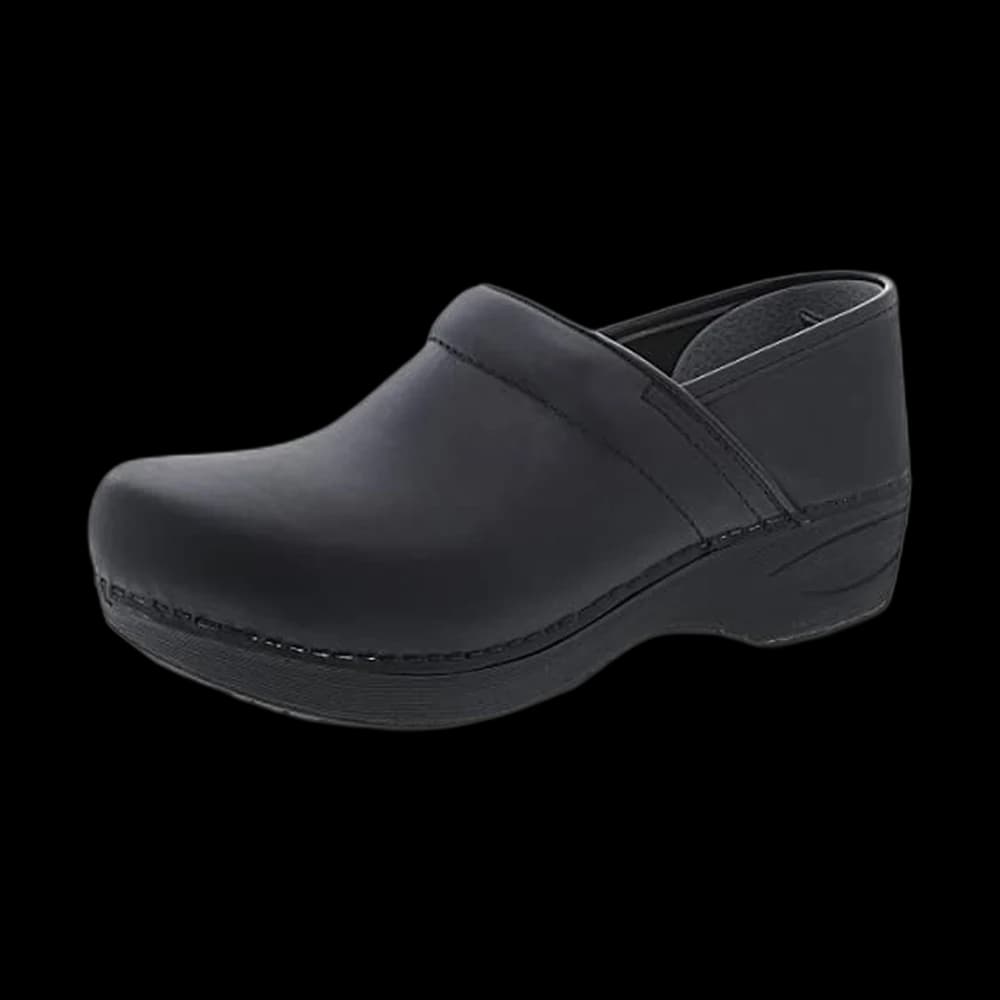
Check price on Amazon →Clogs have a long following among nurses with heel pain, and the XP 2.0's case is specific. Dansko says the removable footbed accommodates most standard and custom orthotics, its own dual-density footbed uses Dansko's Natural Arch shape, and the 1.7 inch heel means a tight calf is not stretched as far as in a flat shoe. Dansko rates the outsole for dry, wet and oily-wet floors.
Two cautions. Clogs divide nurses with plantar fasciitis more than any other shoe: some say they ended their pain, others found the firm footbed made it worse. And an open back is a poor shoe for codes and stairs. Around $165. Our Dansko research page covers fit and break-in.
5. PowerStep Pinnacle Orthotic Insole — the arch support
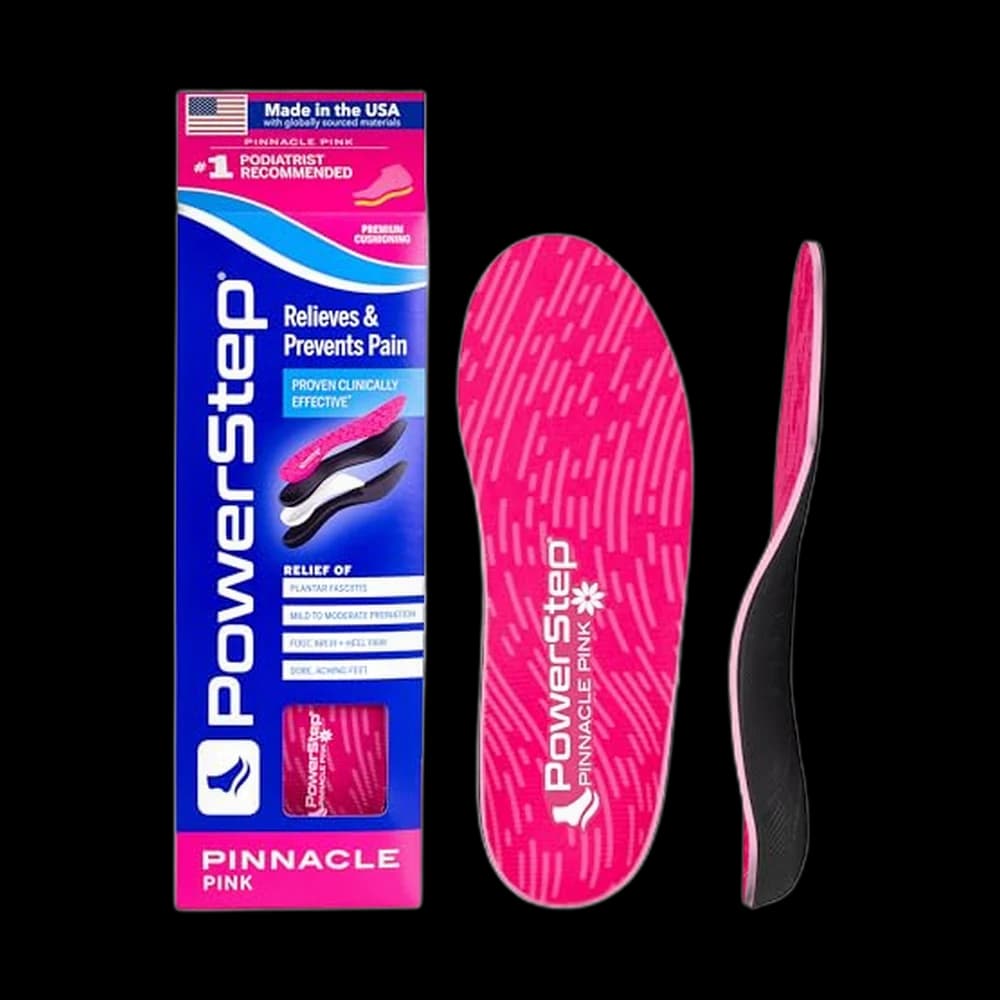
Check price on Amazon →Mayo Clinic lists arch supports, store-bought or custom-made, among the treatments that help distribute pressure more evenly across the foot, and AOFAS describes over-the-counter inserts as adding arch support and soft cushioning. The Pinnacle is our default over-the-counter pick: a firm-but-flexible neutral arch, a deep heel cradleheel cupThe moulded rear section of an insole or footbed that surrounds the heel. A deeper cup keeps the heel pad centred under the calcaneus and resists side-to-side motion; a shallow cup lets the heel spread and slide. Depth is the spec most commonly cited by insole makers and the one owners most often mention. and dual-layer cushioning, sized to your shoe size. It needs a shoe with a removable insole, and a neutral arch will not suit every foot. Around $50. If a podiatrist has prescribed custom orthotics, use those instead.
What to look for, in order
Cushioning under the heel. Thick soles with extra cushioning are the footwear property OrthoInfo names.
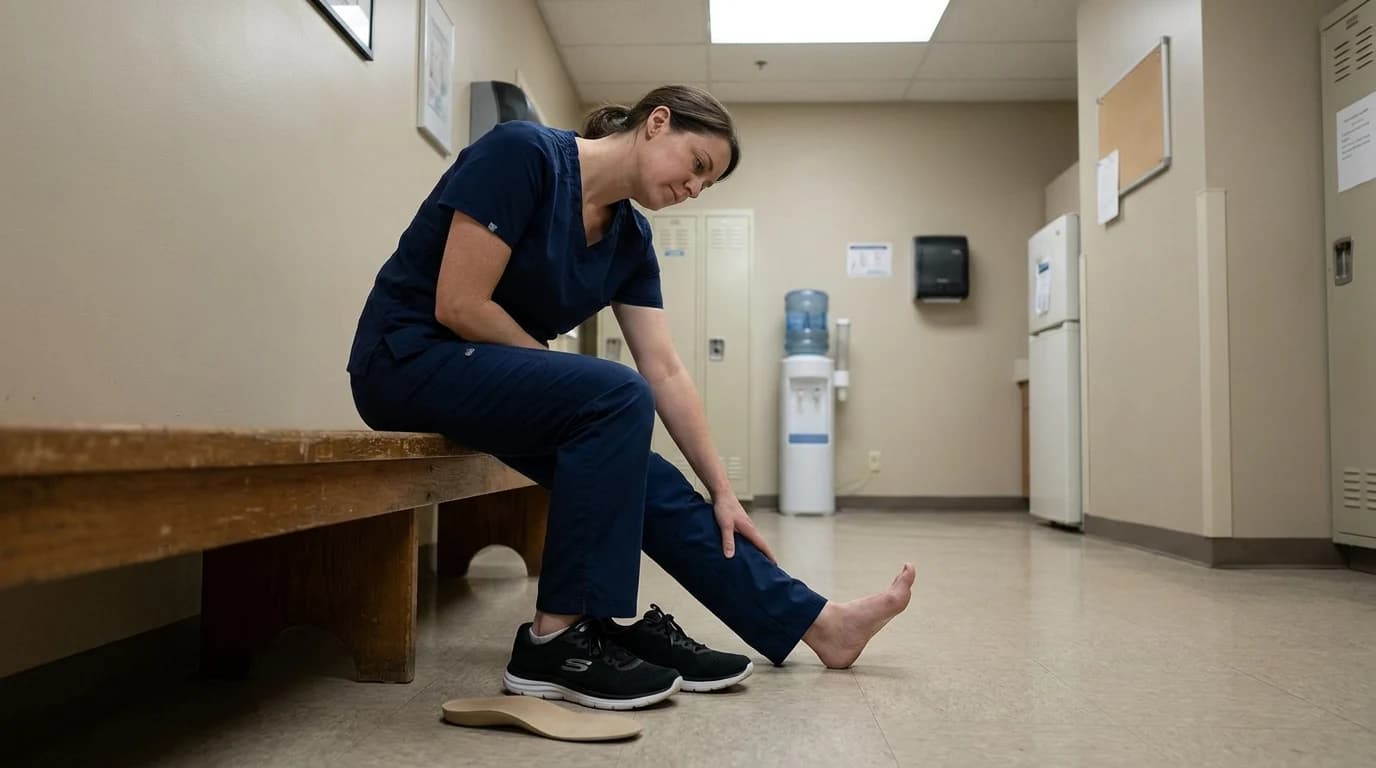
Room for an insert. If the footbed does not come out, you cannot add arch support. Dansko and Skechers state theirs is removable; on any other shoe, check that the stock insole lifts out before you plan around an orthotic.
A drop that suits your calves. The comparison table above lists each maker's stated drop. If you are not sure whether your calves are tight, that is a good question for your first podiatry appointment.
Replacement on a schedule. Mayo Clinic notes that old or worn-out shoes lose support. Foam fails quietly, and most people on full-time shifts get two to three seasons from a pair.
Width. A foot squeezed into a narrow shoe compensates somewhere else. Our wide-feet guide lists width by model.
What we would skip
Soft moulded-foam clogs feel kind on day one and pack out within months, with no footbed to replace and no room for an orthotic. Thin budget work shoes are the other trap: the Skechers Work Arch Fit 2.0 SR we recommend elsewhere for its slip-resistant outsole is not our pick for diagnosed heel pain. And nurses in the forums repeatedly warn against going barefoot on days off once the heel is sore.
When to see a podiatrist
See a podiatrist or a foot and ankle specialist if you have not been diagnosed, if the pain is getting worse rather than better, if it has not settled after a few months of supportive shoes and stretching, or if you have started walking differently to avoid it. AOFAS and Mayo Clinic both note that changing the way you walk can lead to knee, hip or back problems. The outlook is good: OrthoInfo reports that more than 90 percent of patients improve within 10 months of starting simple treatment methods, and a clinician can tell you which of them, from stretching to night splints to custom orthotics, fits your foot.
For general shift shoes rather than heel pain specifically, start with best shoes for nurses.
Cheaper alternative
HOKA Bondi 9 ($174.95) is our #1 pick here. If that is more than you want to spend, this is a cheaper option in the same category — our researched verdict on it is below.
Brooks Ghost 18
The Ghost is the neutral daily trainer nurses keep re-buying, and the Ghost 18 is the current generation, replacing the Ghost 17. It keeps the nitrogen-infused DNA LOFT v3 midsole and adds an Ortholite X-60 sockliner and a redesigned flat-knit tongue. It earns its rank as the balanced all-rounder rather than the deepest cushion: Brooks describes a secure heel with a dynamic forefoot and a 10mm drop, so it suits units where you cover ground instead of standing in one room. Brooks also lists it as carrying the APMA Seal of Acceptance and PDAC A5500 diabetic certification, which is more third-party paperwork than most shoes here have. The tradeoff is the upper, which is engineered air mesh built for road running, so it does not wipe down and carries no slip-resistance rating.
Common questions
What kind of shoe helps plantar fasciitis on a 12-hour shift?
Are HOKAs good for plantar fasciitis?
Are Dansko clogs good for plantar fasciitis?
Should I buy an insole or new shoes?
When should I see a podiatrist for heel pain?
Research Sources
- Plantar Fasciitis and Bone Spurs (OrthoInfo, American Academy of Orthopaedic Surgeons)
- Plantar fasciitis: symptoms, causes and risk factors (Mayo Clinic)
- Plantar fasciitis: diagnosis and treatment (Mayo Clinic)
- Plantar Fasciitis (FootCareMD, American Orthopaedic Foot & Ankle Society)
- XP 2.0 Black Waterproof Pull Up: features, measurements and widths (Dansko)