Key takeaways
- The Professional and the XP 2.0 are not interchangeable. Only the XP 2.0's product page carries a slip-resistance claim, a removable dual-density footbed and a stated orthotic accommodation; the Professional publishes a single-density fixed footbed and a PU rocker-bottom outsole.
- Dansko's own product pages state that the heel counter allows the heel to move up and down freely while providing lateral stability. That free-moving heel is the design, and it is simultaneously the reason the shoe is comfortable to stand in and the reason ankle rolls and stairs come up so often.
- APMA acceptance is real and verifiable: Dansko, LLC appears on the association's own Seal Program listing. So do Brooks, ASICS, Altra, adidas and Clove, which is why the seal cannot settle a clog-versus-sneaker argument.
- Dansko publishes the Professional at a 2 inch heel and the XP 2.0 at 1.7 inches. Coming from flat sneakers, that is a real change in geometry and the break-in period nurses describe is partly the shoe and partly the ankles and calves adjusting.
- Buy Danskos for standing, not for covering ground. If your shift is corridors and rapid responses, a cushioned running-style shoe gives you the ankle security a clog structurally cannot.
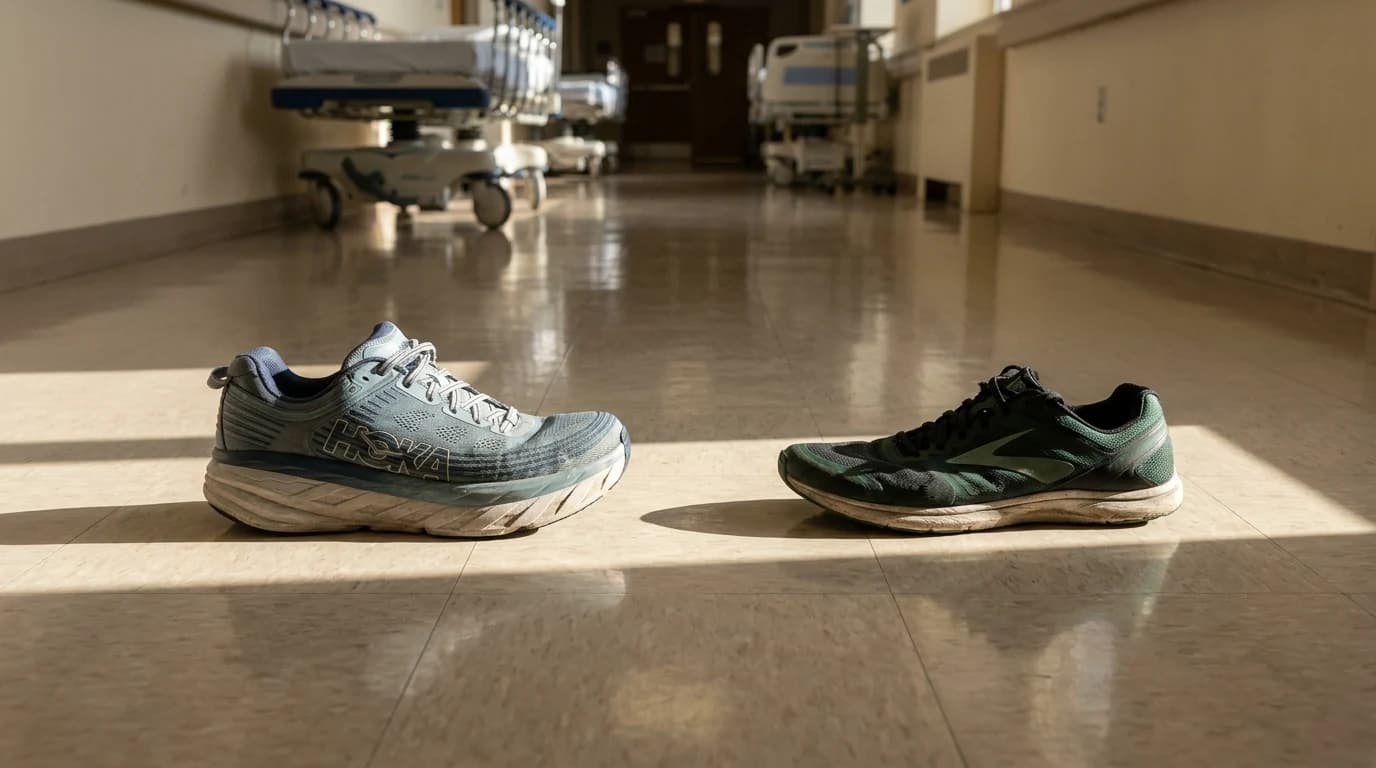
Ask ten nurses about Dansko clogs and you will get two answers delivered with equal certainty. One group has worn nothing else since 2005 and describes the day their foot pain stopped. The other group has a story about the stairwell. Both groups are describing the same shoe honestly, which is the part most buying guides skip.
We do not test shoes. What we can do is read what Dansko publishes about its own construction, check what the certification on the box actually certifies, and set that against the pattern of what nurses say in their own forums over years of threads. Done that way, the disagreement stops looking like a matter of taste and starts looking like a predictable consequence of one design decision.
The two clogs people mean when they say "Dansko"
Almost every conversation about Dansko nurse shoes is really about one of two models, and they are not interchangeable.
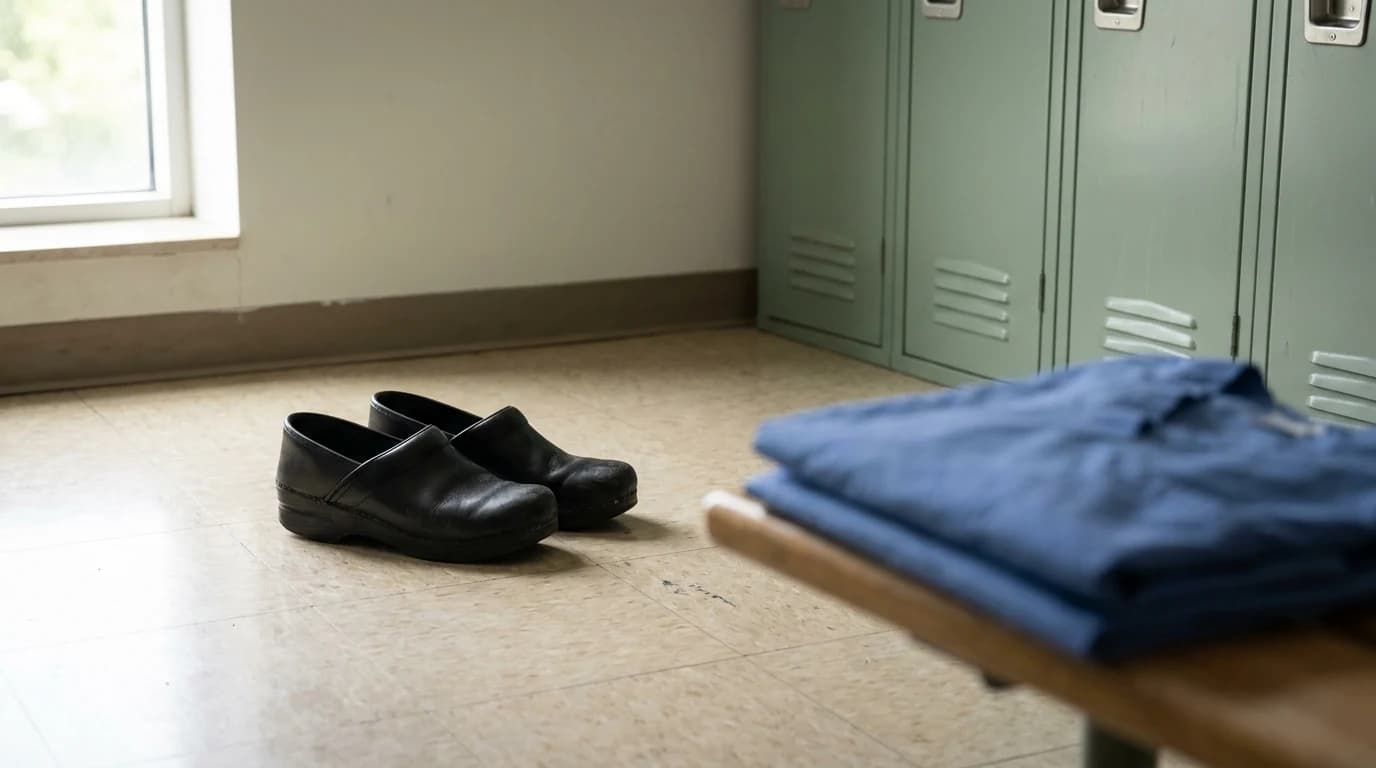
The Professional is the original silhouette, the one that made the brand. Dansko describes it as its flagship: a roomy reinforced toe boxtoe boxThe front section of a shoe surrounding the toes. Width and height here drive most comfort complaints on shift footwear, because feet swell over a twelve-hour shift and a toe box that fits at 7 a.m. can be tight by 5 p.m. Some brands publish width designations (D, 2E, 4E); many publish nothing., a padded instep collar, a single-density open-cell PU footbed, an inner frame for stability, and a PU rockerrocker soleA sole with a curved profile that rolls the foot forward through each step instead of flexing it. Common on nursing clogs and recovery shoes. Wearers who like them describe less forefoot fatigue on long shifts; wearers who dislike them describe a tippy feel that takes a week to adjust to.-bottom outsole built to promote forward motion. Dansko lists its heel height at 2 inches.
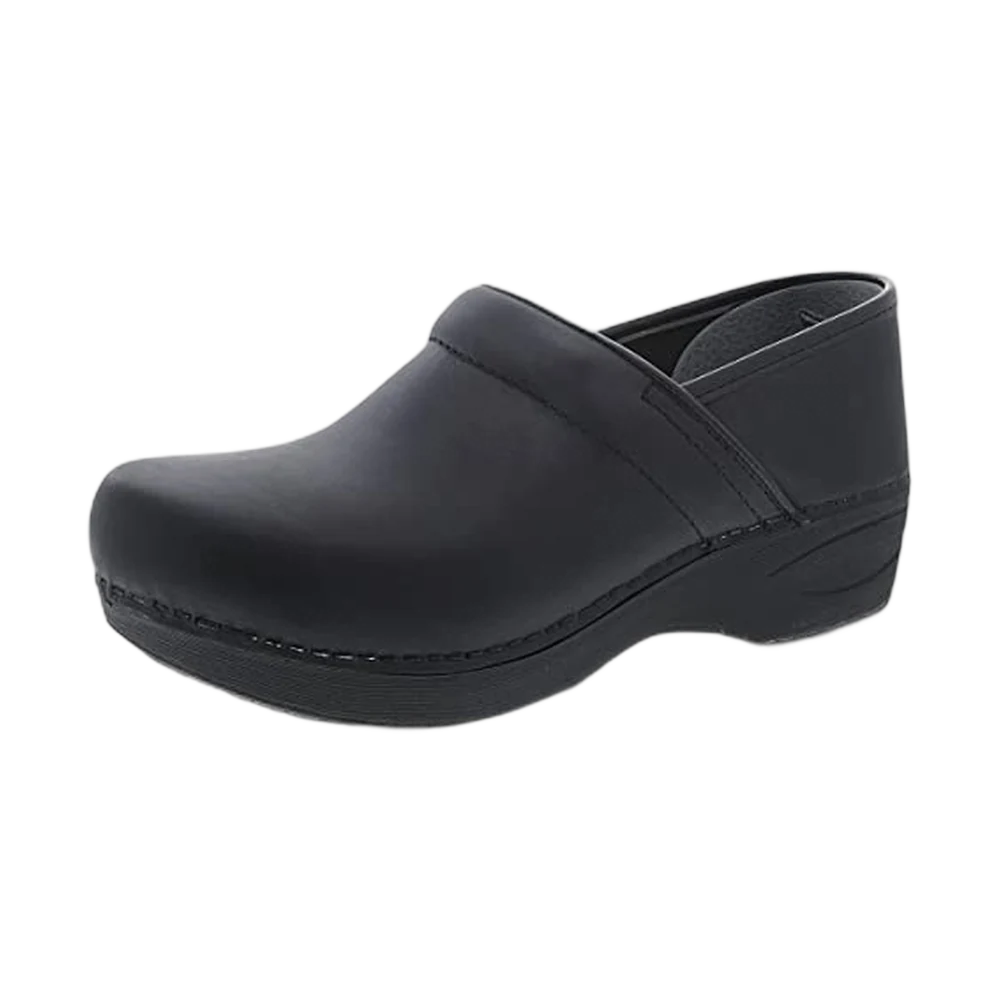
The XP 2.0 is the work-specific update, and Dansko calls it its number one occupational shoe for healthcare and hospitality. It swaps the rocker bottom for a patented slip-resistantslip-resistant outsoleAn outsole compound and tread pattern intended to keep traction on wet or contaminated floors. Testing is not uniform: some brands cite an ASTM or SATRA coefficient-of-friction result, most simply print the phrase on the box. Where a manufacturer names the standard we say so; where it only claims 'slip-resistant' with no standard behind it, that is all the claim is worth. rubber outsole that Dansko states is suitable for dry, wet and oily/wet surfaces, adds a lightweight EVAEVAEthylene-vinyl acetate, the light foam used in most shoe midsoles, clogs and cheaper insoles. It cushions well when new and compresses permanently over months of use - the 'packed out' that owners describe. Denser polyurethane and modern supercritical foams resist that compression longer and cost more. midsole, and replaces the fixed foam footbed with a removable dual-density PU footbed carrying Dansko's Natural Arch technology and memory foam. Dansko states it accommodates most standard and custom orthotics, and lists the heel at 1.7 inches.
That difference matters more than the price gap between them. If your unit requires slip resistance, only one of these two carries a slip-resistance claim on its product page. If you wear an orthotic, only one of them publishes a removable footbed. Nurses who bought the Professional expecting either of those things are a meaningful slice of the disappointed reviews.
What the APMA seal actually tells you
Dansko's marketing leans on APMA acceptance, and the claim checks out at the source: Dansko, LLC appears on the American Podiatric Medical Association's own Seal Program listing, and Dansko's FAQ states the association awards the seal after evaluating whether a product promotes quality foot health.
What it does not tell you is more useful. The same APMA listing also carries Brooks, ASICS, Altra, adidas and Clove, among many others. The seal does not distinguish a clog from a running shoe, it is not a slip-resistance rating, it is not a durability rating, and it is not a statement that the shoe will suit your feet. Dansko's own explainer is refreshingly blunt about this last point: it says an APMA-approved shoe will not necessarily cure your foot problems. Treat the seal as a floor, not a recommendation.
The design decision that explains both camps
Here is the sentence that unlocks the whole argument, and it is Dansko's, published on its own product pages for both models. The heel counter "allows heel to move up and down freely while providing lateral stability."
Your heel is supposed to lift out of the shoe with every step. That is not a fit failure; it is the design. Combined with a roomy toe boxtoe boxThe front section of a shoe surrounding the toes. Width and height here drive most comfort complaints on shift footwear, because feet swell over a twelve-hour shift and a toe box that fits at 7 a.m. can be tight by 5 p.m. Some brands publish width designations (D, 2E, 4E); many publish nothing. that Dansko describes as offering plenty of wiggle room, and an open back, you get a shoe you can step into in three seconds, that never rubs a heel blister, and that a lot of people find genuinely transformative for standing.
You also get the noise, which is the heel dropping back onto a hard shell twice per stride. You get a shoe that does not hold your foot laterally the way a laced sneaker does. And on stairs, on a fast pivot, or on a sprint to a rapid response, the same freedom that makes it comfortable is the freedom to come off your foot. The recurring ankle-roll reports are not evidence that people are wearing the wrong size. They are the predictable cost of the feature.
Who Danskos genuinely suit
The pattern that emerges is about how you move, not how tough your feet are.
Danskos suit you if your shift is mostly standing in one place — perioperative, procedural, lab bench, pharmacy compounding, a long OR case. They suit you if you want a wipeable leather upper rather than a mesh one that absorbs whatever lands on it. They suit you if you want a supportive shoe you can kick off at the desk. And if you wear an orthotic, the XP 2.0 is one of very few clogs at this level that publishes a removable footbed rather than leaving you to guess.
They suit you least if you cover ground. If your day is 12,000 steps of corridor, a cushioned running-style shoe is a better tool, and the ankle security is not a trade you have to make. Our head-to-head on the Bondi 9 and the Ghost 18 walks through what separates a standing shoe from a walking one, and the wider nursing shoes roundup covers the sneaker side properly. If you would rather answer questions than read comparisons, the nursing shoe finder does the same job in about a minute.
The one situation where this stops being a shopping question: if you have diagnosed foot or ankle problems, or ankle instability from a previous injury, the person to ask is a podiatrist or your own clinician, not a review site. Threads full of people recommending the shoe that fixed their feet are not a substitute for someone who has looked at yours.
Sizing, width and the break-in period
Dansko sizes in European whole sizes, which is the first thing that trips up new buyers, and it publishes a size chart and fit guide rather than leaving you to convert. Its fit guidance is specific and worth following literally: your toes should not touch the front of the clog, and your heel should move up and down freely as you walk. Most styles are manufactured in medium width, with narrow and wide clogs also offered.
The practical consequence is that a Dansko that fits correctly will feel looser than a sneaker that fits correctly, and people who size down to stop the heel lift are removing the thing the shoe is designed around. The break-in period nurses describe — typically a couple of weeks — is partly the leather and partly learning to walk in a shoe with a 2-inch heel after years in flats. If you are coming from a zero-drop sneaker, expect calves and knees to notice.
Lifespan and cleaning, which is half the value argument
The case for spending clog money rather than sneaker money is usually made on lifespan, and it is a fair case as far as it goes. A leather clog is repairable and wipeable in a way a mesh running shoe is not; Dansko's care guidance for the XP 2.0 is simply to wipe with a damp cloth and maintain with leather cream, and for the Professional's box leather it notes the finish is designed for workplaces with wet, acidic or greasy conditions.
Set against that, the most common concern in aggregated owner feedback on the XP 2.0 is durability — specifically soles and the bond between sole and upper rather than the leather itself. So the honest version of the value argument is: the upper will almost certainly outlast a sneaker, the sole may not outlast it by as much as the price difference implies, and you should plan on the same shoe-rotation habit that extends the life of any work footwear. Two pairs alternated dry longer and compress less than one pair worn daily, which is as true of a $60 clog as a $165 one.
Insoles are the other half of that equation, and they are the cheapest upgrade available on any work shoe — including the ones you already own. Our insoles for standing all day guide is the highest-leverage read for anyone who is not sure the shoe is the problem.
Where the XP 2.0 sits in our rankings
We rank the XP 2.0 in the nursing clogs category, and it is not our top pick there. It earns a NurseComforts Score of 72, held back mainly by value and by the open-back security penalty that the same scorecard applies to every open-back clog. Our top clog is a closed-back design with elastic side goring, which holds the foot in a way an open-back clog structurally cannot, at meaningfully less money.
That is not a knock on the Dansko. It is the honest answer to "should I buy the famous one," which is: buy it for the footbed and the orthotic compatibility, not for the reputation, and buy the XP 2.0 rather than the Professional if your floor is ever wet. Our scoring method shows exactly which sub-scores produced that number.
The bottom line
Dansko clogs are a genuinely good shoe for a specific job, sold to everyone. The loyalty is real and so are the complaints, and they coexist because the free-moving heel that makes the shoe comfortable to stand in is the same free-moving heel that makes it unstable to run in. Know which of those two things your shift is mostly made of, and the choice makes itself.
| Published detail | Professional | XP 2.0 |
|---|---|---|
| List price on dansko.com | $140.00 | $165.00 |
| Heel height | 2 in | 1.7 in |
| Platform height | 0.8 in | 0.98 in |
| Footbed | Single-density open-cell PU foam; removability not stated | Removable dual-density PU with Dansko Natural Arch technology plus memory foam |
| Orthotics | Not stated on the page | Stated to accommodate most standard and custom orthotics |
| Midsole | Not stated; an inner frame is listed for stability | Lightweight EVA |
| Outsole | PU rocker bottom for forward motion, wide heel strike | Patented slip-resistant rubber, stated for dry, wet and oily/wet surfaces |
| Slip-resistance key detail on the page | Not listed | Listed |
| Heel counter | Allows heel to move up and down freely while providing lateral stability | Allows heel to move up and down freely while providing lateral stability |
| Care guidance | Damp soapy cloth; box leather suits wet, acidic or greasy conditions | Wipe with a damp cloth; maintain with Dansko Leather Cream |
Products discussed in this article
Every item named above, with the NurseComforts Score and the price we last recorded. Prices at the affiliate retailers we link change constantly.
Your next step