Our #1 Pick
Comrad's knee-highs deliver 15-20 mmHg of true graduated compression in a 91% nylon, 9% spandex knit with SmartSilver anti-odor treatment, and they ship three to a pack so you can actually wear compression on consecutive shifts. They earn the mid-range pick because the sizing is charted by both shoe size and calf circumference rather than a vague small-medium-large, which is the single biggest reason compression socks disappoint people. The tradeoff is price per pair and the compression tier: 15-20 mmHg is the mild-to-moderate level, not the firm support some legs need by hour ten.
Key takeaways
- Start at 15-20 mmHg. It is the mild, most commonly used tier and where most people on their feet all day should begin.
- Graduated is the feature: tightest at the ankle, easing up the leg. A sock that squeezes evenly is not doing the job.
- Sizing depends on calf circumference, not just shoe size. Too small bites at the band, too large delivers no gradient and rolls down.
- For a wide calf, buy a purpose-built wide-calf model rather than sizing up. Sizing up lengthens the sock without fixing the band.
- Owning too few pairs costs you more than buying cheap socks. The benefit tracks days worn, so buy the multi-pack first and upgrade later.
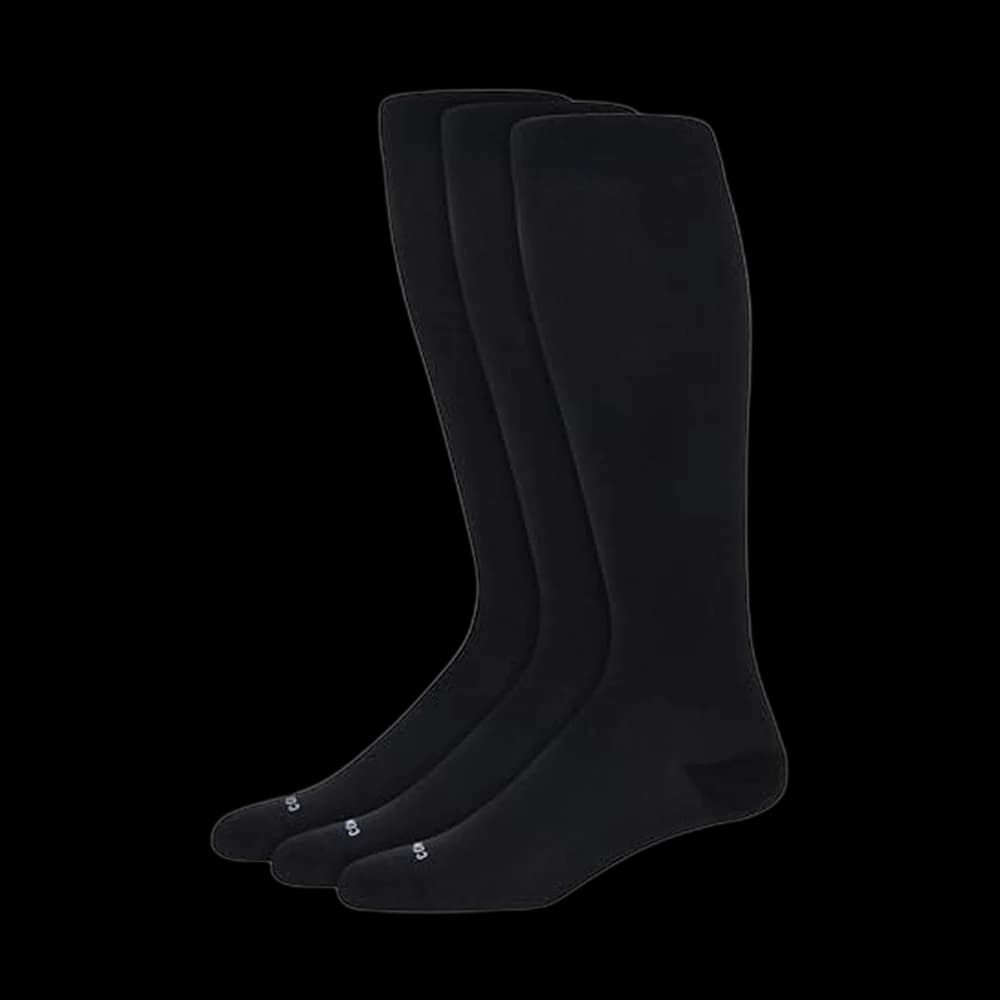
Comrad Knee-High Compression Socks, 3-Pack
- True graduated 15-20 mmHg, strongest at the ankle and easing up the leg
- Sized by shoe size and calf circumference together, so you can measure rather than guess
- SmartSilver treatment targets odor, which matters on back-to-back shifts
True graduated 15-20 mmHg sized against calf circumference rather than shoe size alone, sold three to a pack so laundry never decides whether you wear compression. If the price is the obstacle, buy an eight-pack of a budget sock first and upgrade later.
Side-by-side comparison
#1Comrad Knee-High Compression Socks, 3-Pack Owner rating4.3(565) | #2CHARMKING Compression Socks, 8 Pairs Owner rating4.5(90,077) | #3Physix Gear Sport 20-30 mmHg Compression Socks Owner rating4.4(42,744) | #4Sockwell Circulator Compression Sock Owner rating4.6(4,986) | #5Wellow 18-25 mmHg Bamboo Compression Socks Owner rating4.2(146) | |
|---|---|---|---|---|---|
|  |  |  |  | |
| NurseComforts Score | |||||
| Verdict | True graduated 15-20 mmHg with sizing charted against calf circumference, which is the spec most brands skip. | Eight pairs for less than one premium pair, which is what turns compression into a daily habit rather than an experiment. | The cheap way into the firm tier, for legs that stopped responding to 15-20 mmHg. | The merino blend pick, for when the problem is a hot damp foot as much as a heavy leg. | A useful middle rung when 15-20 mmHg is not enough but 20-30 is more than you want to fight on. |
| Price | ~$101.99Buy on Amazon Price checked Oct 10 | ~$19.99Buy on Amazon Price checked Oct 10 | ~$18.82Buy on Amazon Price checked Oct 10 | ~$32.95Buy on Amazon Main button: women's sizes | ~$31.99Buy on Amazon Price checked Oct 10 |
| Compression Level (mmHg) | 15-20 mmHg, true graduated | 15-20 mmHg, graduated | 20-30 mmHg, graduated | 15-20 mmHg, moderate graduated | 18-25 mmHg |
| Fiber Content | 91% nylon, 9% spandex with SmartSilver | 85% nylon per the manufacturer; remainder not stated | Not stated on the listing | 32% merino, 31% bamboo rayon, 32% stretch nylon, 5% spandex | Viscose from bamboo blend; percentages not stated |
| Pairs Per Pack | 3 pairs | 8 pairs | 1 pair on this listing | 1 pair | - |
| Size Range / Calf Fit | - | - | - | - | Regular calf, size MD: 11.5 inch fit stretching to 19 inches |
| Buyer sentiment | Quality Compression Comfort Buyers praise quality, compression and comfort. Mixed feedback on fit and ease of use. Based on 259 user mentions | Quality Comfort Functionality Appearance Buyers praise quality, comfort, functionality and appearance. Mixed feedback on fit and compression. Based on 26,302 user mentions | Quality Comfort Compression Support Size Buyers praise quality, comfort, compression and support. Mixed feedback on fit and ease of use. Some flag size. Based on 20,650 user mentions | Comfort Fit Compression Functionality Buyers praise comfort, fit, compression and functionality. Mixed feedback on value for money and ease of use. Based on 3,236 user mentions | Compression Fit Buyers praise compression. Mixed feedback on quality. Some flag fit. Based on 47 user mentions |
| Pros |
|
|
|
|
|
| Cons |
|
|
|
|
|
* Prices are approximate. Click Buy to see current pricing on Amazon.
Compression socks are the one thing on this site you buy over and over, which makes ten minutes on the basics worth more than any amount of brand comparison. Two specs decide almost everything: whether the sock is genuinely graduated, and whether it fits your calf.
For most people the sensible default is the Comrad Knee-High Compression Socks, 3-Pack — true graduatedgraduated compressionCompression that is strongest at the ankle and eases as it travels up the calf. The gradient is what distinguishes a compression sock from a merely tight sock. Manufacturers state the ankle band in mmHg; independent verification of the gradient across the leg is rare, so treat the stated band as a manufacturer claim. 15-20 mmHgmmHgMillimeters of mercury, the pressure unit used to rate compression socks and blood-pressure readings. Compression hosiery is sold in bands - commonly 8-15, 15-20, 20-30 and 30-40 mmHg - and the number describes pressure at the ankle, not an average over the whole leg., sized against calf circumferencewide calfCompression sock sizing based on measured calf circumference rather than shoe size alone. Brands that publish a two-axis chart (shoe size plus calf measurement) produce far fewer 'cut into my leg' and 'rolled down' reports than brands that publish shoe size only. as well as shoe size, and enough pairs that you are not choosing between compression and laundry.
There is a strong argument for starting cheaper, though, and it is not really about money. The most expensive mistake in this category is owning too few pairs. A single premium pair worn twice a week does less for you than eight budget pairs worn every shift, because the benefit tracks days worn rather than dollars spent. If that is where you are, start with the CHARMKING Compression Socks, 8 Pairs and upgrade later.
Our top picks
Comrad Knee-High Compression Socks, 3-Pack — the one that fits properly
Check price on Amazon →Comrad's knee-highs are 15-20 mmHg of true graduated compression in a 91% nylon, 9% spandex knit with a SmartSilver anti-odor treatment, and they ship three to a pack. What earns them the top slot is unglamorous: the sizing is charted against both shoe size and calf circumference rather than a vague small-medium-large. Sizing is the single biggest reason compression socks disappoint people, and Comrad is one of the few brands that lets you measure instead of guess.
The tradeoffs are cost per pair, which is the highest here by a wide margin, and the ceiling — there is no firmer tier in this line if 15-20 mmHg turns out not to be enough for your legs. The nylon knit also runs warmer than merino or bamboo. Around $102 for three pairs.
CHARMKING Compression Socks, 8 Pairs — the pack that makes it a habit
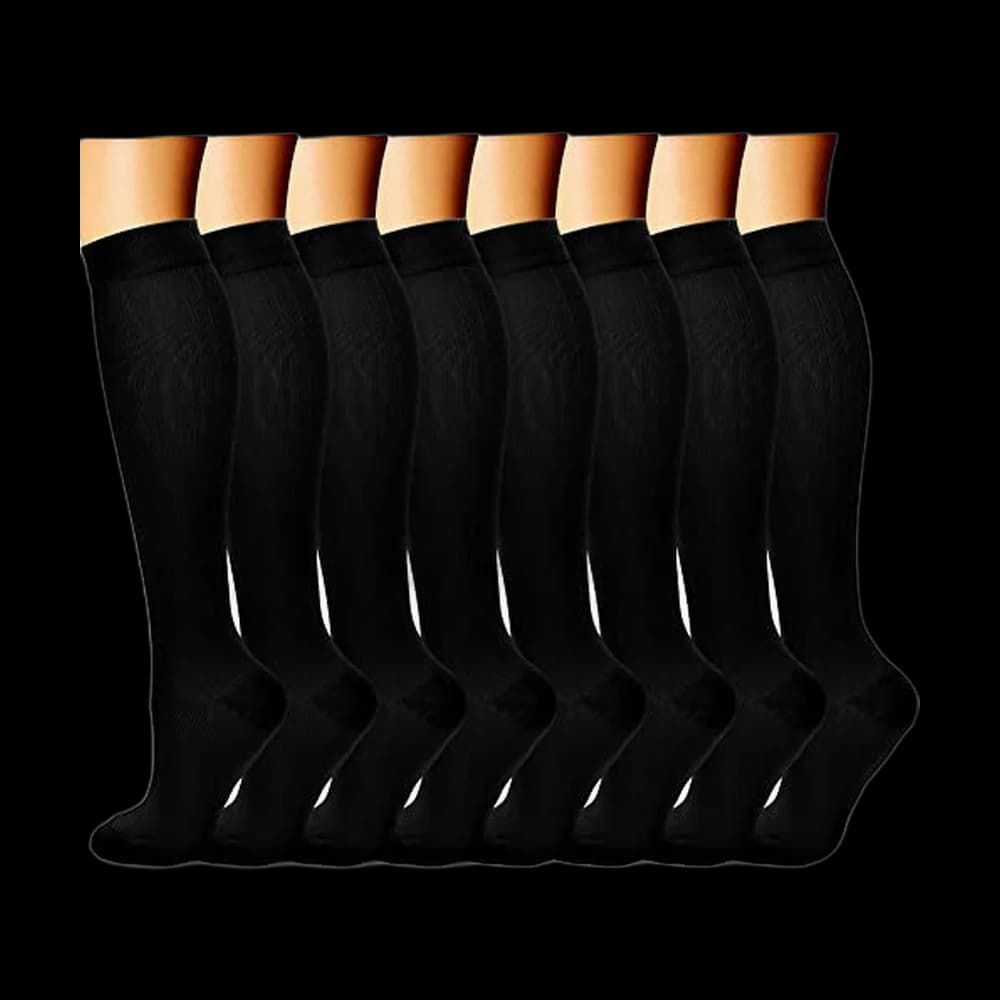
Check price on Amazon →Eight pairs of 15-20 mmHg graduated compression for less than the price of one premium pair. That is the entire pitch and it is a good one, because it turns compression from an experiment into something you actually do every shift. CHARMKING states the knit was upgraded to 85% nylon for 360-degree stretch, and the knee-high wide-calf cut fits more legs than most budget packs manage.
The tradeoff is consistency. Budget multi-packs vary pair to pair, they lose elasticity faster than premium knits, and there is no published calf-circumference chart beyond the size-chart image on the listing. Treat these as a seasonal replacement rather than a multi-year sock. Around $20.
Physix Gear Sport 20-30 mmHg — the firm tier, cheaply
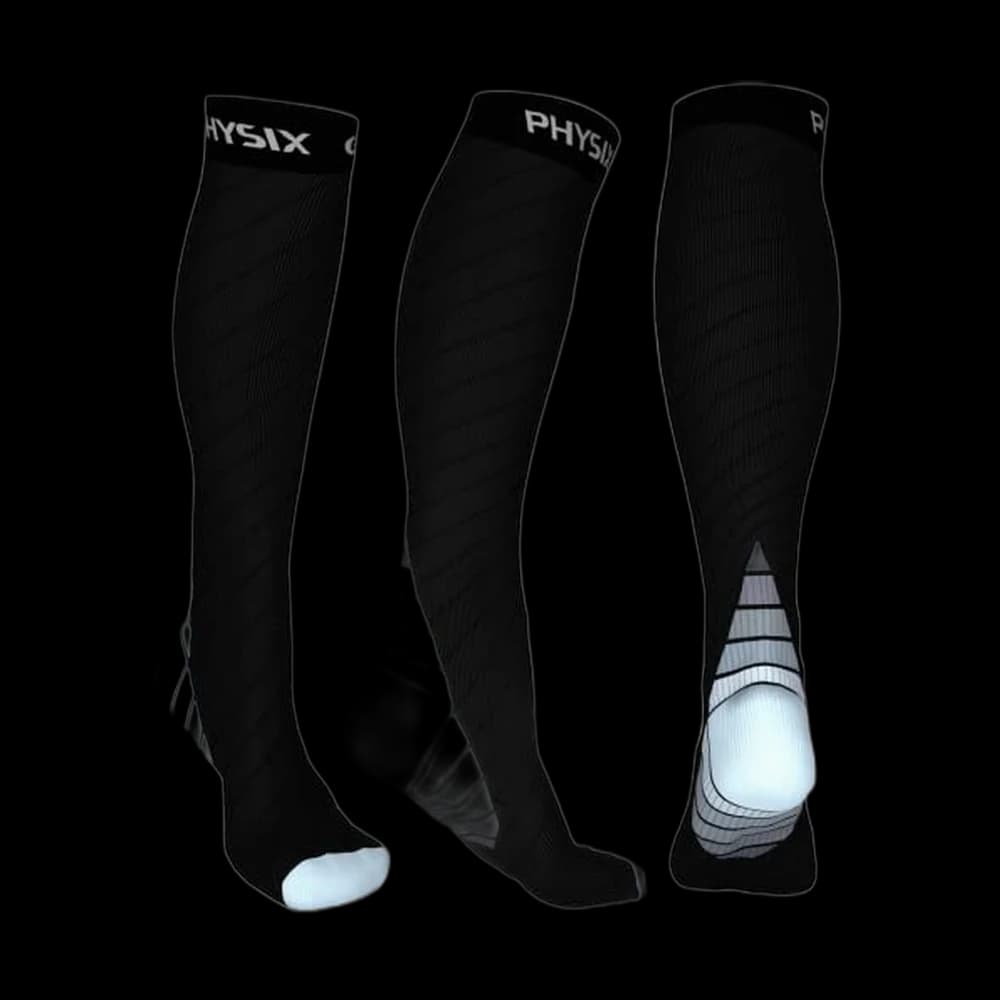
This is the accessible route into 20-30 mmHg20-30 mmHgThe firm band of compression hosiery, often labelled by sellers as 'medical grade' - a marketing phrase, not a regulatory classification. It is harder to don than 15-20 mmHg and is frequently the band nurses report their own clinicians discussing. Which band suits a given person is a question for that person's clinician, not a review site. for legs that stopped responding to the mild tier. Physix Gear's graduated athletic fit is one of the most widely bought compression socks on Amazon and costs less than a single pair of most premium 15-20 mmHg socks, despite being a firmer class.
Two honest notes. It is genuinely firm and noticeably harder to pull on at 0630 than a 15-20 sock. And this is not a starting point: if you are new to compression, or you have any circulatory condition, diabetes or peripheral neuropathy, the tier you should wear is a conversation with your own clinician, not a decision to make from a review page. The listing also does not state fiber percentages. Around $19.
Sockwell Circulator — for hot, damp feet
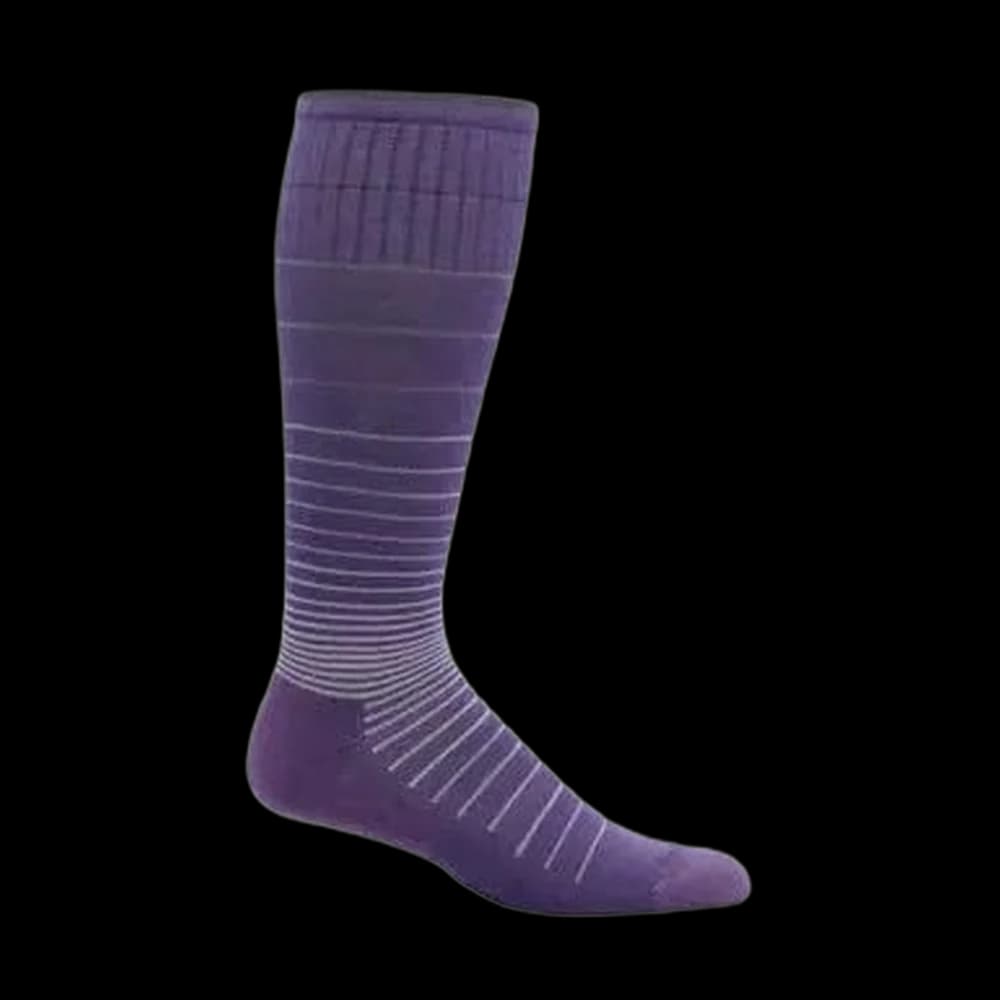
The Circulator is the answer when the problem is a hot, damp foot as much as a heavy leg. Sockwell publishes the blend as 32% merino wool, 31% bamboo rayon, 32% stretch nylon and 5% spandex, at 15-20 mmHg graduated compression with an ultra-light cushion underfoot, a seamless toe closure and a turn-welt top. Merino manages moisture and resists odor in a way an all-synthetic knit simply does not, which matters a great deal on consecutive nights.
The tradeoffs are laundry and money. Wool blends want a gentler cycle than a hospital sock usually gets, one pair costs what a whole budget multi-pack does, and Sockwell publishes shoe-size bands rather than calf measurements. Around $33.
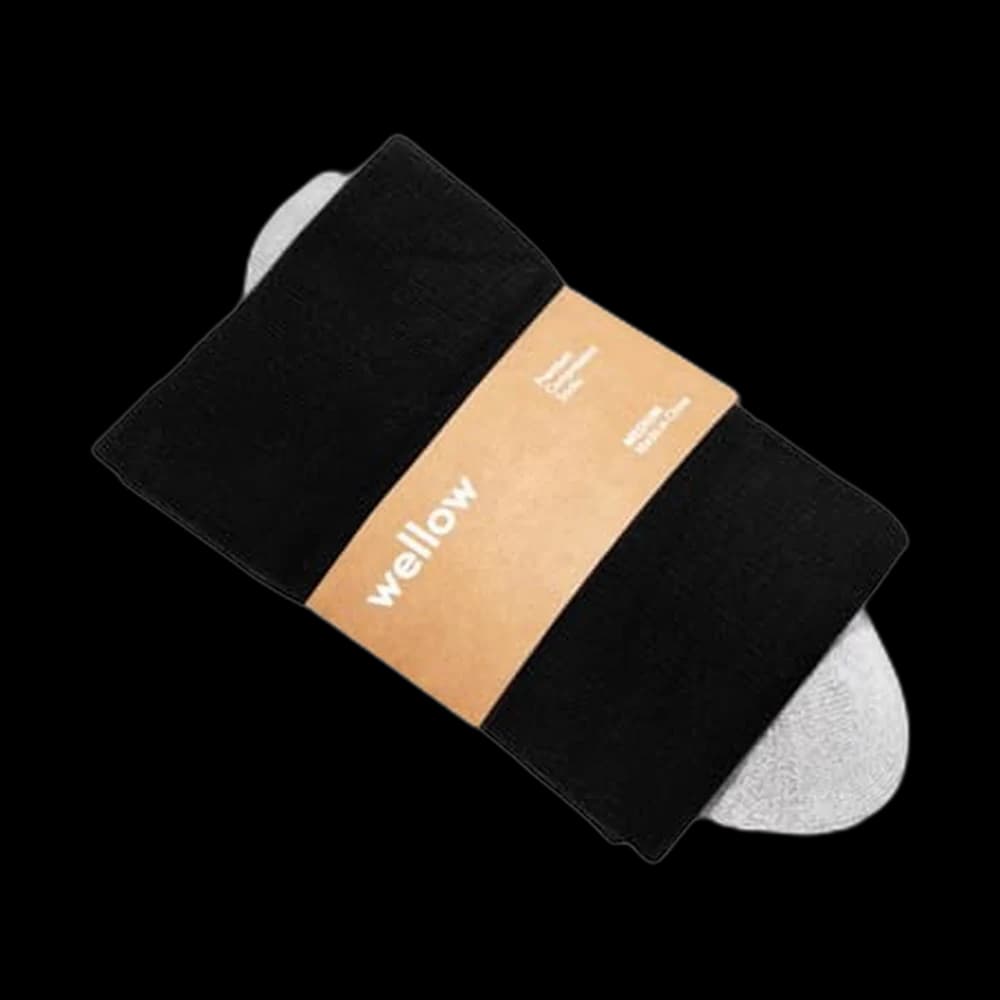
Wellow 18-25 mmHg Bamboo Compression Socks — the in-between tier
Check price on Amazon →Wellow sits at an unusual 18-25 mmHg, between the mild 15-20 class and the firm 20-30, in a viscose-from-bamboo knit with anti-odor treatment and a seamless toe and heel. It is a genuinely useful middle rung if 15-20 has not been enough but you do not want to fight a 20-30 sock on before a shift. Wellow also publishes real measurements, which we appreciate: an 11.5 inch fit stretching to 19 inches, with a 15 to 15.8 inch sock length.
Read the listing carefully, though. This particular SKU is the Regular calf build, not the wide-calf version the brand is known for, despite the family name. And 18-25 is a non-standard class, which makes it harder to line up against clinical guidance. Around $32 for one pair.
Graduated is the feature. mmHg is the dose.
Graduated means the sock is tightest at the ankle and eases as it goes up the leg. Comrad describes the effect as helping blood travel up from the feet toward the heart. A sock that squeezes evenly, or squeezes hardest at the top where the band is, is not doing that job at all. Check that the listing says graduated, not merely "compression."
For dose, 15-20 mmHg is the mild, most commonly used level — Comrad classes it for daily wear, work and recovery, and it is where the overwhelming majority of people on their feet all day should begin. Firmer exists and some people genuinely need it. It is also harder to get on, less pleasant to sit in, and not something to self-prescribe if you have a circulatory condition.
It is worth knowing that the research here is more mixed than the marketing suggests. A 2022 crossover trial in BMC Musculoskeletal Disorders looked at 39 workers who stand more than eight hours a day, nurses among them, and found that wearing medical compression stockings during work prevented leg swelling but did not reduce pain measured immediately after the shift. Swelling and pain are not the same outcome, and it is fair to expect help with one and be uncertain about the other.
Measure your calf. Actually measure it.
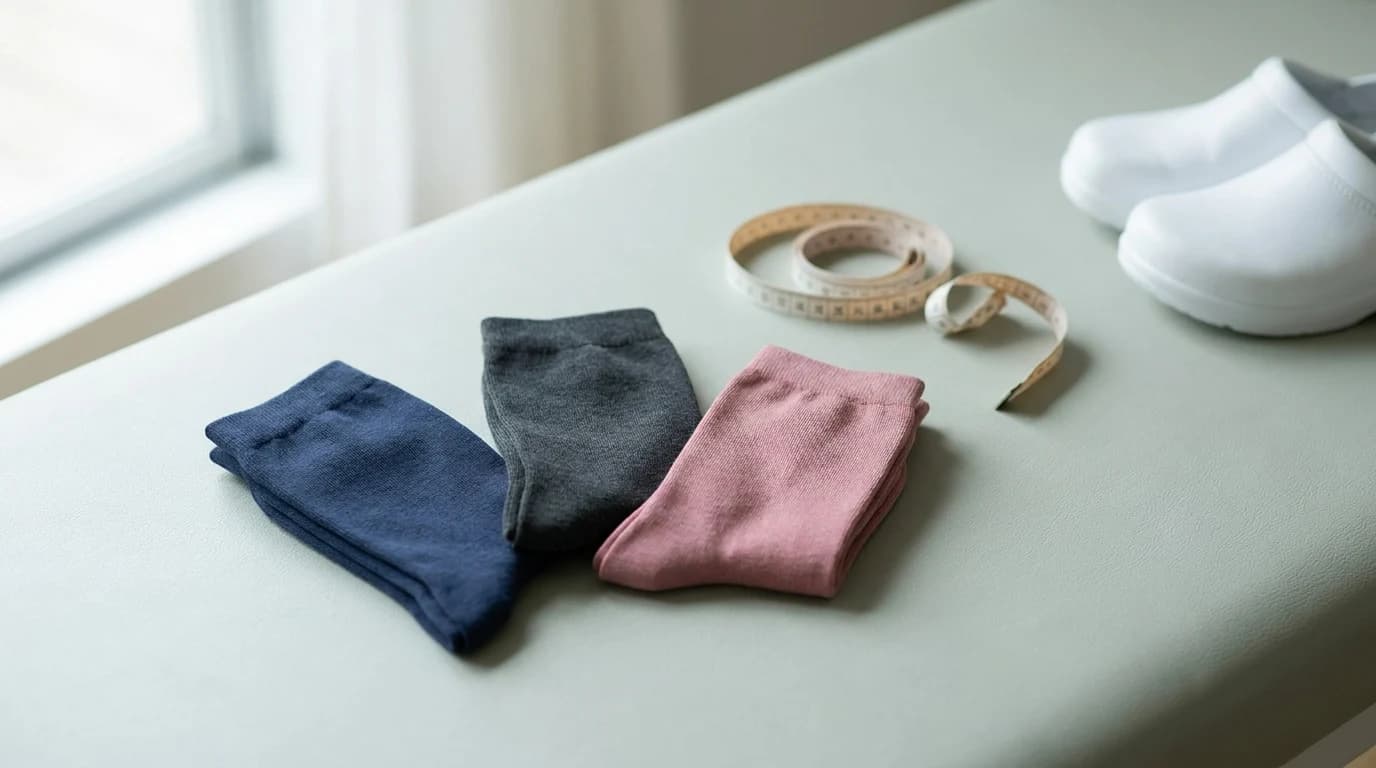
This is where most compression purchases quietly fail. Sizing is a function of shoe size and calf circumference together — Comrad's small, for instance, is charted at a 10 to 14 inch calf. A sock that is too small becomes a tourniquet at the band. A sock that is too large delivers no meaningful gradient at all and rolls down by lunch, which is the version most people experience and then conclude compression "doesn't work for me."
If your calf sits outside the standard chart, buy a purpose-built wide-calf model rather than sizing up the length. Sizing up lengthens the sock without fixing the band, so you get the bite at the top or no gradient anywhere. Wide-calf availability is a recurring frustration and the answer is always the same: buy the right build, not a bigger one.
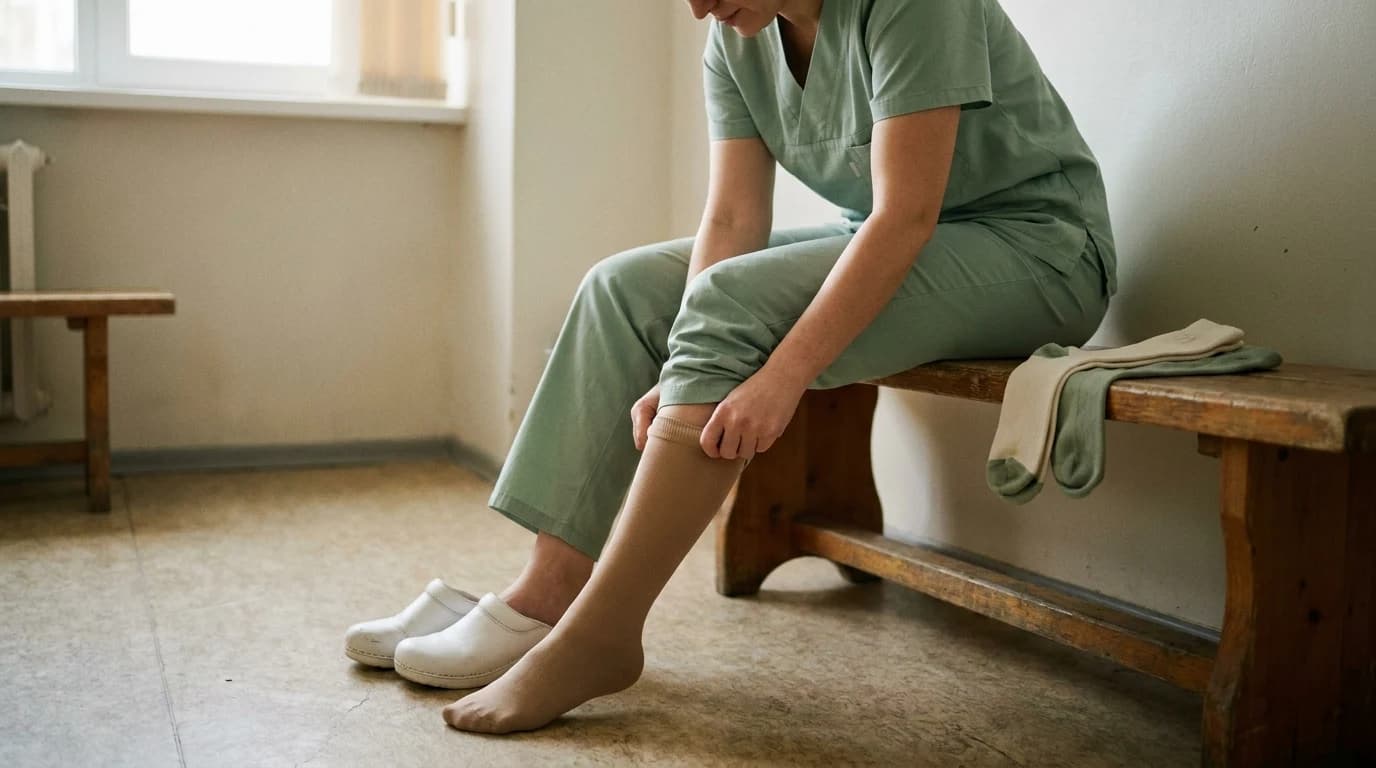
Two habits that cost nothing. Put them on in the morning, before you have been upright long — pulling compression onto an already-swollen leg is miserable and less effective. And skip ankle-length socks marketed as compression: graduated compression works by grading across the length of your leg, and an ankle sock has almost no leg to grade across.
Buy for the week, replace on feel
Compression only helps on the days you wear it. Either buy a multi-pack outright or build to four or five pairs so laundry never becomes the reason you skip a shift.
Replace them when the ankle band stops springing back. Elastic fatigues on a schedule that has nothing to do with how the sock looks, and a stretched-out compression sock is a normal sock with a marketing story attached. Ignore copper content entirely — the gradient and the fit are the parts doing the work.
If your legs are the problem, socks are one lever and the ground is the other. What you stand on and what is under your feet matter just as much, which is what our nursing shoes and insoles picks are for.
Cheaper alternative
Comrad Knee-High Compression Socks, 3-Pack ($101.99) is our #1 pick here. If that is more than you want to spend, this is a cheaper option in the same category — our researched verdict on it is below.
CHARMKING Compression Socks, 8 Pairs
Eight pairs of 15-20 mmHg graduated compression for less than the price of one premium pair, which makes this the pack that turns compression from an experiment into a habit. CHARMKING states the knit was upgraded to 85% nylon for 360-degree stretch, and the wide-calf knee-high cut suits more legs than most budget packs. The tradeoff is consistency: budget multi-packs vary pair to pair, they lose elasticity faster than premium knits, and there is no published calf-circumference chart beyond the size-chart image on the listing.
Your next step