Our #1 Pick
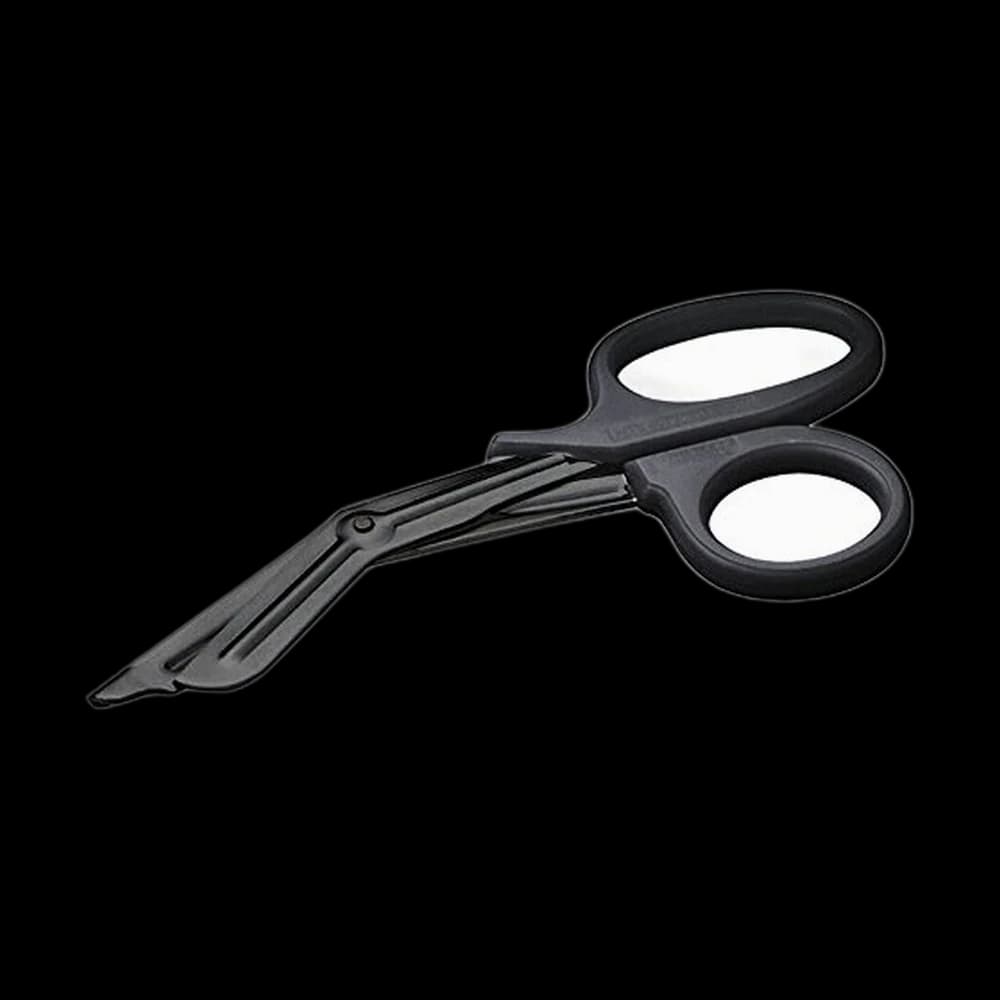
The pair that comes up over and over when floor and ED nurses talk about what actually cuts, without paying extrication-tool money. XShear builds them on hardened Japanese 420J2 stainless roughly twice the thickness of a standard shear, with a serrated lower blade, a patented blunt tip and a heavy centre bolt that does not loosen. The tradeoff is that this is a full-size fixed shear with no folding action and no pocket clip, so it lives in a holster or a leg pocket rather than clipped to a scrub top.
Key takeaways
- The XShear 7.5 in Extreme Duty is the best all-round pair: doubled-thickness hardened stainless, a serrated lower blade, and none of the rescue tools you will never use indoors.
- If shears disappear on your unit, a two-pack of budget fluoride-coated shears is the correct strategy, not a compromise.
- Almost the entire price premium on folding Raptors is non-cutting tools. Leatherman lists six on the Rescue, and inpatient nurses use one.
- Coatings exist so tape adhesive releases from the blade, not to make a cheap shear cut like an expensive one.
- If your unit requires processing between uses, plain stainless fixed shears can be autoclaved and a folding multi-tool cannot be treated the same way.
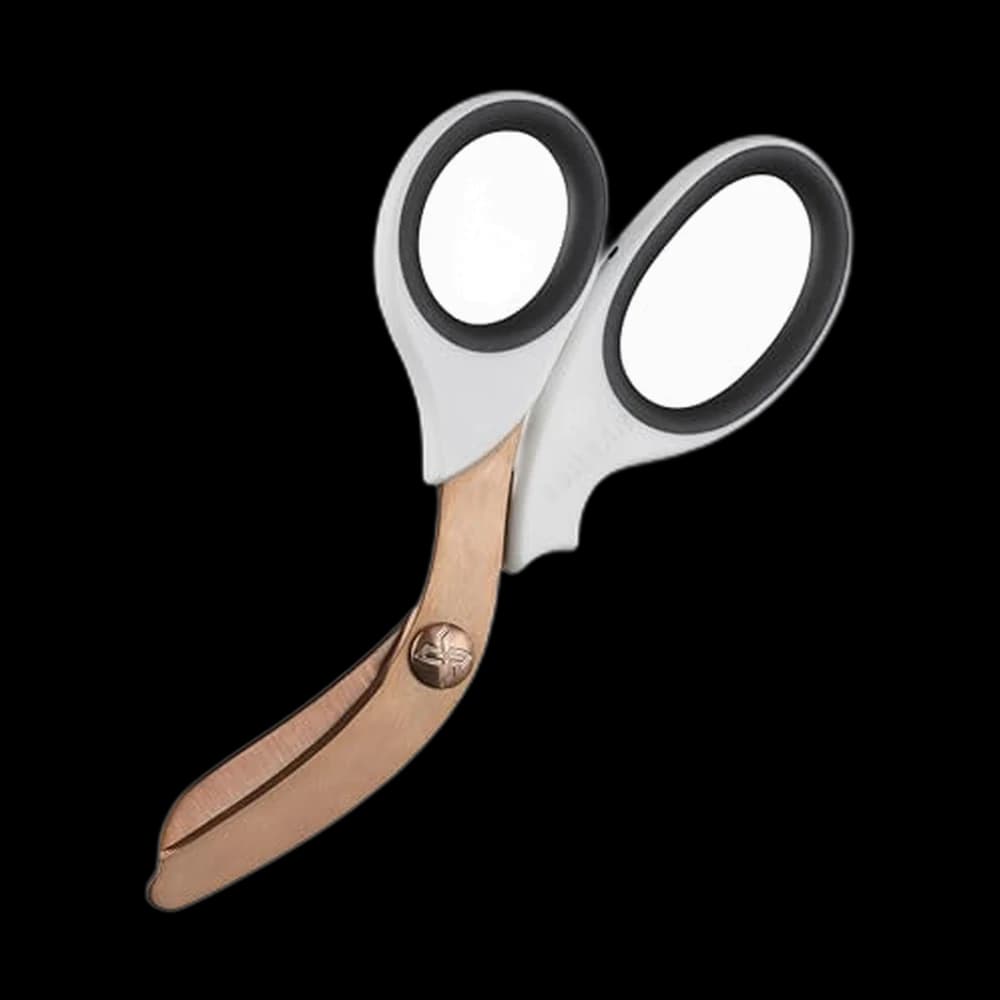
XShear 7.5 in Extreme Duty Trauma Shears
- Blades roughly twice the thickness of a typical trauma shear, on hardened 420J2 stainless
- Serrated lower blade that grips fabric instead of pushing it away
- Patent-pending blunt tip and curved blade profile, per XShear's listing, for a gentler edge near skin
Doubled-thickness hardened 420J2 stainless and a serrated lower blade mean these get through clothing and seams the way trauma shears are supposed to, without charging you for a glass breaker and strap cutter you will never use on a floor.
Side-by-side comparison
#1XShear 7.5 in Extreme Duty Trauma Shears Owner rating4.8(2,974) | #2Madison Supply 7.5 in Trauma Shears, 2-Pack Owner rating4.7(28,246) | #3ADC 320 Medicut EMT Shears, 7.25 in Owner rating4.8(331) | #4Leatherman Raptor Response Folding Shears Owner rating4.9(220) | #5Leatherman Raptor Rescue 6-in-1 Shears Owner rating4.9(117) | |
|---|---|---|---|---|---|
|  |  |  |  | |
| NurseComforts Score | |||||
| Verdict | Full-size fixed shears with doubled-thickness hardened stainless that cut clothing properly without extrication-tool pricing. | Two pairs of non-stick coated shears for under ten dollars, which is the only strategy that survives a unit where shears migrate. | A well-made single pair with unusually specific durability claims, and the sensible first shear for a student or new grad. | The Raptor configuration that makes sense indoors: folding locking shears with a ring cutter and oxygen wrench, minus the field-rescue extras. | Six tools in one folding body with a 25-year warranty, and mostly wasted weight if you work inside a building. |
| Price | ~$44.00Buy on Amazon Price checked Oct 10 | ~$8.99Buy on Amazon Price checked Oct 10 | ~$10.43Buy on Amazon Price checked Oct 10 | ~$39.95Discontinued Price checked Oct 10 | ~$79.95Buy on Amazon Price checked Oct 10 |
| Blade Material | Hardened Japanese 420J2 stainless, approximately 0.118 in thick | - | Super-hardened surgical stainless, tempered to Rockwell C56 | 420HC stainless steel | 420HC stainless with glass-filled nylon handles |
| Blade Length | 7.5 in overall; XShear lists a 2 in cutting area | 7.5 in overall shear length | 7.25 in overall shear length | 1.9 in shear length; 4.3 in closed, 7.25 in open | 1.9 in shear length; 5 in closed, 8 in open |
| Pack Count | 1 pair | 2 pairs | - | - | - |
| Blade Coating | - | Non-stick fluoride coating | - | - | - |
| Warranty | - | - | 2-year warranty (ADC states) | - | - |
| Weight | - | - | - | 5.5 oz (157 g) | 5.8 oz |
| Buyer sentiment | Quality Cutting Performance Sharpness Value for money Buyers praise quality, cutting performance, sharpness and value for money. Mixed feedback on weight. Based on 1,220 user mentions | Cutting Performance Sharpness Usefulness Appearance Buyers praise cutting performance, sharpness, usefulness and appearance. Mixed feedback on ease of use. Based on 3,687 user mentions | Cutting Performance Effectiveness Necessary Buyers praise cutting performance, effectiveness and necessary. Mixed feedback on value for money and durability. Based on 120 user mentions | Quality Functionality Build Quality Sharpness Buyers praise quality, functionality, build quality and sharpness. Mixed feedback on durability. Based on 51 user mentions | Quality Sharpness Buyers praise quality and sharpness. Based on 23 user mentions |
| Pros |
|
|
|
|
|
| Cons |
|
|
|
|
|
* Prices are approximate. Click Buy to see current pricing on Amazon.
Shears are the tool you reach for twenty times a shift and the one most likely to vanish by Thursday. That combination — high use, high loss — should drive the whole purchase, and it is the thing most buying advice in this category quietly ignores.
Our pick for most nurses is the XShear 7.5 in Extreme Duty Trauma Shears. They are full-size fixed shears built on hardened Japanese 420J2 stainless roughly twice the thickness of a standard pair, with a serrated lower blade that grips fabric instead of pushing it away. They cut clothing and heavy seams properly, and you are not paying for roadside extrication tools you will never touch on a med-surg floor.
If your unit is a place where shears simply evaporate, buy the Madison Supply 7.5 in Trauma Shears, 2-Pack instead and buy them repeatedly. That is not a downgrade. It is the correct response to the actual failure mode.
Our top picks
If you work on an ambulance rather than a unit, weigh the Leatherman Raptor Rescue higher: its strap cutter and glass breaker are field tools, which is exactly why they rarely earn their price on a hospital floor. Our EMT and paramedic gear list covers the rest of the kit.
1. XShear 7.5 in Extreme Duty Trauma Shears — best overall
Check price on Amazon →These come up again and again when floor and ED nurses talk about what actually cuts. The blades are about 0.118 in thick, roughly double a typical trauma shear, with a serrated lower edge, a blunt patented tip and a heavy centre bolt that does not work loose over a year of use. The colourway we link is White & Rose Gold, because the black-titanium versions were backordered at our last check; that listing does not state a blade coating, and the colour does not change the steel. Soft-touch inner handles stay controllable with gloves on, and XShear states a 90-day money-back guarantee plus a five-year warranty.
The honest tradeoff: at around $44 this is a single pair costing several times what budget shears do, so losing it genuinely stings. It is also a fixed full-size design with no pocket clip and no fold, so it rides in a holster or a leg pocket rather than clipping to a scrub top. And the listed cutting area is only 2 inches, so a long cut takes several strokes.
2. Madison Supply 7.5 in Trauma Shears, 2-Pack — best budget strategy
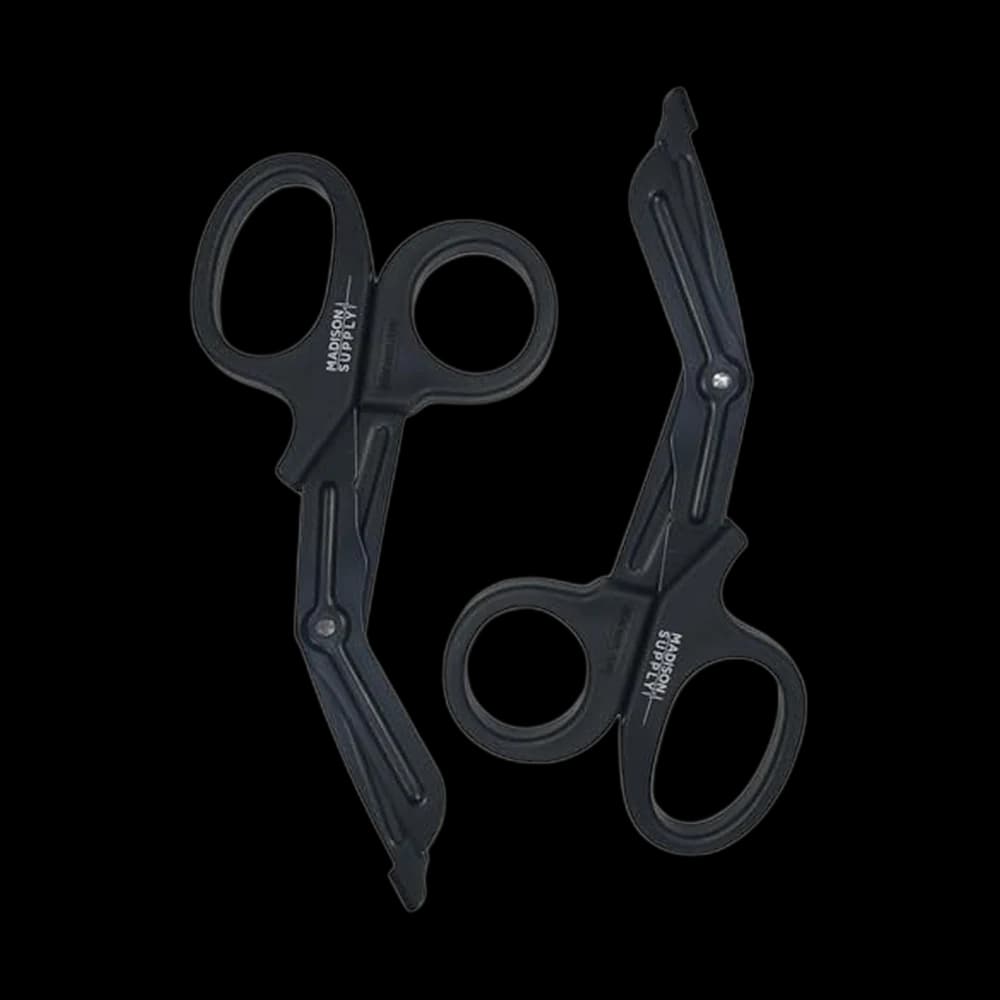
Check price on Amazon →Two pairs of fluoride-coated stainless shears for under $10. The non-stick coating is the entire point: tape adhesive wipes off instead of building into a gummy ridge on the blade. Madison Supply states they are autoclavableautoclavableAble to withstand steam sterilisation at autoclave temperature and pressure without deforming. It appears on some clogs, shears and instrument specs. It describes material tolerance only - what actually gets processed, and how, is set by facility policy. to 290F, and the green-and-black handles are distinctive enough to spot on a shared counter.
The tradeoff is edge life. Budget coated shears dull noticeably faster than premium steel, and there is no warranty or parts program to fall back on. Treat these as a consumable. They handle tape, gauze and light clothing well and struggle on thick denim seams.
3. ADC 320 Medicut EMT Shears, 7.25 in — best first pair
Check price on Amazon →The sensible starting shear for a student or new grad, from a manufacturer that makes diagnostic instruments rather than novelty gear. ADC states super-hardened surgical stainless tempered to Rockwell C56, one serrated edge, a bandage safety tip and a rivet rated to 88 kg — specific claims that budget shears usually do not make. Fully autoclavable to 143C per ADC, with a two-year warranty, at around $10.
The tradeoff is that it is a single pair, not a multi-pack, so a replacement costs you something. The contoured polypropylene handles are comfortable but less grippy than overmoulded soft-touch ones.
4. Leatherman Raptor Response Folding Shears — discontinued
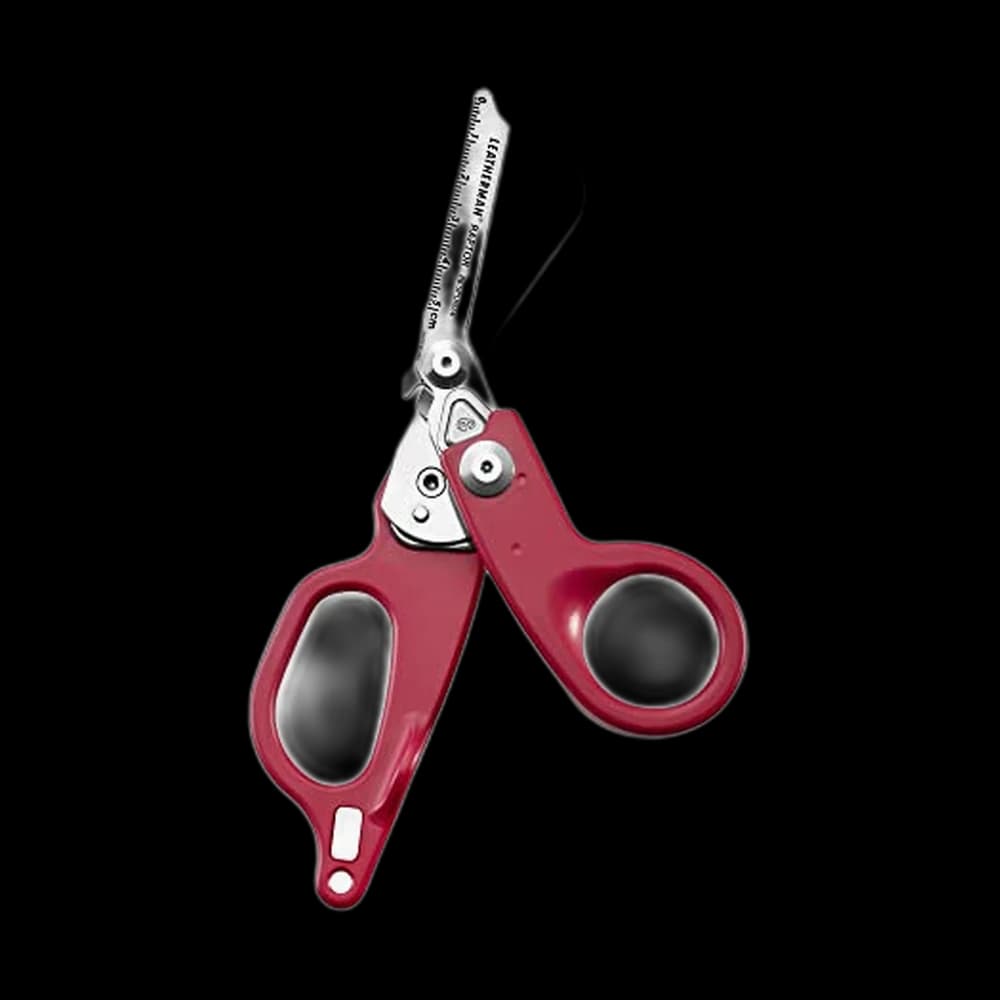
DiscontinuedUpdate, September 2026: Leatherman no longer lists the Raptor Response (its product page now redirects to the Raptor Rescue), and our affiliate retailer shows it unavailable with no restock date. We have kept the notes below because owners still carry it, but there is nothing to buy at our link.
This was the Raptor with the field-rescue extras trimmed back, which is the version that made sense inside a building. Folding 420HC stainless shears that lock open, plus a ring cutter, a ruler and an oxygen tank wrench, in a 4.3-inch closed package with a removable pocket clip. Leatherman's 25-year warranty and Portland manufacturing put it in a different ownership category from a disposable shear.
The tradeoff is the 1.9-inch shear length. It cuts clothing fine, but it takes noticeably more strokes than a full-size fixed shear across a long run of fabric. At 5.5 oz it is heavy for a pocket tool by hour eleven, and it costs enough that you will hesitate before setting it down in a patient room — which is exactly the wrong instinct in an emergency.
5. Leatherman Raptor Rescue 6-in-1 Shears — for field and transport work
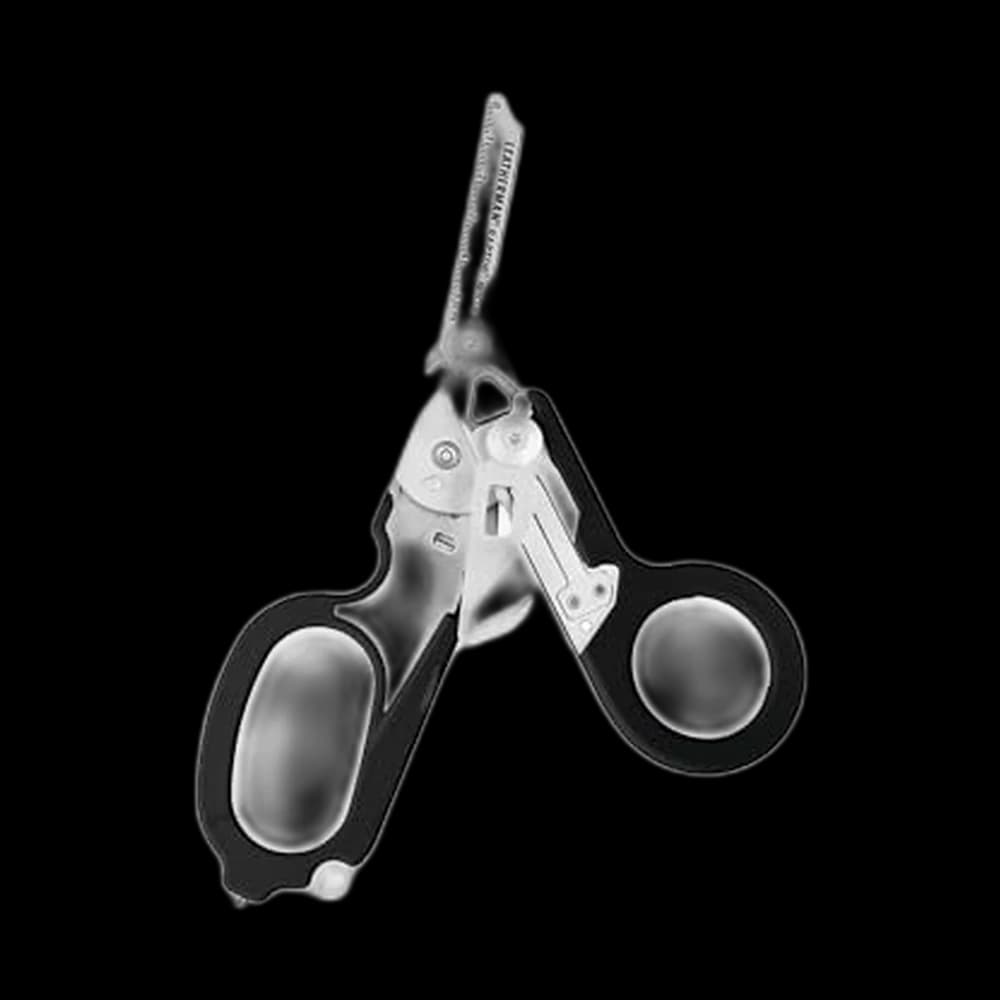
Check price on Amazon →Six tools in one folding body: 420HC shears, a strap cutter, a ring cutter, a carbide glass breaker, an oxygen tank wrench and a ruler, with a utility holster that locks the shears in upside down for a fast draw. Leatherman states a 25-year warranty.
The tradeoff is blunt: if you work inpatient, you are carrying 5.8 oz and paying roughly $80 for a glass breaker you will never use. It earns its place on transport, flight and field response, and almost nowhere else.
What actually decides this for a nurse
Decide whether you are a floor nurse or a field nurse before you spend anything. Almost every price difference in this category comes from tools that are not the scissors. Leatherman states the Raptor Rescue carries six tools; inside a building you will regularly use exactly one of them. That single realisation moves most nurses from an $80 purchase to a $10 or $44 one with no loss of capability.
Blade length and leverage do the work. The 7.25 to 7.5 inch range is standard for a reason: enough leverage to get through a seam, short enough to live in a scrub pocket. Anything shorter is effectively a bandage scissor, which is a different tool for a different job. And heavy trauma shears are genuinely clumsy on the thing nurses cut most — tape, tubing and gauze. Many nurses end up carrying both a trauma pair and a small bandage scissor, and that is a reasonable outcome rather than a failure of shopping.
Coatings are about stickiness, not sharpness. Fluoride and titanium coatings exist so adhesive releases from the blade instead of gumming it. They do not make a cheap shear cut like an expensive one, and they wear off at the cutting edge first.
Autoclavability is a real dividing line. Plain stainless fixed shears can be processed; both the Madison Supply pair and the ADC 320 state 290F. A folding multi-tool with a pivot screw, a locking mechanism and a carbide insert cannot be treated the same way, and Leatherman advises against disassembling the tool for cleaning. If your unit's infection control policy requires processing between uses, that decides the question before you compare anything else.
Buy for the loss rate, not the fantasy. If your shears last four months on your unit, a pair costing eight times as much needs to survive three years to break even — and it will not, because it will be borrowed at a code and never come back. Mark whatever you buy: colour, tape, engraving, nail polish on the handle. Anything that makes a pair identifiably yours across a room is a cheaper intervention than upgrading. The same logic applies to the rest of your pocket kit, from penlights to your badge reel.
The short version
Buy the XShear if you want one good pair that cuts everything and you will keep track of it. Buy the Madison Supply two-pack if your unit eats shears. Buy the ADC 320 if you are starting out and want a solid autoclavable pair for the price of a sandwich. Buy a Raptor only if you work outside a building.
Cheaper alternative
XShear 7.5 in Extreme Duty Trauma Shears ($44.00) is our #1 pick here. If that is more than you want to spend, this is a cheaper option in the same category — our researched verdict on it is below.
ADC 320 Medicut EMT Shears, 7.25 in
A plain, well-made single pair from a diagnostic instrument manufacturer, and the sensible first shear for a student or a new grad. ADC states the blades are super-hardened surgical stainless tempered to Rockwell C56 with one serrated edge and a bandage safety tip, and the rivet is rated to 88 kg, which is a specific claim most budget shears do not make. The tradeoff is that it is one pair with a two-year warranty rather than a multi-pack, so losing it costs you a replacement.
Worth the upgrade
XShear 7.5 in Extreme Duty Trauma Shears ($44.00) is our #1 pick here. If your budget stretches further, this is a pricier option in the same category — our researched verdict on it is below.
Leatherman Raptor Rescue 6-in-1 Shears
Six tools in one folding body: 420HC shears, a strap cutter, a ring cutter, a carbide glass breaker, an oxygen tank wrench and a ruler, with a utility holster that lets the shears lock in upside down for fast draw. Leatherman backs it with a 25-year warranty, which puts it in a different category of purchase from a ten-dollar shear. The tradeoff is honest and simple: if you work inpatient, you are carrying weight and paying for a glass breaker you will never use.
Your next step