
Key takeaways
- Separate the fixed block from the live block. Code status, allergies, access and diagnosis get written once at report and never touched again; vitals, drips, results and tasks need the messy space underneath.
- Pick your engine by unit. Time-driven floors (med-surg, tele) run on an hour strip across the top. Critical care runs on a head-to-toe systems block, with hourly boxes demoted to titration.
- SBAR belongs in a corner, not on the whole page. Four blank lines per patient that you fill in before you dial, so the R forces you to name what you are actually asking for.
- The sheet is what makes report repeatable. If the systems run head to toe on the page, you give report head to toe and stop forgetting the skin.
- Most nurses fold a printed sheet into quarters and that is the entire system. A board is worth buying for three reasons only: no desk space, closing the page in a patient room, and numbers you rewrite hourly.
A brain sheet is the one piece of paper a nurse carries all shift: room by room, it holds the things you cannot afford to look up twice. Name and room, code status, allergies, the admitting diagnosis and hospital day, lines and drips, telemetrytelemetryContinuous remote cardiac-rhythm monitoring, and by extension the unit where monitored patients are grouped. Relevant to gear because telemetry assignments mean frequent pocket-to-pocket carry of a monitor pack - the reason pocket count, pocket depth and a secure clip come up so often in reviews from those units. rhythm, the meds that actually have timing consequences, what you are waiting on, and a to-do column you cross off. It is not a legal record and it is not a care plan. It is working memory moved onto paper, because a twelve-hour shift12-hour shiftThe three-shifts-per-week pattern common in hospital nursing, and the interval most of our footwear, sock and hydration scoring is framed around. It matters for gear because foot swelling, foam compression and insulation hold time all behave differently over twelve hours than over eight. with four to six patients produces far more small facts than anyone holds reliably at hour ten.
The short answer on structure: most floor nurses run a by-hour strip across the top of each patient block and a by-system or by-line block underneath, at a density of one patient per quarter-page on a heavy assignment and one patient per half-sheet or full sheet in critical care. Med-surg and telemetry work is time-driven, so the hour strip carries the sheet. ICU work is system-driven, so the systems block carries it. Nearly everyone reserves a corner for the SBAR-flavored version of the patient — the two sentences you would say out loud if you had to call a provider at 3 a.m. Build the sheet around which of those three engines your unit actually runs on, and it stops being a chore.
What actually belongs on a brain sheet?
Split the page into two kinds of information, because they behave differently.
The fixed block is written once, at report, and almost never changes: room, name, age, code status, allergies, diagnosis and day of admission, provider team, isolation status, mobility and diet, access (peripheral, PICC, central, Foley), and a one-line history that explains why this patient is the way they are. This is the block that answers a question from a family member, a rapid response team or a covering nurse without you opening the chart.
The live block changes all shift: vitals and their frequency, blood sugars, drips and rates, pain scores, intake and output, the results you are waiting on, and the tasks with a clock attached. This is the part that needs room to be messy.
A sheet fails when those two get mixed together, because the fixed block gets buried under scribbles by 1100 and you end up re-reading your own handwriting to find a code status. Draw a line. Keep the fixed block at the top or in a left-hand column and never write anything live in it.
By-hour, by-system, or SBAR-flavored?
The by-hour grid
Draw a strip of narrow columns labeled with your shift hours — 0700 through 1900, or 1900 through 0700 — across the top of each patient block. Everything with a time goes in its column: scheduled meds, the 1000 antibiotic, accuchecks, vitals, the ordered ambulation, the 1600 dressing change. You are not writing sentences, you are writing a symbol in a box and slashing it when it is done.
The strength is that an unfilled box at 1400 is visible from across the room, which is the entire point. The weakness is that it tells you nothing about why a patient is here. Time-driven units live on this: med-surg, telemetrytelemetryContinuous remote cardiac-rhythm monitoring, and by extension the unit where monitored patients are grouped. Relevant to gear because telemetry assignments mean frequent pocket-to-pocket carry of a monitor pack - the reason pocket count, pocket depth and a secure clip come up so often in reviews from those units., post-op floors, anywhere your failure mode is a missed task rather than a missed trend.
The by-system column
Underneath (or instead), stack short labeled rows in head-to-toe order: Neuro, Cardiac/Tele, Resp, GI/GU, Skin/Wounds, Lines & Drips, Labs. You fill in only the abnormals and the things you are trending. Baselines get a checkmark or a dash.
The strength is that it maps directly onto how you assess a patient and how you give report — you are reading down the page in the same order you say it out loud. The weakness is that it consumes vertical space fast, so it does not scale to six patients on a quarter-page. Critical care and step-down nurses tend to run this as the main body of the sheet with a narrow hour strip clipped on for drips and titration.
The SBAR-flavored corner
SBAR is a communication structure, not a documentation structure, so it works badly as the whole sheet and well as a box in the corner. Reserve a few lines per patient headed S / B / A / R and keep them empty until something changes. When you are about to call a provider, you write the four lines first, then dial. Nurses who do this consistently say the call gets shorter and the ask gets clearer, because "R" forces you to name what you actually want.
What changes between med-surg, tele and ICU?
Med-surg, four to six patients. Density is the constraint. One quarter-page per patient, hour strip on top, three or four system lines underneath, and a to-do column down the right edge. Pre-print the labels; you do not have time to draw a table at 0700. The fields that earn their space here are code status, mobility, diet, access, last bowel movement, and the pending discharge tasks, because those are the questions you get asked most and the ones that hold up a bed.
Telemetry and step-down. Same skeleton, plus a rhythm line and a heart-rate trend for each patient, plus a column for the cardiac meds where holding parameters matter. Add a box for the last set of enzymes or the last time the monitor tech called you. Telemetry brains tend to be med-surg brains with one extra system promoted to the top.
ICU, one to two patients. Now the sheet inverts. A full half-page or full page per patient, systems block dominant, and a dedicated area for drips: name, concentration, current rate, titration parameter and the goal. A vent block (mode, settings, last gas). A running I&O tally, because you will be asked for it. Hourly boxes still exist, but they are there for titration and hourly assessments rather than med passes. ICU brains are also the ones most often rewritten mid-shift, because a patient that changes character makes the morning sheet obsolete.
How does a brain sheet change report?
Two ways, and the second one is the one people underestimate.
Getting report, a pre-printed sheet stops you writing on a blank page while someone talks quickly. You are filling slots, so you notice the empty ones — nobody told you the code status, nobody told you the access. That noticing is the whole value.
Giving report, the sheet becomes your script. If your systems run head to toe on the page, you give report head to toe, every time, and you stop forgetting the skin. A common habit on floors that run 12s is color-coding by day — one ink color per day of a stretch, so you can see at a glance what changed since yesterday and what has been sitting for four days. Another is leaving the left margin blank so the oncoming nurse can annotate your sheet while you talk, then take a photo of nothing and hand the paper straight back to be shredded. Whatever you write on stays inside the unit and goes in the shred bin at the end of the shift; a brain sheet is a live PHI document, not a souvenir.
Do you need a clipboard, or is folded paper fine?
Honest answer first: most nurses fold a printed sheet into quarters, shove it in a scrub pocket, and that is the whole system. It costs nothing, the folds make natural patient boundaries, and paper survives being sat on. If someone tells you that you need to buy something to have a brain, they are selling something.
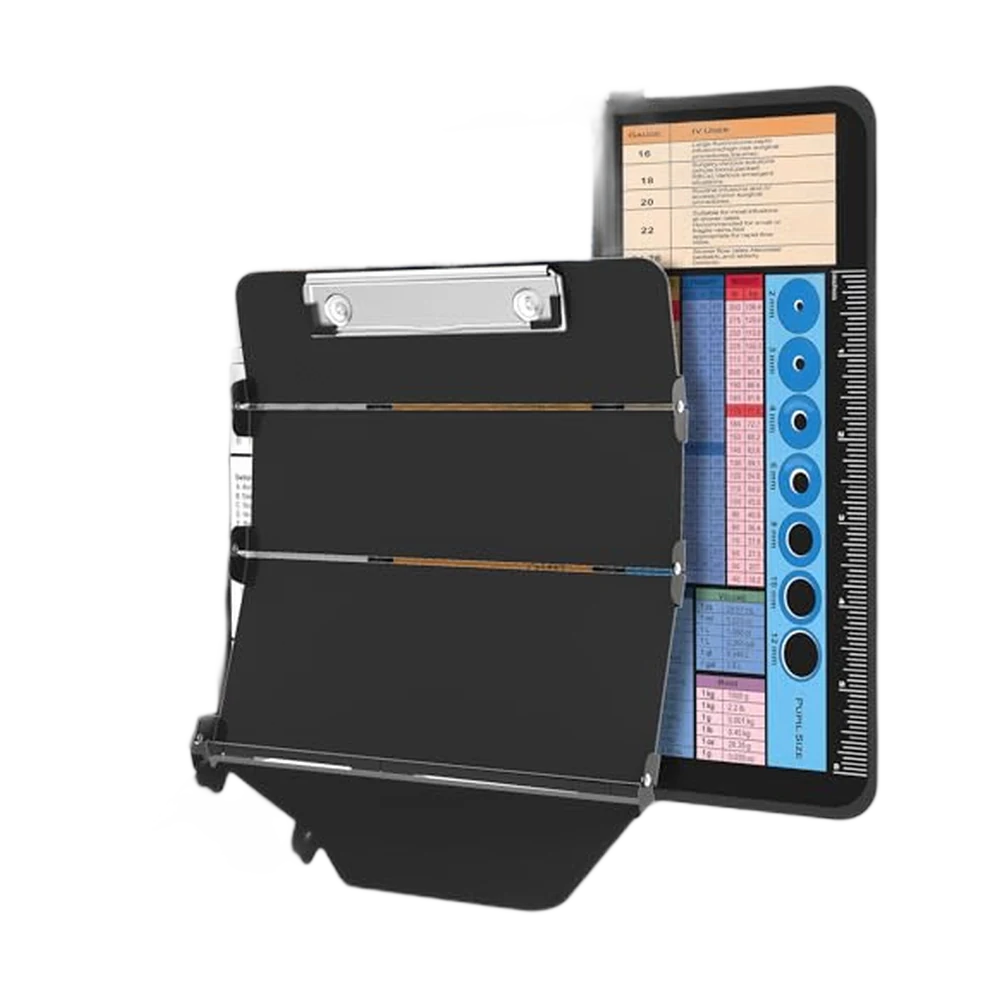
A board earns its place in three specific situations. The first is no desk: if your unit has no reliable flat surface and you chart standing at a WOW or on a windowsill, a folding aluminum board is a writing surface you always have. The second is hiding the page: a bi-fold like the WhiteCoat Clipboard, Nursing Edition (Bi-Fold) closes over your patient list when you walk into a room, which is a real privacy improvement over a folded sheet clipped to your waistband — it runs in the mid-$20s and prints lab and EKG reference charts where your hand already is. Students carrying a fatter stack often prefer a four-panel board like the NECEG 4-Fold Nursing Clipboard, in the mid-teens, which claims 50-plus sheets of capacity. The third is numbers that change constantly: a wearable dry-erase board — the Pocket Dry Erase Board & Badge Reel Set, 50 pc bundles 36 of them with reels and markers for around $13 — is genuinely better than paper for room numbers, callbacks and a drip rate you are re-writing hourly, and it wipes clean at shift change with nothing to shred. It smudges against scrubs, so treat it as a scratchpad, not the handoff document.
If you want the full comparison of folding versus storage boards, we went through the category in our nursing clipboard guide, and the full set is on the nursing clipboards and brain boards page. The other thing worth clipping to it is a reel that actually retracts — see badge reels.
The honest close
There is no perfect brain sheet, and the nurses with the best ones have all thrown several away. Steal a layout from someone on your unit whose report you like, use it for a full stretch, then cross out the fields you never filled in and add the ones you kept writing in the margin. Do that twice and you will have a sheet that fits your unit better than anything you could download — which is the actual reason experienced nurses keep a stack of their own in a locker rather than buying one.
| Unit | Patients | Page per patient | Engine that carries the sheet | Fields that earn their space |
|---|---|---|---|---|
| Med-surg and post-op | 4 to 6 | Quarter page | By-hour grid across the top; failure mode is a missed task | Code status, mobility, diet, access, last bowel movement, pending discharge tasks |
| Telemetry and step-down | 4 to 6 | Quarter page | Same hour grid, with one system promoted to the top | Rhythm line, heart-rate trend, cardiac meds with holding parameters, last enzymes |
| ICU | 1 to 2 | Half to full page | By-system block; hourly boxes exist for titration, not med passes | Drip name, concentration, rate, titration parameter and goal; vent mode, settings and last gas; running I and O |
| Any unit, corner box | All | A few lines | SBAR, left empty until something changes | S, B, A and R written out before you dial the provider |
Products discussed in this article
Every item named above, with the NurseComforts Score and the price we last recorded. Prices at the affiliate retailers we link change constantly.
NECEG 4-Fold Nursing Clipboard
90 · Score$14.24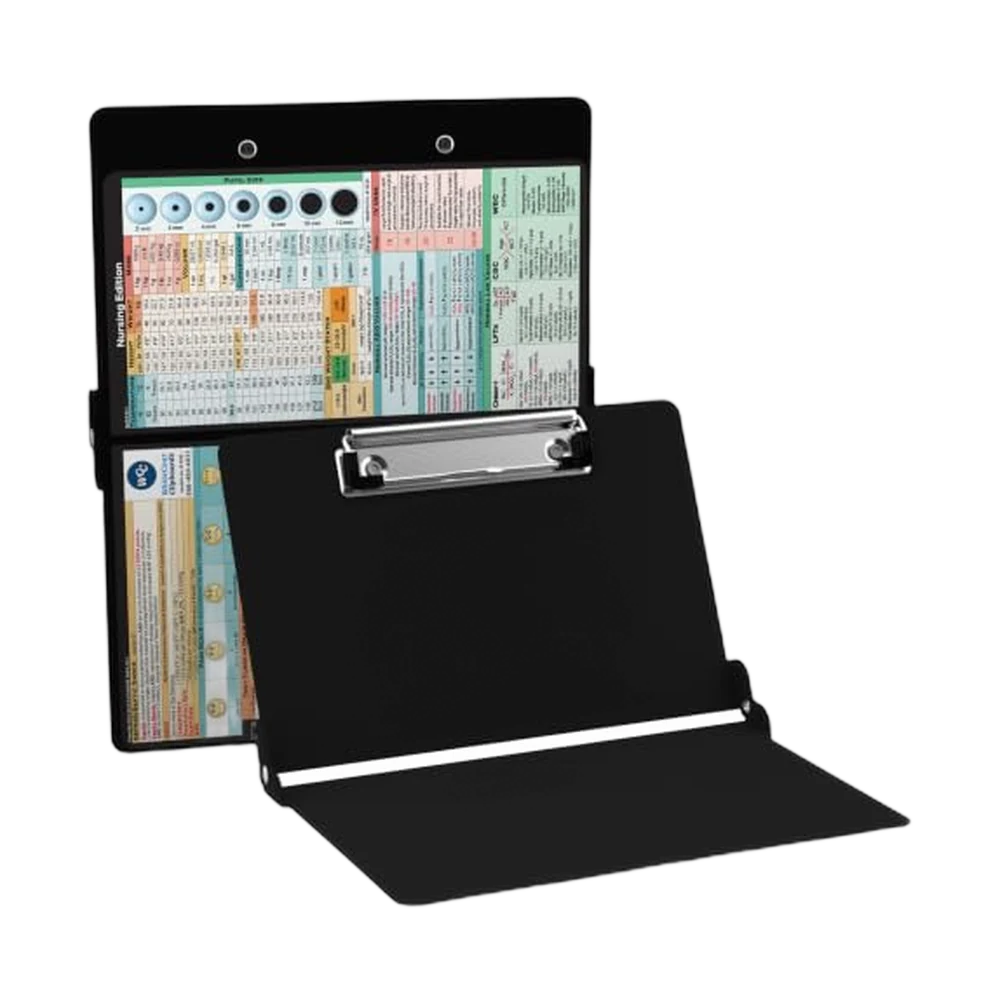
WhiteCoat Clipboard, Nursing Edition (Bi-Fold)
82 · Score$26.95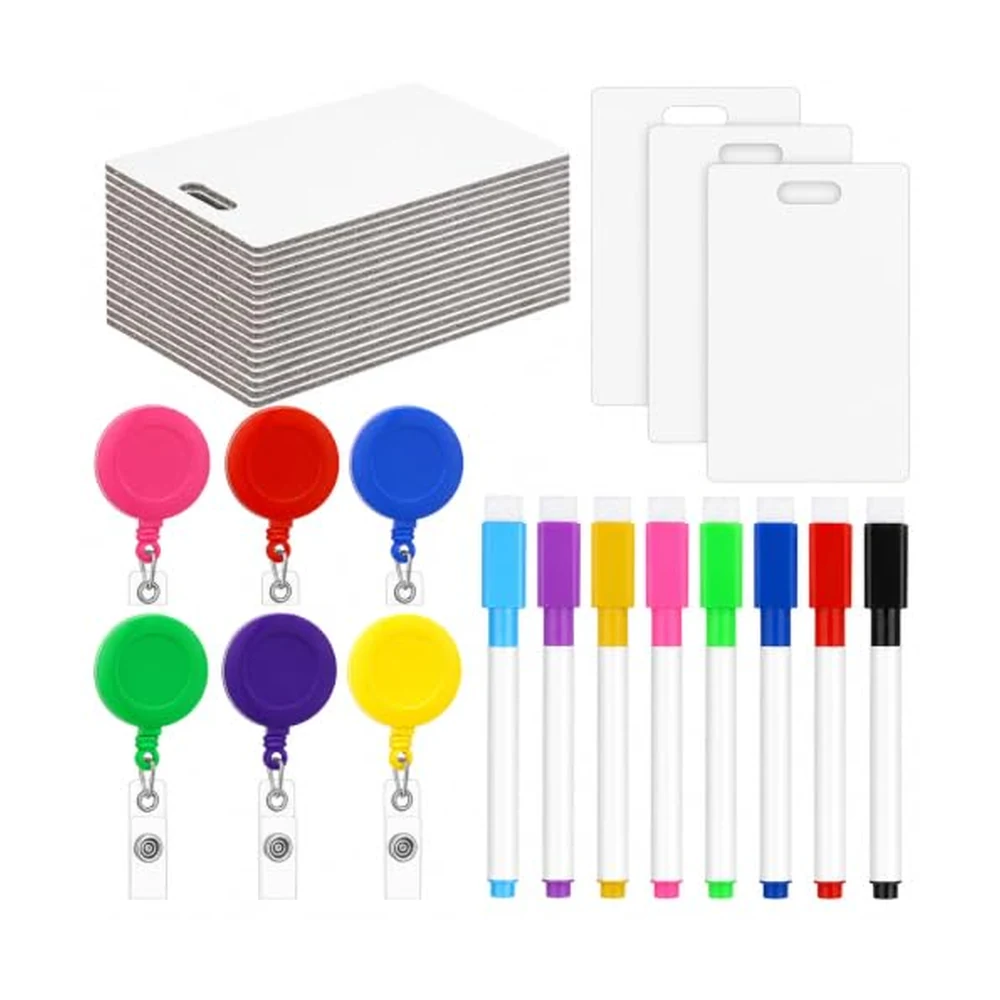
Pocket Dry Erase Board & Badge Reel Set, 50 pc
70 · Score$12.99
Your next step