Our #1 Pick
A Key-Bak-built reel sold under the Specialist ID name, pairing a 24-inch Kevlar cord with a 360-degree swivel metal alligator clip. That pairing is the point: the swivel lets the cord leave the housing straight no matter which way you yank the badge at a reader, which is what stops the fraying that kills cheap reels. The tradeoff is that you are paying single-reel money for one reel, and the metal clip rules it out for MRI work.
Key takeaways
- The Specialist ID Key-Bak Sidekick is the pick if you badge into doors and machines all shift: a 24-inch Kevlar cord and a 360-degree swivel alligator clip, which is the pairing that stops fraying at the housing.
- Cord material and swivel matter more than housing material. A swivel lets the cord leave the housing straight no matter how you yank the badge at a reader.
- Treat reels as a consumable. Four of our five picks are sold in packs of 2, 10 or 20, and the 20-pack is what makes throwing away a sticky reel an easy decision.
- MRI is a hard specification, not a preference. The Specialist ID MRI Safe reels are stated as plastic and non-ferrous, but that is a manufacturer statement rather than a labeled ASTM F2503 rating, so confirm with your MR safety officer.
- The badge is the part nobody cleans. A study that swabbed 200 healthcare worker ID badges at a tertiary center in Riyadh found 37 percent contaminated, mostly with low-virulence skin staphylococci, and the rate was higher among staff who never cleaned theirs.
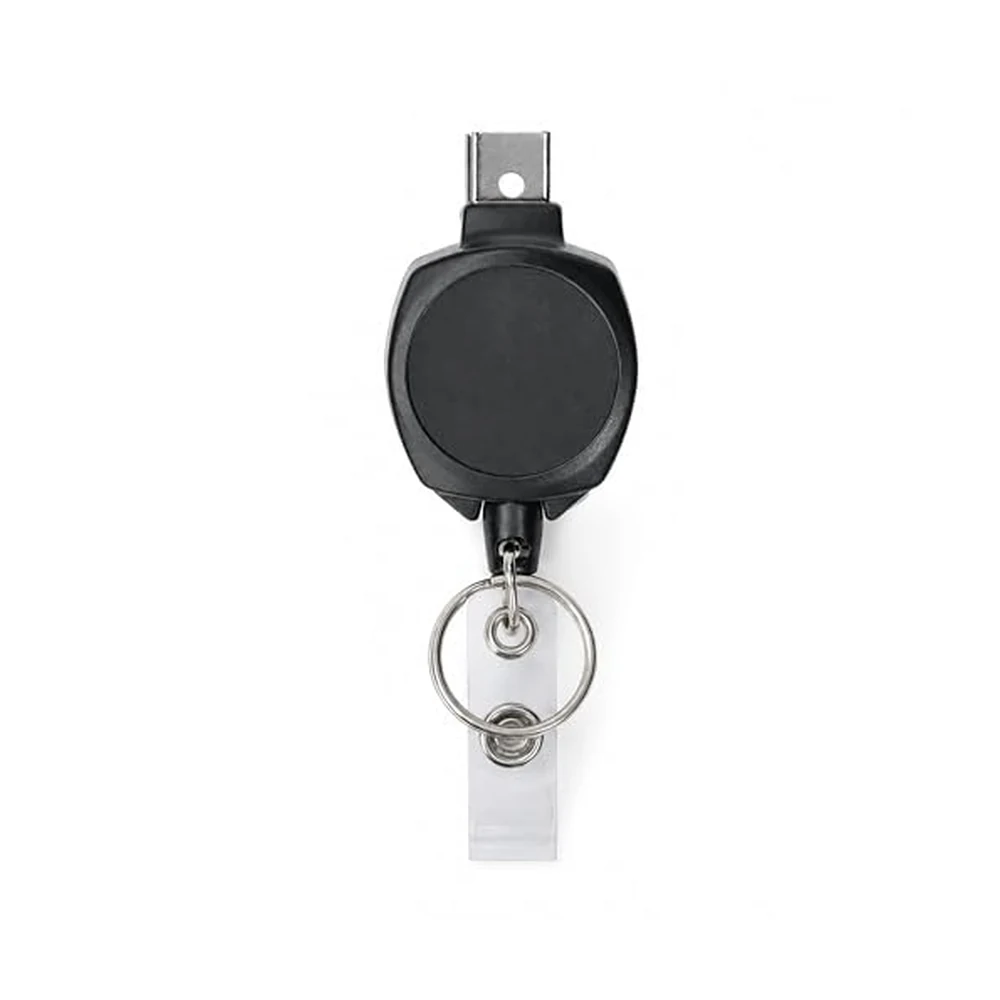
Specialist ID Key-Bak Sidekick Badge Reel
- 24-inch cord is genuine DuPont Kevlar with a braided polyester jacket, not a bare polyester string
- 360-degree swivel bulldog clip reduces friction on the cord regardless of pull angle, which is the main fraying cause
- Alligator clip with teeth grips a v-neck scrub, a pocket edge or a waistband without needing a belt
The Kevlar cord and 360-degree swivel clip attack the actual failure mode: cord fraying where it enters the housing. The toothed alligator clip also grips a v-neck scrub, which a slide clamp does not.
Side-by-side comparison
#1Specialist ID Key-Bak Sidekick Badge Reel Owner rating4.3(2) | #2QREEL Heavy Duty Metal Badge Reel, 2-Pack Owner rating4.5(798) | #3Specialist ID MRI Safe Badge Reels, 2-Pack Owner rating4.7(777) | #4Uniclife Carabiner Badge Reel, 10-Pack Owner rating4.6(11) | #5MIFFLIN-USA Retractable Badge Reels, 20-Pack Owner rating4.6(281) | |
|---|---|---|---|---|---|
|  |  |  |  | |
| NurseComforts Score | |||||
| Verdict | A Kevlar cord paired with a 360-degree swivel alligator clip, which is the combination that survives constant badging. | A zinc-alloy housing with a stainless wire rope, built to carry keys rather than just a plastic card. | The one specification that decides whether an accessory crosses into a scanner suite or gets stripped at the door. | The longest reach here at 31.5 inches, so a low or awkwardly mounted reader does not mean unclipping anything. | Twenty plain black reels in a box, which turns a sticky reel into something you throw out instead of tolerate. |
| Price | ~$15.99Buy on Amazon Price checked Oct 10 | ~$13.99Buy on Amazon Price checked Oct 10 | ~$9.99Buy on Amazon Price checked Oct 10 | ~$27.99Buy on Amazon Price checked Oct 10 | ~$7.99Buy on Amazon Price checked Oct 10 |
| Clip Type | 360-degree swivel metal alligator clip | Carabiner plus belt clip with a stainless key ring | 360-degree swivel back clip with no-flip card clamp | Hard carabiner clip with a metal key ring | Belt-loop slide clamp with a stainless hook |
| Cord Length | 24 inches | 23.6 inches | 22.5 inches | 31.5 inches | Over 2 feet, per MIFFLIN |
| Cord Material | DuPont Kevlar with a braided polyester jacket | - | Dyneema #10 PE | - | - |
| Pack Count | - | 2 | - | 10 | 20 |
| Buyer sentiment | - | Appearance Cable Strength Durability Clip Durability Buyers praise appearance and cable strength. Mixed feedback on quality and value for money. Some flag durability and clip durability. Based on 367 user mentions | Quality Mri Safe Suitability Durability Buyers praise quality, mri safe and suitability. Mixed feedback on magnetic attachment and value for money. Some flag durability. Based on 193 user mentions | - | Quality Color Value for money Buyers praise quality, color and value for money. Mixed feedback on durability. Based on 37 user mentions |
| Pros |
|
|
|
|
|
| Cons |
|
|
|
|
|
* Prices are approximate. Click Buy to see current pricing on Amazon.
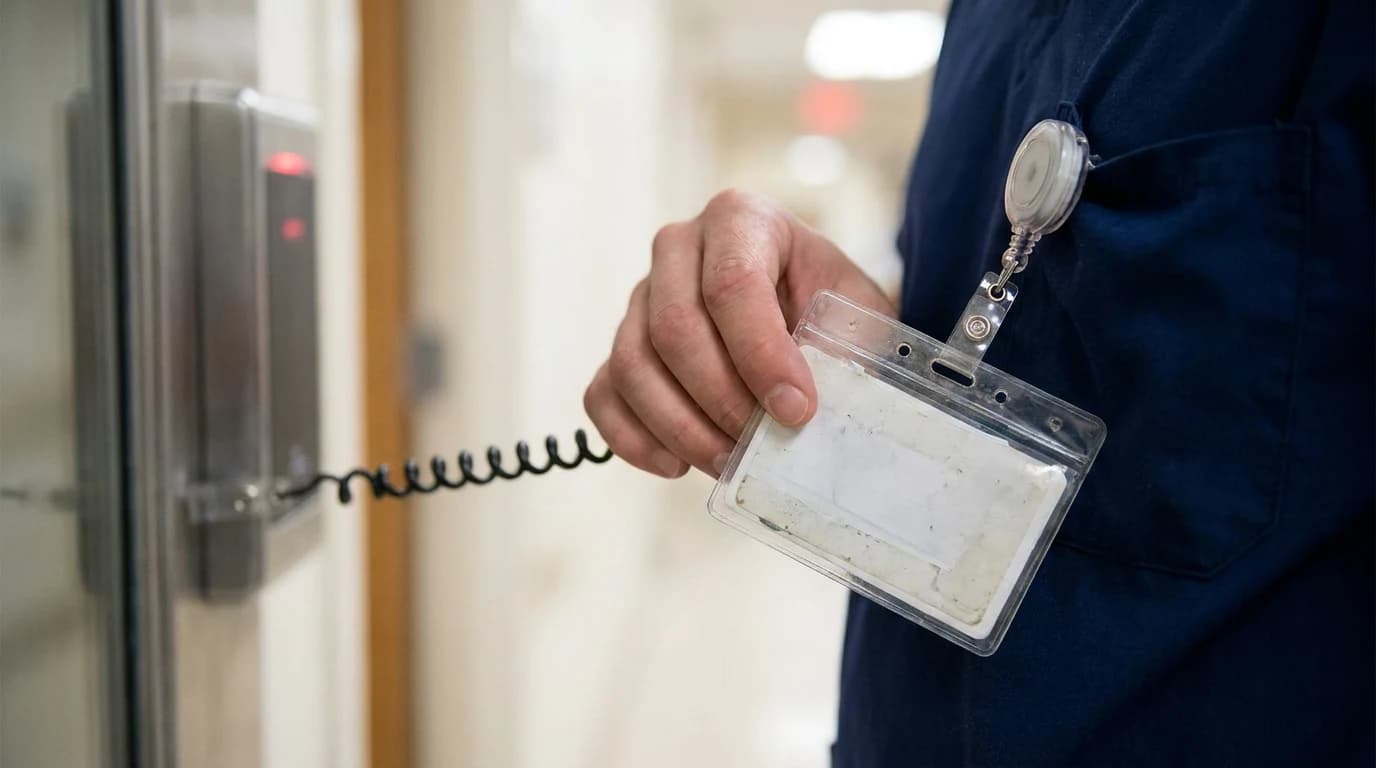
A badge reelbadge reelA spring-loaded retractable holder that clips an ID badge to clothing and pulls out on a cord for scanning. The three failure points owners report are the cord (frays or snaps), the clip (slips off a scrub waistband) and the spring (stops retracting). Steel-cord and swivel-clip versions address the first two. is the cheapest thing a nurse buys and close to the most used. You pull it forty or eighty times a shift, at every door, every med room, every workstation, and you notice it exactly twice: the day it starts sticking, and the day the cord finally lets go in front of a reader.
The pick is the Specialist ID Key-Bak Sidekick Badge Reel, which pairs a 24-inch DuPont Kevlar cord with a 360-degree swivel metal alligator clipcarabiner clipAttachment styles for badge reels and pouches. A swivel alligator clip grips fabric and rotates so the reel lies flat; a carabiner clips through a loop or belt and is harder to knock loose. Which one holds on scrub fabric all shift is the actual question, and it is fabric-dependent.. That pairing is the entire argument. The swivel lets the cord leave the housing straight no matter which direction you yank the badge, and the angled pull is what frays cheap reels at the exit point.
The other thing to know before you spend anything: this is a consumable. Four of the five picks below are multi-packs, and that is the clearest signal in the category about how these should be treated.
Our top picks
Specialist ID Key-Bak Sidekick Badge Reel
Check price on Amazon →A Key-Bak-built reel sold under the Specialist ID name. The cord is genuine Kevlar with a braided polyester jacket rather than a bare polyester string, and the toothed alligator clip grips a v-neck scrub, a pocket edge or a waistband without needing a belt loop, which matters because scrubs frequently do not have one where you want it. Specialist ID states support for up to 4 oz, roughly six keys, without the reel drooping, and a no-twist notch keeps the badge facing forward so you are not flipping it at every reader.
The tradeoffs: it contains ferrous metal hardware, so it is a nonstarter near an MRI scanner, and you are paying single-reel money for exactly one reel with no spare in the box.
QREEL Heavy Duty Metal Badge Reel, 2-Pack
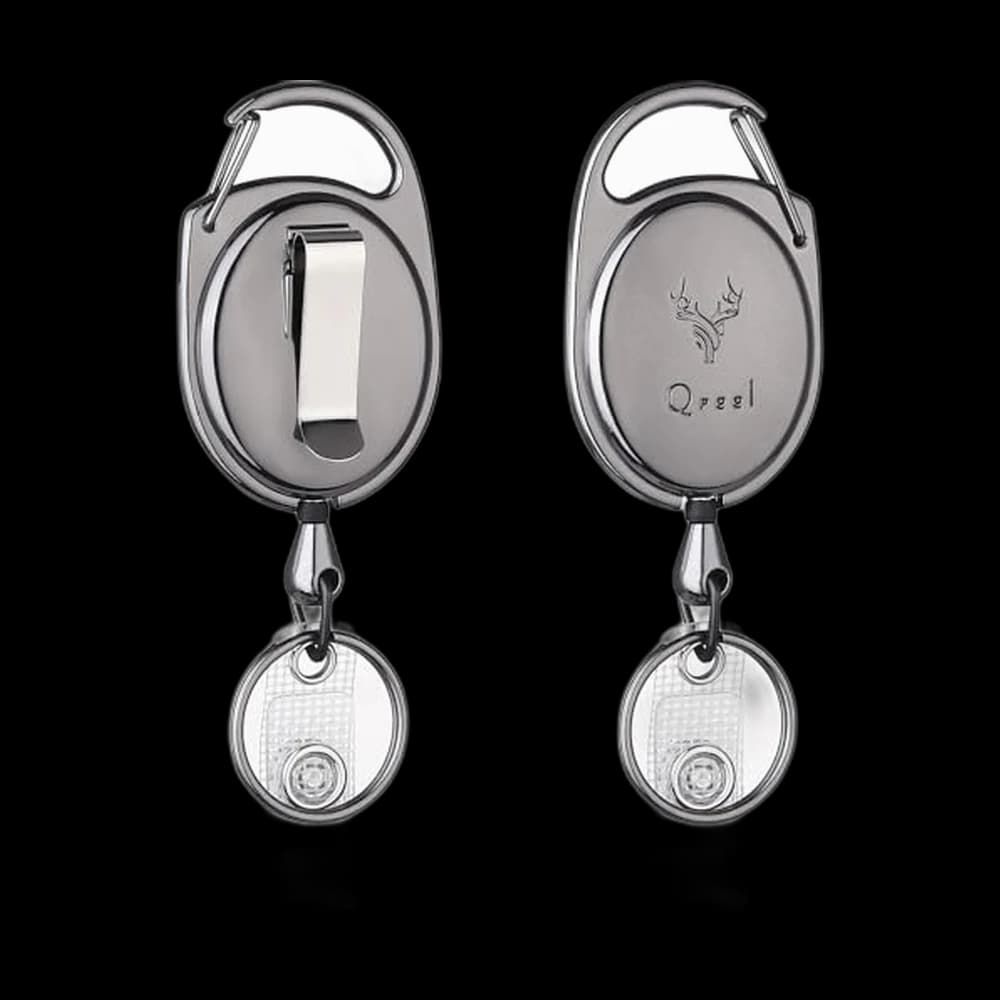
Check price on Amazon →The premium build, and the right pick if your badge shares a reel with keys and a fob. Load is what actually kills consumer reels, and this one answers with a zinc alloy housing instead of a thin plastic shell, a stainless steel wire rope, and a stainless spring, so neither the cord nor the retraction is the weak link. QREEL rates it to about 5 oz or roughly ten keys, and gives you a carabiner, a belt clip and a key ring as attachment options.
It is loud. A metal reel with a carabiner announces you every time you lean on a bed rail or a computer cart, and at 4.2 by 1.38 inches it is a visible piece of hardware rather than something that disappears behind a badge.
Specialist ID MRI Safe Badge Reels, 2-Pack
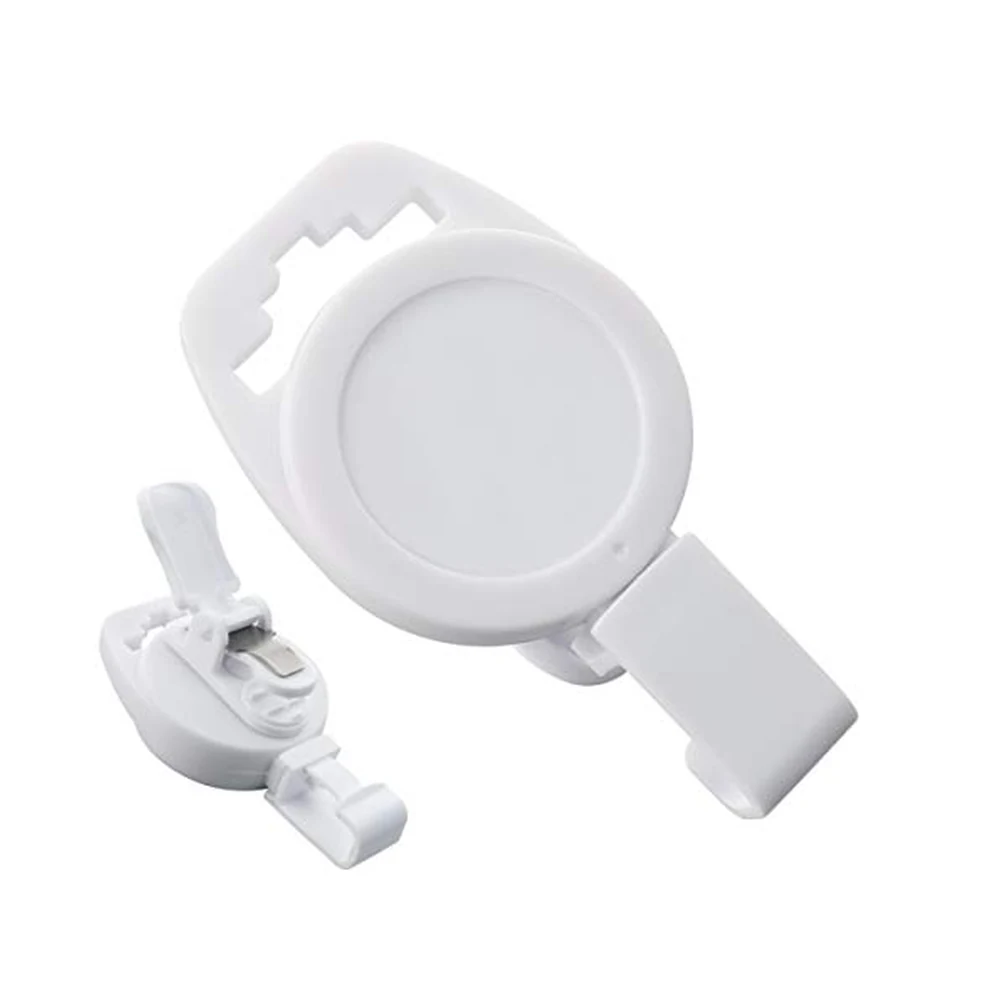
Check price on Amazon →Specialist ID states these are built from plastic and non-ferrousMRI safeFree of ferromagnetic material, so it will not be drawn into a magnet - a real constraint for badge reels, shears, scissors and watches near an MRI suite. 'MRI safe' and 'MRI conditional' are distinct designations, and the authority on what may enter a scan room is the facility's own policy, not a product listing. metal and will not react to a magnet, which is the one property that decides whether your badge accessory crosses into a scanner suite or gets left at the door. The pleasant surprise is that it is not a compromise build: the Dyneema #10 PE cord is rated by the manufacturer at an average of 76.3 lbs before breaking, and the 22.5-inch reach covers a typical wall reader without unclipping.
Two caveats worth stating plainly. This is a manufacturer statement rather than a labeled ASTM F2503 rating, so clear anything you intend to take into zone IV with your MR safety officer. And if you never go near a scanner, you are paying for a material property you will never use.
Uniclife Carabiner Badge Reel, 10-Pack
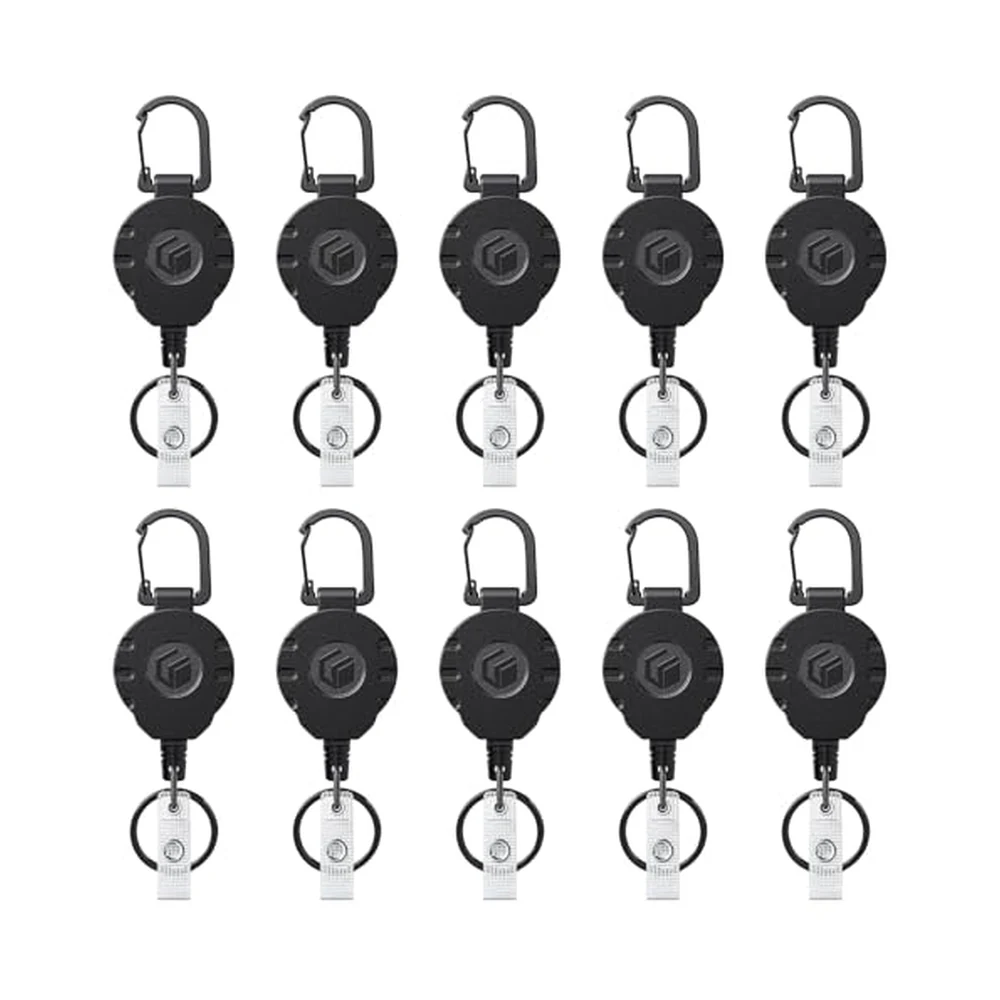
Check price on Amazon →The reach specialist. At 31.5 inches this is the longest cord here, which is the difference between badging a low or awkwardly mounted reader and unclipping the whole assembly to reach it. The cord is a 1 mm steel wire rope braided from seven strands with a vinyl coating that reduces friction, and Uniclife states stainless spring coils rated past 10,000 pulls and an 8 oz capacity, which is heavy-duty territory at a price that does not read like it.
It is bulky by design. The carabiner clips more securely than a slide clamp to a pocket, belt loop or backpack, and it also swings and knocks against things. The casing is ABS plastic despite the heavy-duty framing, and the steel hardware rules out MRI.
MIFFLIN-USA Retractable Badge Reels, 20-Pack
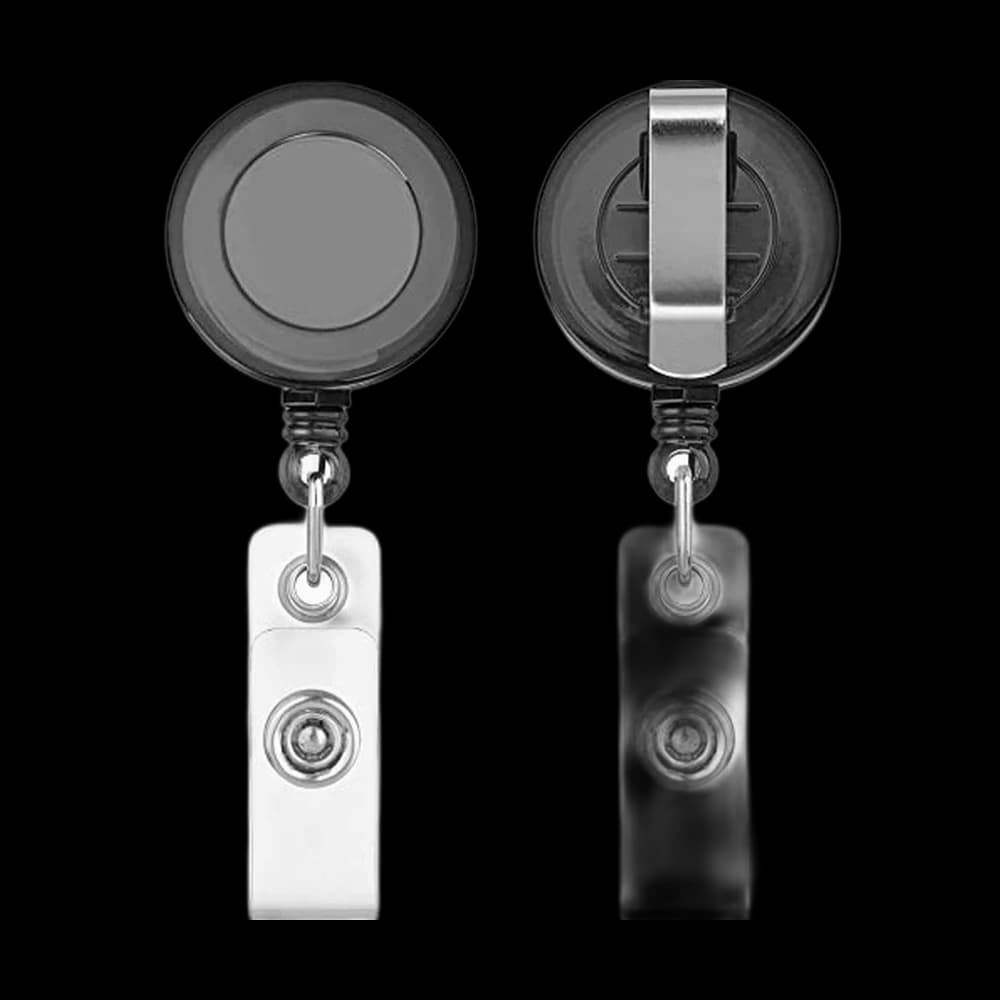
Check price on Amazon →Twenty plain black reels in a box, and the reason to buy it is behavioral rather than technical. At this per-unit price, a reel that starts feeling sticky goes in the bin the same day instead of getting nursed along for another month. That makes it the obvious buy for charge nurses, educators and clinical instructors stocking a cohort or a unit drawer, and MIFFLIN sells it in multiple colors, so a unit can color-code roles or shifts.
These are ABS-shell reels with a belt-loop slide clamp, not metal-housed heavy-duty builds. The clamp is less secure on a v-neck scrub than a toothed alligator clip, and MIFFLIN does not state the cord material.
Match the clip to what you actually wear
The most common buying mistake in this category is choosing a clip designed for a belt loop when you spend twelve hours in scrubs that do not have one in a useful place.
A toothed alligator clip is the most versatile: it bites a v-neck, a pocket edge, a waistband or a jacket placket. A slide clamp wants a belt loop or a thick hem and slips on thin scrub fabric. A carabiner is the most secure of the three and also the one that swings, clatters and catches on things.
Cord length is the second decision and it is dictated by your building, not by preference. If the readers on your unit sit at a comfortable chest height, 22 to 24 inches is plenty. If you badge into low door plates, elevators or a machine mounted at an odd angle, 31.5 inches stops you unclipping.
The part nobody wipes
The uncomfortable finding in this category is that the badge itself carries bacteria. In a cross-sectional study that swabbed the ID badges of 200 healthcare workers at a tertiary center in Riyadh found 37 percent contaminated, mostly with coagulase-negative staphylococci, a low-virulence skin organism, and staff who never cleaned their badges had the higher contamination rate.
The takeaway is not that you need a different reel. It is that the reel, the clip and the badge itself belong on the same wipe-down routine as your stethoscope and your shears, and almost nobody does it. Which is also an argument for the cheap multi-pack: hardware you are willing to replace is hardware you are willing to clean aggressively.
One more policy check before you buy. Neck-worn fabric lanyards are restricted or discouraged on many units, both as a snag risk and on infection-control grounds, so a clipped reel is the safer default. If you are new on a floor and tired of explaining your role, a badge buddy is the cheapest fix there is, but confirm your facility permits third-party role backers, because plenty issue their own.
The remaining picks, including the RN badge buddy, are in badge reels and ID accessories. If you clip a report sheet to the same pocket, nursing clipboards and brain boards covers the boards that fold small enough to live there.
Cheaper alternative
Specialist ID Key-Bak Sidekick Badge Reel ($15.99) is our #1 pick here. If that is more than you want to spend, this is a cheaper option in the same category — our researched verdict on it is below.
MIFFLIN-USA Retractable Badge Reels, 20-Pack
Twenty plain black reels in a box, which changes how you treat a reel: it becomes a consumable you throw out the day it feels sticky rather than a thing you nurse along for another month. It earns the budget slot for charge nurses, educators and clinical instructors stocking a cohort or a unit drawer. The tradeoff is that these are ABS-shell reels with a slide clamp, not the metal-housed heavy-duty builds elsewhere in this category.
Your next step