Key takeaways
- Home laundry cannot reproduce hospital laundry, and it does not need to. The CDC guideline describes facility hot-water washing as at least 160F for 25 minutes, and also says uniforms without blood or body substance contamination presumably do not differ much from street clothes in soilage.
- The dryer does more hygiene work in a home routine than the wash temperature does - the same guideline notes that drying and ironing temperatures add significant microbiocidal action regardless of whether the wash was hot or cold.
- Anything with spandex washes cold and dries low, every time. Heat is what kills elastane recovery, pills a performance knit at the underarm and bags out a knit waistband.
- An antimicrobial finish is an odour claim about the garment. It is not an infection-control measure, it does not protect you or your patient, and it weakens with laundering.
- Retire a set for thinning, fading, a waistband that no longer recovers or opacity loss under hospital lighting - not when it finally tears.
Wash your scrubs after every shift, in their own load, using the warmest water the care label allows, with your normal detergent plus an oxygen-based bleach if the color will take it. Dry on low heat and take them out promptly. That is the entire routine, and it is deliberately unglamorous — there is no product or cycle that turns a home washing machine into hospital laundry.
That last point is the one worth internalising. The CDC's environmental infection control guideline describes hot-water washing in health-care facilities as a temperature of at least 160°F for a minimum of 25 minutes, and most domestic water heaters are set nowhere near that. The same guideline is also reassuring about what you are actually dealing with: it says uniforms without blood or body substance contamination presumably do not differ appreciably from street clothes in the degree and nature of soilage, and that home laundering would be expected to remove that level of soil adequately. Your scrubs are dirty clothes, not a biohazard — and the moment they genuinely are contaminated, that is a facility policy question, not a laundry question.
Do you need to wash scrubs separately from everything else?
There is no rule that says you must, and the honest reason most nurses do it anyway is a mix of hygiene instinct and practicality. Ask on r/nursing and the split is clear: one camp keeps a dedicated hamper, strips at the door, and runs work clothes as their own load, usually hot; the other camp says washing three garments alone is a waste of a cycle and throws them in with everything else, sometimes with a laundry sanitiser added. Both camps have been doing it for years without incident, which tells you something about the size of the risk.
Where the separate load genuinely earns its place is the boring stuff: scrubs are dyed dark, they shed lint onto everything, and washing them alone means you can use a hotter cycle or an oxygen bleach that the rest of your wardrobe would not survive.
The one place opinion stops mattering is contamination. OSHA regulations prohibit home laundering of items considered personal protective apparel or equipment — lab coats are the example the CDC guideline gives — and as that guideline notes, experts disagree about whether this extends to uniforms and scrub suits not contaminated with blood or other potentially infectious material. Facility policies vary. If yours says a soiled set stays on site, that policy is the answer, and your infection prevention team is the right place to take the question.
What water temperature actually matters?
Less than you would expect, and not for the reason you would expect.
The 160°F figure is a facility-laundry number achieved with a booster heater. At home you are usually choosing between roughly 120°F and cold. The CDC guideline notes that low-temperature laundry cycles lean heavily on chlorine- or oxygen-activated bleach to reduce microbial contamination, and — the detail almost nobody quotes — that regardless of whether hot or cold water is used, the temperatures reached in drying and especially in ironing provide additional significant microbiocidal action. In a home routine, the dryer is doing more of the work than the wash temperature is.
Running against that is the manufacturer. Cherokee's own care guidance tells you to wash in cold water to prevent fading and shrinking, to use a gentle detergent, and to reach for an oxygen-based bleach rather than chlorine where the fabric permits. Barco's care line for its scrub collections is the same shape: machine wash cold with like colors, tumble dry low.
So the practical resolution is a fabric decision, not a hygiene one. A cotton-poly poplin like the Dickies EDS Signature Women's V-Neck Scrub Top 86706 will take a warm-to-hot cycle without complaint — that brushed poplin is the blend built for repeated industrial washing. Anything with spandex in it goes cold, every time, because heat is what destroys elastane recovery. If you want a hygiene margin on a cold cycle, add an oxygen bleach; that is the lever the guideline itself points at.
What is the dryer actually doing?
More than you think, and also more damage than you think.
On the useful side, drying heat is a real part of the microbiocidal action of a laundering process, per the CDC guideline. On the destructive side, that same guideline notes dryer temperatures and cycle times are dictated by the fabric, and that man-made fibres — polyester and polyester blends — need shorter times and lower temperatures. That is your entire scrub wardrobe.
High dryer heat is what pills the underarm of a performance knit, what turns a knit waistband into one that no longer springs back, and what shrinks a rayon-heavy top by a size you will notice at the shoulders. Low heat, short cycle, out of the drum promptly. If your dryer has a steam or sanitise cycle, it is a genuine feature, but treat it as a tool for cotton-rich sets and keep it away from anything stretchy.
Does an antimicrobial finish change any of this?
No, and this is the claim worth being blunt about. An antimicrobial finishantimicrobial finishA chemical treatment applied to fabric to slow the growth of odour-causing bacteria on the garment itself. Treated fabric is not an infection-control measure, does not protect the wearer or the patient, and typically weakens with repeated laundering. Treat it as an odour claim about the garment and nothing more. is a chemical treatment applied to fabric to slow the growth of odour-causing bacteria on the garment itself. It is not an infection-control measure, it does not protect you or your patient, and it typically weakens with repeated laundering. Treat it as an odour claim about a piece of clothing and nothing more.
There is a related trap in the listings. Marketplace copy lags the manufacturer badly: the retail listing for the Cherokee Infinity CK623A Women's V-Neck Scrub Top still advertises Cherokee's retired Certainty finish and an associated wash-count durability figure, while Cherokee's current Infinity pages describe a different odor-fighting technology entirely. If a listing promises you a specific number of washes of protection, assume the number is out of date and buy the garment for its fabric and cut instead.
What actually controls odour is unromantic: wash after every wear, do not overload the drum so the garments can move, and give the underarms an oxygen-bleach soak when they start to hold a smell.
Which blends survive home laundry, and which fade?
Read the blend before you read the price.
Brushed cotton-polyester poplin is the durability champion. It softens rather than pills, tolerates a hotter cycle, and comes out of the dryer wrinkled — which is the trade. If creases bother you more than fading, our wrinkle-resistant scrubs guide compares the blends that come out smoother. Poly/rayon/spandex twill, roughly 77/20/3, is the modern default: polyester carries the colour, rayon supplies the drape, spandex supplies recovery. Rayon is also the fibre most likely to shrink and the one that holds moisture, so a rayon-heavy top is the wrong choice for a hot unit.
High-polyester performance blends hold colour best and pill fastest under heat. Recycled polyester knits — the Skechers by BARCO Vitality Crew Men's 4-Pocket Top sits in this family at 54 percent polyester, 40 percent recycled polyester and 6 percent spandex — feel the best of the lot and are the least forgiving of a hot cycle.
On colourfastness, expect any dark navy or black set to release dye for its first few washes regardless of blend. Wash new scrubs on their own the first time. Cherokee suggests a cold pre-wash and air dry before first wear anyway, which conveniently doubles as shrink insurance.
What gets blood, betadine and ink out?
Cherokee's stain guidance is the sensible baseline, and it splits by stain type: rinse blood with cold water and treat it with hydrogen peroxide or a salt solution, use rubbing alcohol or dish soap on medication stains, and dab ink with rubbing alcohol or hand sanitiser. The mechanism behind the first one is the one to remember — heat sets protein stains, so a hot wash on fresh blood permanently fixes it.
The honest caveat: betadine on a light-coloured polyester often does not come out, and no amount of technique changes that. That set becomes your clinic spare.
When should you retire a set?
Cherokee's own replacement list is a fair checklist: visible thinning, fraying or holes; stains that will not wash out; fading and loss of colour; loss of stretch or comfort; and persistent odour despite washing. Two additions from the floor. First, a waistband that no longer recovers is done even if the fabric looks fine — that is elastane fatigue and it does not come back. Second, opacity fails before anything else on light colours, and it fails under hospital fluorescents rather than your bathroom light, so ask a colleague rather than a mirror.
Rotation is the other half of the answer. Enough sets to cover the shifts you work plus two is the number that stops you washing a set at midnight, and it is also what makes every set last longer, because no single garment is taking every cycle.
The buying side of this
If a laundry audit just told you that half your sets are thin, faded or no longer recovering, replacing them is a fabric decision more than a brand one — cotton-rich poplin if durability is the priority, poly/rayon/spandex if comfort is. Our compared picks live in women's scrubs and men's scrubs, and the fit and pocket reasoning behind them is in Best Women's Scrubs and Best Men's Scrubs.
The short version
Wash every shift, separate if it suits you, cold for anything with spandex, oxygen bleach rather than chlorine, and dry low. Do not buy hygiene claims printed on a garment, and retire a set when it thins, fades or stops recovering rather than when it finally tears.
| Blend family | Example among our picks | Wash | Dry | Why |
|---|---|---|---|---|
| Brushed cotton-polyester poplin | Dickies EDS Signature 86706 V-Neck Top | Warm to hot, as the care label allows | Low heat, out of the drum promptly | A woven with no elastane. It softens rather than pills and is the blend built to survive repeated industrial washing; the trade is that it comes out wrinkled |
| Poly/rayon/spandex twill, about 77/20/3 | Healing Hands Purple Label Jane Top | Cold, every time | Low heat, short cycle | Heat is what destroys elastane recovery, and rayon is the fibre most likely to shrink and the one that holds moisture |
| High-polyester performance poplin, 95/5 | Cherokee Infinity CK623A V-Neck Top | Cold | Low heat | Holds colour best and pills fastest at the underarm under heat |
| Recycled polyester knit, 54/40/6 | Skechers by BARCO Vitality Crew Top | Cold | Low heat, short cycle | The softest of the four and the least forgiving of a hot cycle |
| Any of the above, on a cold cycle | All picks | Add an oxygen-based bleach where the colour will take it, never chlorine | The dryer is doing more of the microbiocidal work than the wash temperature is | CDC puts facility hot-water washing at 160F for 25 minutes, which a domestic heater does not reach; low-temperature cycles lean on bleach instead |
Products discussed in this article
Every item named above, with the NurseComforts Score and the price we last recorded. Prices at the affiliate retailers we link change constantly.
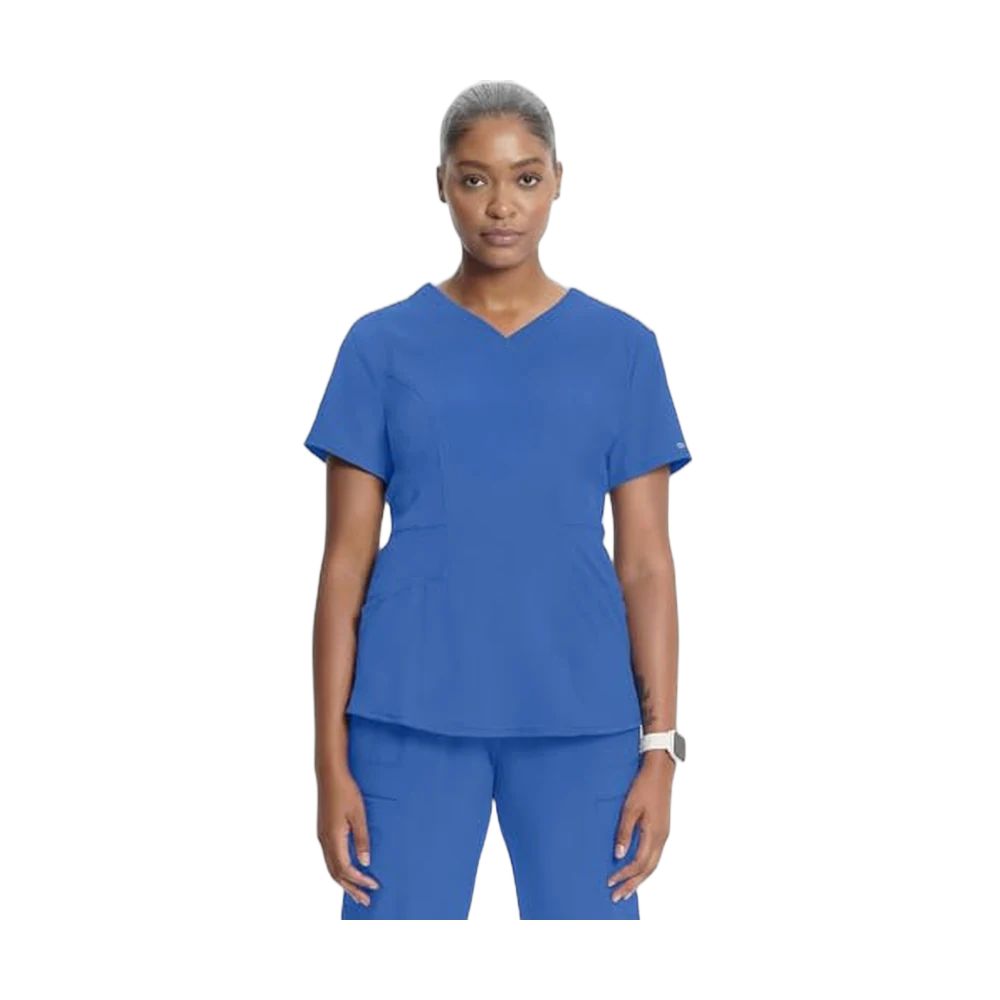
Cherokee Infinity CK623A Women's V-Neck Scrub Top
78 · Score$38.99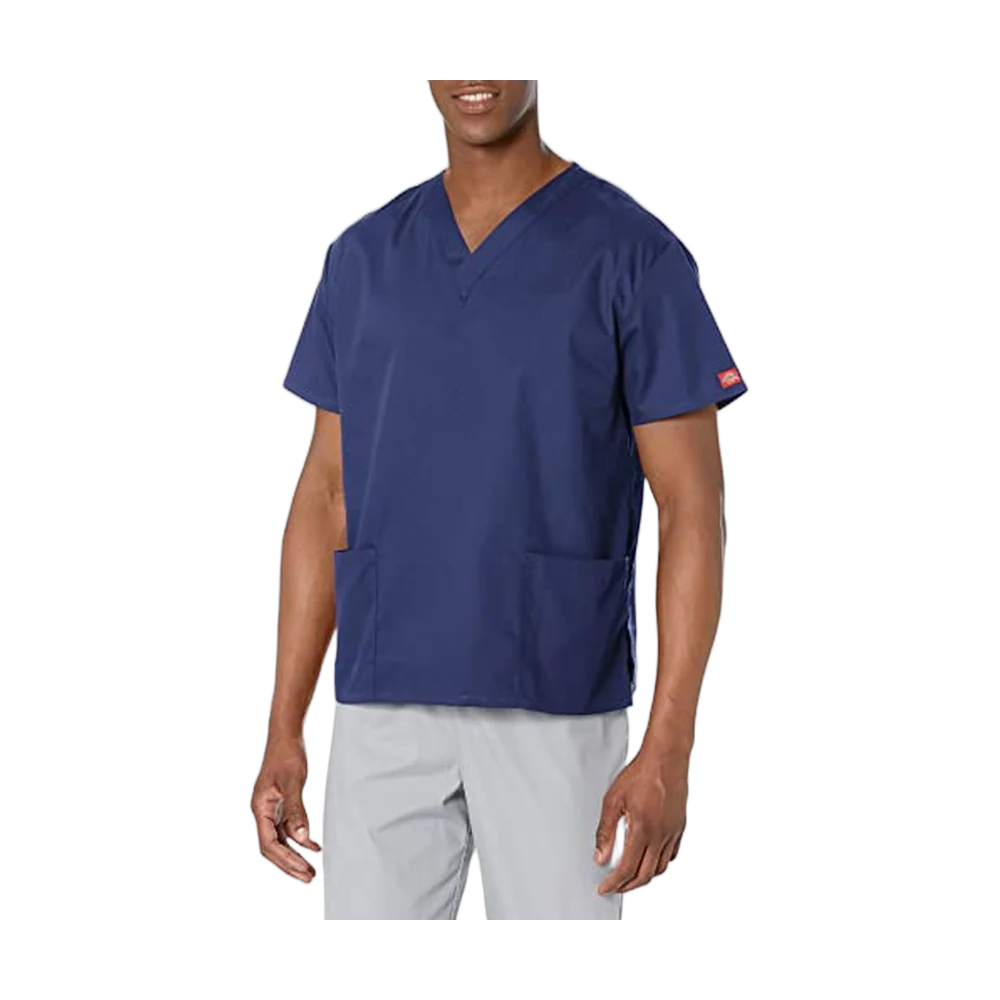
Dickies EDS Signature Women's V-Neck Scrub Top 86706
77 · Score$18.99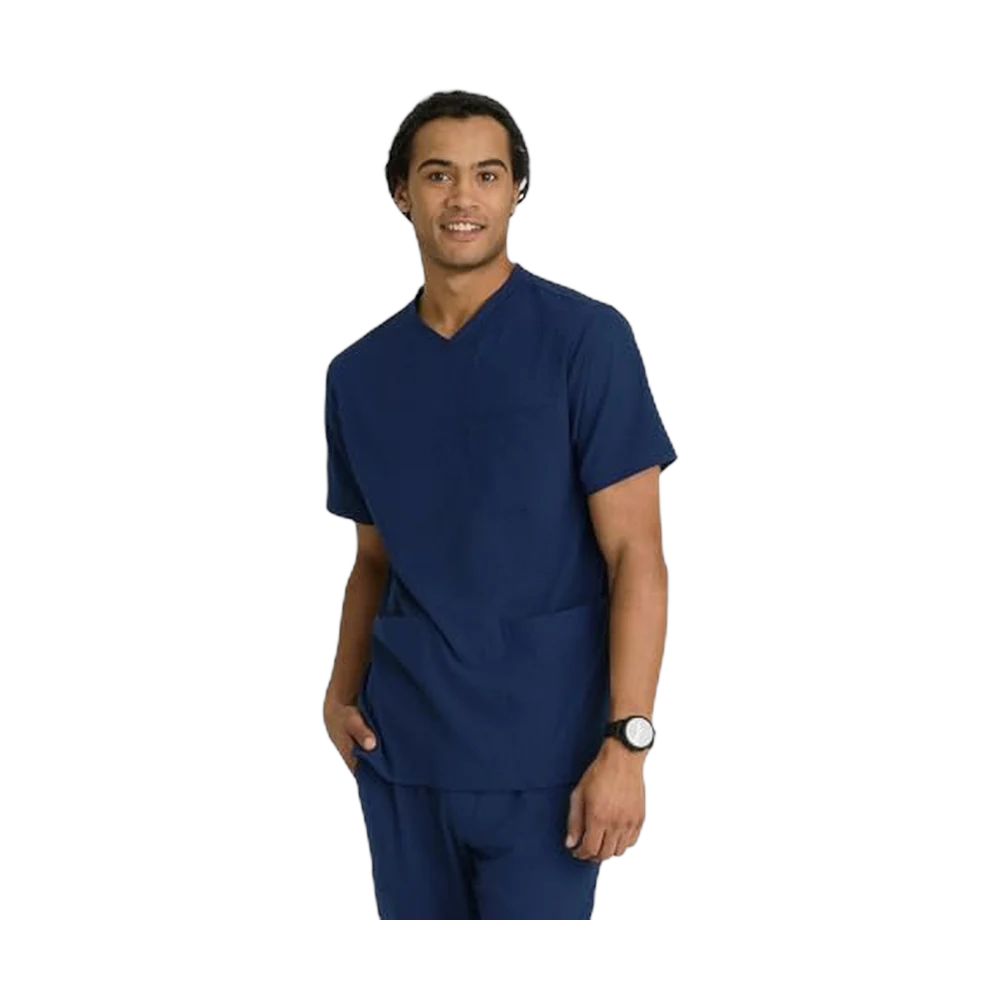
Skechers by BARCO Vitality Crew Men's 4-Pocket Top
76 · Score$23.99
Your next step