Quick Answer
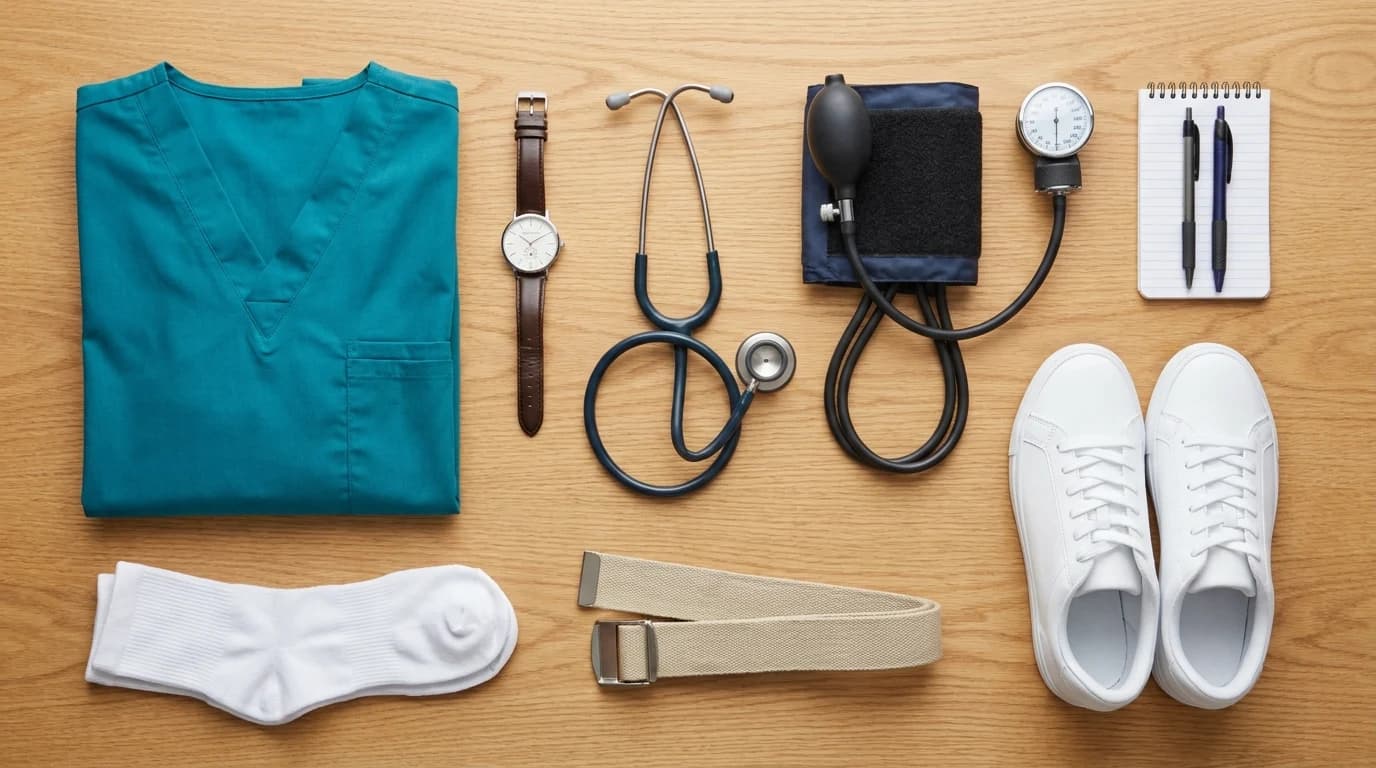
The real nurse essentials list is short: cushioned shoes, compression socks, two or three sets of unit-approved scrubs, a watch with a second hand, a penlight, shears, wash-proof pens and a bag. Ask what your unit supplies before buying a stethoscope, BP cuff or pulse oximeter. The four buys most new grads make first are below.
HOKA Bondi 9$174.95
Road build, not the Bondi SR: HOKA states no slip-resistance rating, and the engineered-mesh upper cannot be wiped down. Check your unit's footwear policy first.
Fits: Regular, Wide and X-Wide: women's US 5–12 and men's US 7–16 in all three, per the Amazon listings
Buy on Amazon · $174.95Main button: women's sizes
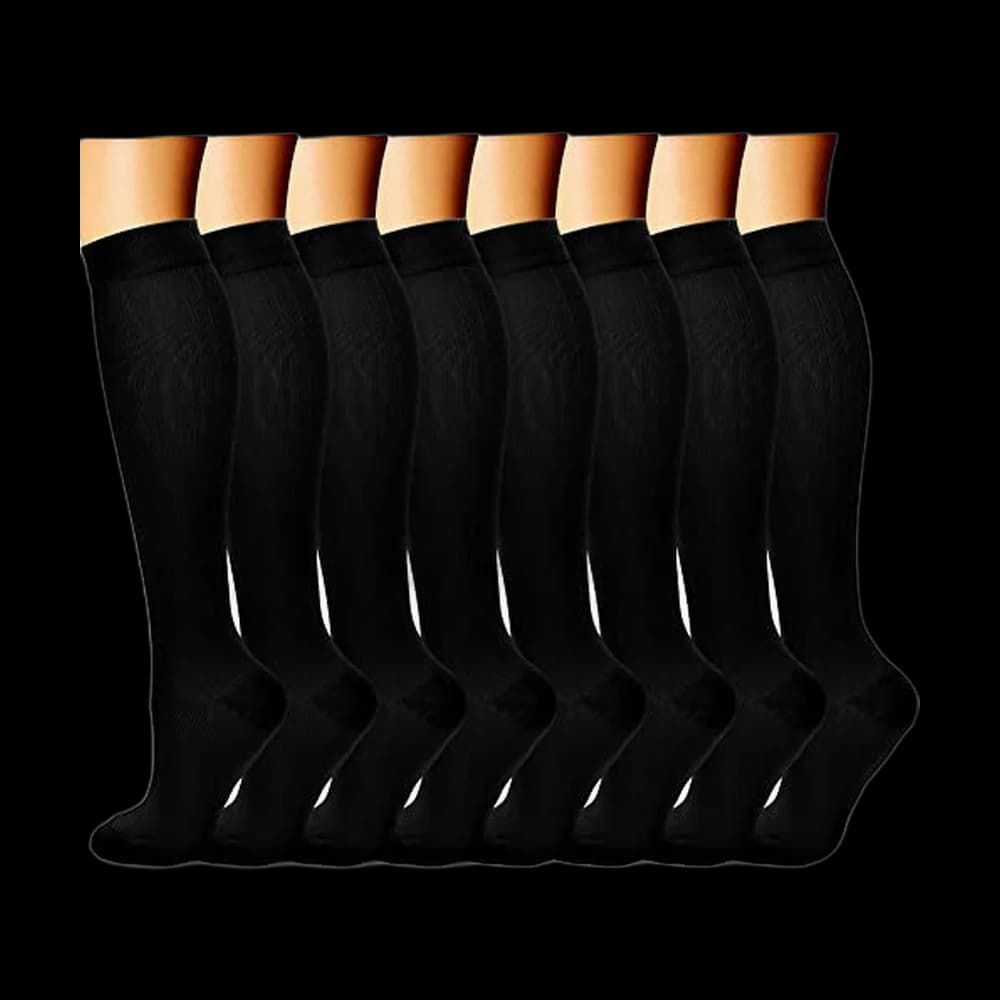
CHARMKING Socks, 8 Pairs$19.99
Buy on Amazon · $19.99Speidel Original Scrub$40.00
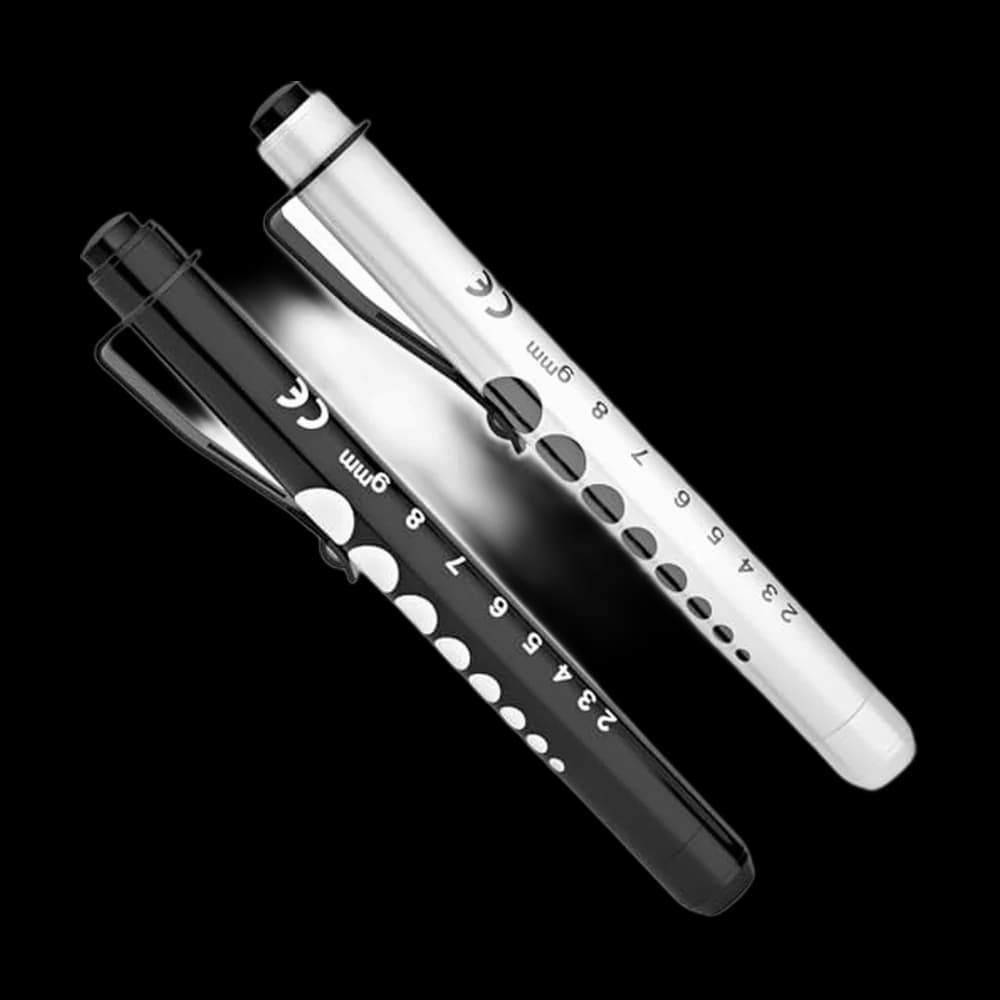
Buy on Amazon · $40.00RISEMART Penlight, 2-Pack$6.59
Buy on Amazon · $6.59Key takeaways
- Ask what your unit supplies before you spend. Stethoscopes, BP cuffs, oximeters, shears and tape are stocked on most inpatient units, and scrub colours are usually mandated.
- Shoes and compression socks are the two lines worth spending on. They touch you for twelve hours and are the only items where more money reliably buys more comfort.
- Buy consumables in multiples, not singles. Badge reels, pens and penlights disappear at a rate that makes bulk packs cheaper than replacements.
- A realistic complete first-day kit runs roughly $300 to $550, and footwear is the largest single line in it.
- Defer the personal stethoscope, cuff and oximeter to month three unless you are in home health or a clinic, where there is no wall-mounted equipment.
Speidel Original Scrub Watch
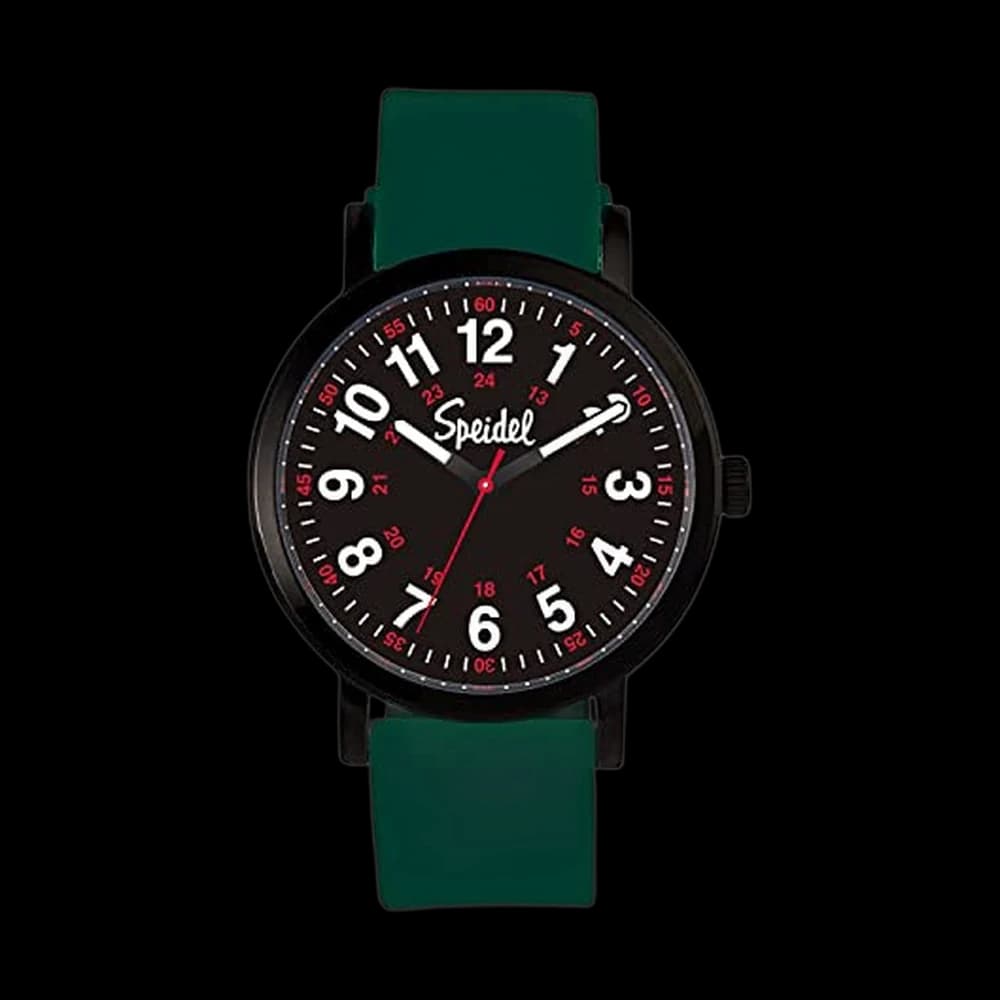
- Red sweep second hand makes a 15-second pulse count a glance rather than a squint
- 12- and 24-hour markers on one white dial, so military-time charting needs no mental conversion
- 100% silicone band and stainless case back wipe clean and tolerate repeated hand hygiene
Of everything on this list, the watch is the item most new grads underestimate and the one your phone cannot substitute for in most facilities. A red sweep second hand and dual 12/24-hour markers turn a pulse count and a military-time entry into glances rather than tasks, and the silicone band takes the same wipes as everything else you carry.
Side-by-side comparison
#1Speidel Original Scrub Watch Owner rating4.4(1,289) | #2CHARMKING Compression Socks, 8 Pairs Owner rating4.5(90,077) | #3RISEMART Nurse Penlight with Pupil Gauge, 2-Pack Owner rating4.6(14,698) | #4ADC 320 Medicut EMT Shears, 7.25 in Owner rating4.8(331) | #5Littmann Classic III Monitoring Stethoscope (5620) Owner rating4.8(45,973) | |
|---|---|---|---|---|---|
|  |  |  |  | |
| NurseComforts Score | |||||
| Verdict | The default nurse watch, and the one kit item your phone genuinely cannot replace in most facilities. | The item nurses most often say they wish they had bought in week one, at the price that makes it a habit rather than an experiment. | Two lights for the price of a sandwich, which is the correct way to buy an item this easy to lose. | A remarkable amount of specification for the price of lunch, and the sensible first shear for a student or new grad. | The month-three purchase rather than the week-one one, unless your facility does not issue a scope at all. |
| Price | ~$40.00Buy on Amazon Price checked Oct 10 | ~$19.99Buy on Amazon Price checked Oct 10 | ~$6.59Buy on Amazon Price checked Oct 10 | ~$10.43Buy on Amazon Price checked Oct 10 | ~$98.77Buy on Amazon Price checked Oct 10 |
| Where It Lives | On your body, all shift | On your body, all shift | Around your neck, or in the isolation room instead | ||
| Usually Supplied by Employers? | No | No | Sometimes, but never when you need one | Stocked on the unit, but unit shears walk off | Often yes on inpatient units |
| Buy Before Day One? | Yes | Yes | Yes | Yes | No, ask your unit first |
| Buyer sentiment | Appearance Readability Value for money Suitability For Nursing Reliability Buyers praise appearance, readability, value for money and suitability for nursing. Mixed feedback on durability. Some flag reliability. Based on 337 user mentions | Quality Comfort Functionality Appearance Buyers praise quality, comfort, functionality and appearance. Mixed feedback on fit and compression. Based on 26,302 user mentions | Quality Functionality Practicality Color Buyers praise quality, functionality, practicality and color. Mixed feedback on brightness and durability. Based on 2,233 user mentions | Cutting Performance Effectiveness Necessary Buyers praise cutting performance, effectiveness and necessary. Mixed feedback on value for money and durability. Based on 120 user mentions | Sound Quality Value for money Color Enjoyment Buyers praise sound quality, value for money, color and enjoyment. Mixed feedback on durability. Based on 3,368 user mentions |
| Pros |
|
|
|
|
|
| Cons |
|
|
|
|
|
* Prices are approximate. Click Buy to see current pricing on Amazon.
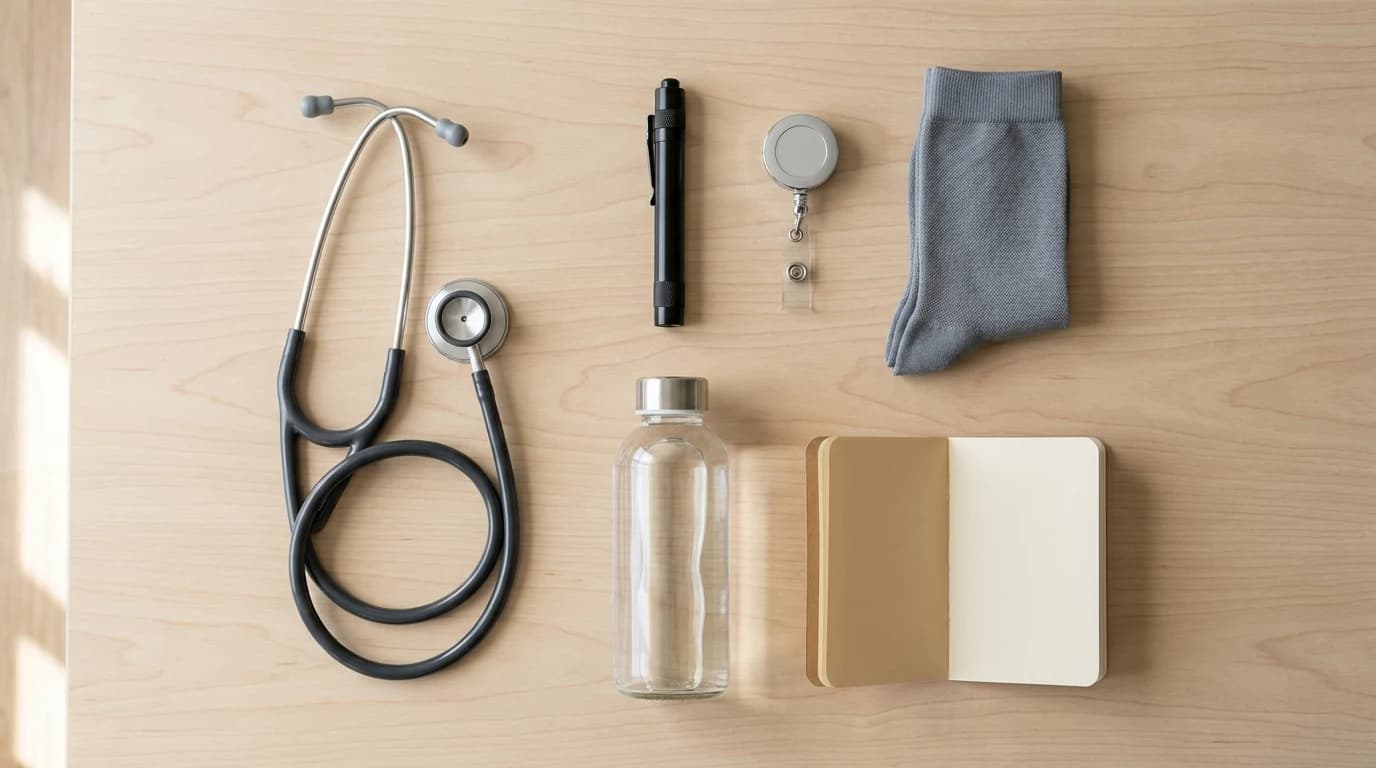
The honest version of the nurse essentials list is much shorter than the internet suggests. You need shoes you can stand in, socks that keep your legs from aching, scrubs that fit your unit's colour rules, a watch with a second hand, a badge reelbadge reelA spring-loaded retractable holder that clips an ID badge to clothing and pulls out on a cord for scanning. The three failure points owners report are the cord (frays or snaps), the clip (slips off a scrub waistband) and the spring (stops retracting). Steel-cord and swivel-clip versions address the first two., a penlight, shears, pens that survive a wash cycle, something to write your report on, and a bag to carry it in. Everything else is either supplied by your employer, cheaper as a hand-me-down, or a purchase you should make in month three once you know what your unit actually is.
That is the whole kit. Roughly $250 to $400 buys a genuinely complete first-day setup if you buy once and buy sensibly, and the biggest single line in it is footwear — which is also the only item where spending more reliably buys you something. Below, the list is organised the way the day actually works: what goes on your body, what lives in your pockets, what rides in your bag, what stays in your locker, and what you need at home to survive the schedule.
First, the do-not-buy-yet list
The most repeated advice in r/nursing and r/StudentNurse threads about new-grad gear is not about what to buy. It is a warning about showing up with a backpack full of things you will never use. Before you spend anything:
- Stethoscope. Many facilities issue one, and a lot of units require you to use a dedicated isolation-room scope anyway. Ask before you buy a Littmann.
- Blood pressure cuff and pulse oximeter. Wall-mounted or on the vitals machine on almost every inpatient unit. Home health and clinic roles are the exception.
- Scrub colours. Units mandate specific colours, and a lot of new grads buy three sets in the wrong shade. Confirm the dress code in writing first.
- Trauma shears, tape, tourniquets, alcohol pads. Stocked on the unit. Bring your own shears because the unit's walk off, not because they are not there.
- Anything with your name embroidered on it before you know you are staying on that unit.
- A nursing-branded anything that costs more than the identical unbranded version. The "for nurses" tax is real and it is mostly on bags and organisers.
Ask your educator or preceptor what the unit supplies. Ten minutes of asking saves a couple of hundred dollars. If you are starting as a CNA rather than an RN, our CNA clinical supplies list trims this to what a nursing assistant carries.
On your body
Shoes. This is the one to spend on, and the one item where a cheap choice costs you physically rather than financially. For most floor nurses the answer is a maximum-cushion trainer such as the HOKA Bondi 9, around $160, unless your unit enforces a footwear policy requiring a rated slip-resistant outsoleslip-resistant outsoleAn outsole compound and tread pattern intended to keep traction on wet or contaminated floors. Testing is not uniform: some brands cite an ASTM or SATRA coefficient-of-friction result, most simply print the phrase on the box. Where a manufacturer names the standard we say so; where it only claims 'slip-resistant' with no standard behind it, that is all the claim is worth. — in which case the Skechers Work Arch Fit 2.0 SR Rosraine at around $100 is both rated and wipeable. Buy one pair now and a second within a few months, because rotating two pairs extends the life of both. Full comparison in best shoes for nurses, and the nursing shoes category has the shortlist.
Compression socks. The item most nurses say they wish they had bought in week one instead of month six. Graduated compressiongraduated compressionCompression that is strongest at the ankle and eases as it travels up the calf. The gradient is what distinguishes a compression sock from a merely tight sock. Manufacturers state the ankle band in mmHg; independent verification of the gradient across the leg is rare, so treat the stated band as a manufacturer claim. is tightest at the ankle and eases up the calf; 15-20 mmHgmmHgMillimeters of mercury, the pressure unit used to rate compression socks and blood-pressure readings. Compression hosiery is sold in bands - commonly 8-15, 15-20, 20-30 and 30-40 mmHg - and the number describes pressure at the ankle, not an average over the whole leg. is the usual starting tier. CHARMKING Compression Socks come eight pairs to a pack for around $20, which is the price point that turns compression into a daily habit rather than an experiment you abandon on laundry day. See compression socks for the firmer tiers. If you have a known circulatory condition, the compression level is a question for your clinician rather than a shopping decision.
Scrubs, two to three sets. Two sets works if you do laundry between every shift; three is the sane minimum. Look for a fabric that recovers rather than bags out at the knee, and count the pockets before you count the price — pockets are the actual specification. Browse women's scrubs and men's scrubs.
A warm layer. Units run cold and you are not allowed to fix it. A snap-front warm-up jacket or a long-sleeve underscrubunderscrubA close-fitting long-sleeve tee worn beneath a scrub top for warmth, arm coverage or personal preference. The two things owners judge them on are bulk under the scrub top and whether the cuffs stay put when you push a sleeve up. Facility policy on underscrubs varies, so check yours. tee under your top solves it, and the underscrub is usually the better buy because it does not need removing for hand hygiene at the elbow. See scrub jackets.
A watch with a sweep second hand. Not optional, and not replaceable by your phone in most facilities. The Speidel Original Scrub Watch is the default for a specific reason: a red sweep second hand that makes a 15-second pulse count a glance instead of a squint, 12- and 24-hour markers on one dial so military-time charting needs no conversion, and a silicone band you can wipe. Around $40. The Casio F91W-1 at around $25 is the honest budget answer if you only need the time. More in nurse watches.
A badge reel. You will lose several. Buy them in bulk rather than singly — a 20-pack of MIFFLIN-USA Retractable Badge Reels costs about what one boutique reel does. If you work anywhere near MRI, you need a specifically MRI-safe reel, which is a real distinction and not a marketing one. See badge reels.
A scrub cap, if your unit uses them. Satin-lined versions exist specifically because standard cotton wrecks certain hair types over a long shift. Scrub caps.
In your pockets
This is the layer that gets stolen, dropped in laundry and left in patient rooms, so the guiding principle is buy multiples of cheap things rather than one nice thing.
Penlight. The RISEMART Nurse Penlight with Pupil Gauge, 2-Pack costs around $7 for two, with a pupil gaugepupil gaugeThe millimetre scale printed on the barrel of many penlights, used as a quick reference against which to compare pupil size. Print quality varies widely and wears off on cheap models - a gauge that survives a hundred trips through a scrub pocket is worth more than a sharper one that does not. and a 5 cm ruler printed on the barrel. Buy the two-pack: one in the pocket, one in the bag. Batteries are not included, which catches people out on day one. More in penlights.
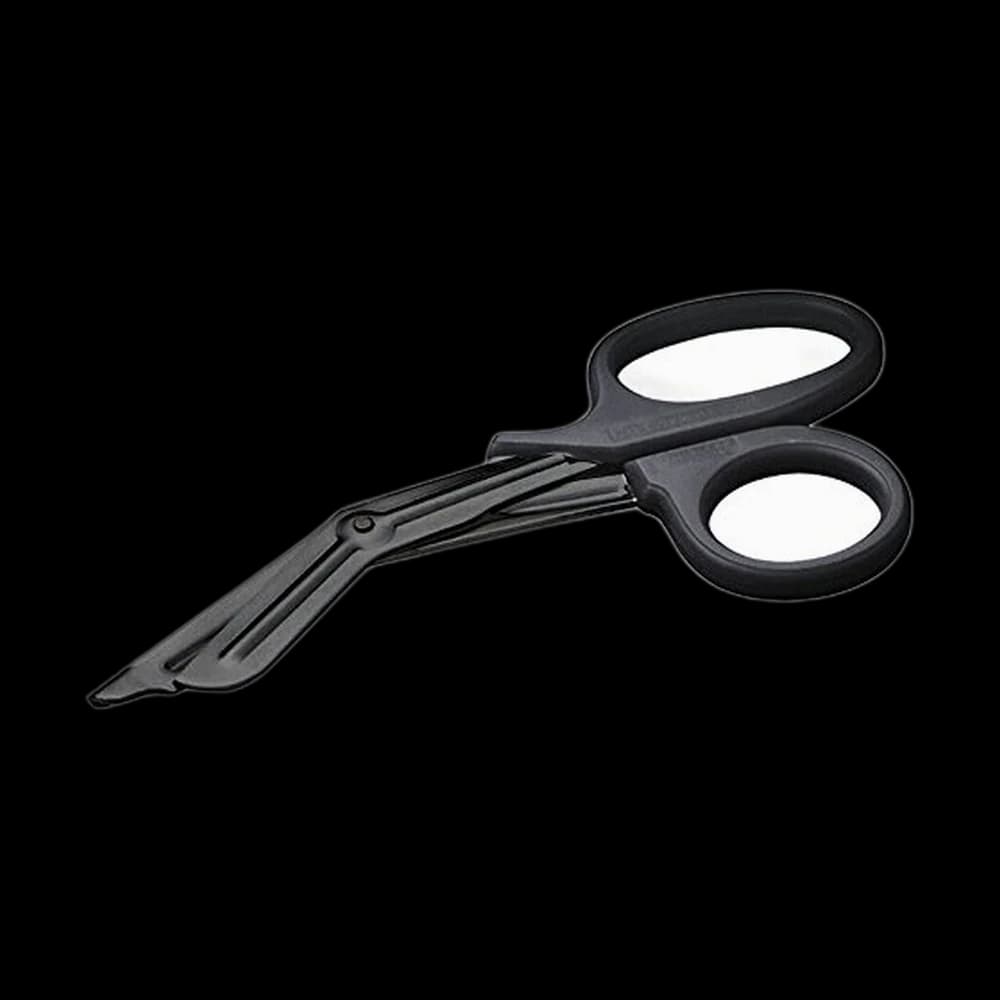
Trauma shears. Unit shears vanish. The ADC 320 Medicut EMT Shears at around $11 have blades tempered to a stated Rockwell C56, one serrated edge, a bandage safety tip, and are autoclavableautoclavableAble to withstand steam sterilisation at autoclave temperature and pressure without deforming. It appears on some clogs, shears and instrument specs. It describes material tolerance only - what actually gets processed, and how, is set by facility policy. to 143C per ADC. That is a lot of specification for the price of lunch. Trauma shears covers the folding and multi-tool options.
Pens, several, cheap. They walk off at exactly the rate badge reels do.
A report sheet holder. A folding nursing clipboard keeps your brain sheet flat, private and dry, and the storage versions hold alcohol pads and spare pens. Around $10 to $27 depending on whether you want a fold-flat or a storage box. See nurse clipboards.
A small dry-erase surface, if your unit's report format suits it. Some people never use one; some never go back.
In your bag
The bag itself. For inpatient work almost any backpack does — this is the category with the steepest "for nurses" markup. The real requirements are a laptop or tablet sleeve, a pocket that will not leak into everything else, and straps that survive being loaded. Home health is the genuine exception: a purpose-built nurse bag with removable dividers and a wipeable base is worth it, because you are carrying supplies rather than a lunch. Nursing bags.
Water. You will not drink enough. A 40 oz insulated bottle at around $15 to $45 exists so that one fill covers a shift, because you are not getting back to the break room. A straw lid matters more than the brand — it is the difference between drinking and intending to. Shift hydration.
Food that survives a shift. An insulated bag plus an ice pack, or a vacuum food jar if your break is unpredictable and the microwave queue is a real thing on your unit. Around $25 to $35 either way. Shift lunch.
Hand cream. You will wash your hands more times per shift than you can count. This one costs a few dollars and is on every experienced nurse's list.
In your locker
The locker layer is the one nobody tells new grads about, and it is the one that saves a bad shift.
- A spare pair of socks. The single highest-value item in this entire article relative to cost.
- A spare set of scrubs, for the shift where you need them. You will know.
- Deodorant, a toothbrush, dry shampoo. Night shift especially.
- Shelf-stable snacks for the shift where lunch does not happen.
- A phone charger that lives there permanently, so you never carry one.
- Your second pair of shoes, once you have them, for when the first pair gets soaked.
At home, if you work nights
Night shift is a gear problem as much as a scheduling one, because you are asking your body to sleep against every environmental cue it has. The three things that consistently matter are darkness, sound and a wake-up that is not a shock: blackout curtains from around $25, a sleep maskblackout maskAn eye mask intended to block daylight for day sleepers. The two specs that decide it are the nose seal - where nearly all light leaks - and the eye-cup depth, since a flat mask presses on the eyelids and a contoured one does not. Strap style decides whether it survives a side sleeper., earplugs or a sound machine, and a sunrise alarm if you can stretch to it. Our night shift sleep kit covers the full setup, and the night shift sleep category has the individual pieces.
The new-grad budget build
A realistic complete kit, assuming your employer supplies a stethoscope and vitals equipment. Prices are typical bands rather than quotes.
| Slot | What we would buy | Budget line |
|---|---|---|
| Shoes | Cushioned trainer or slip-rated work sneaker | $100-$160 |
| Compression socks | Multi-pack, 15-20 mmHg | $20 |
| Scrubs | Two to three sets, unit-approved colour | $60-$120 |
| Warm layer | Underscrub tee or snap-front jacket | $20-$32 |
| Watch | Sweep second hand, wipeable band | $25-$40 |
| Badge reels | Bulk pack | $9 |
| Penlight | Two-pack with pupil gauge | $7 |
| Shears | One decent pair | $10 |
| Clipboard | Folding or storage | $10-$27 |
| Water bottle | 40 oz insulated, straw lid | $15-$45 |
| Lunch kit | Insulated bag or food jar | $25-$35 |
| Bag | Backpack you probably already own | $0-$46 |
| Realistic total | about $300-$550 |
Trim it further by borrowing the bag, buying two sets of scrubs rather than three, and skipping the clipboard until you have seen what your unit's report format actually looks like. Do not trim the shoes or the socks. Those two lines are the reason the rest of the list exists.
What to add in month three, not week one
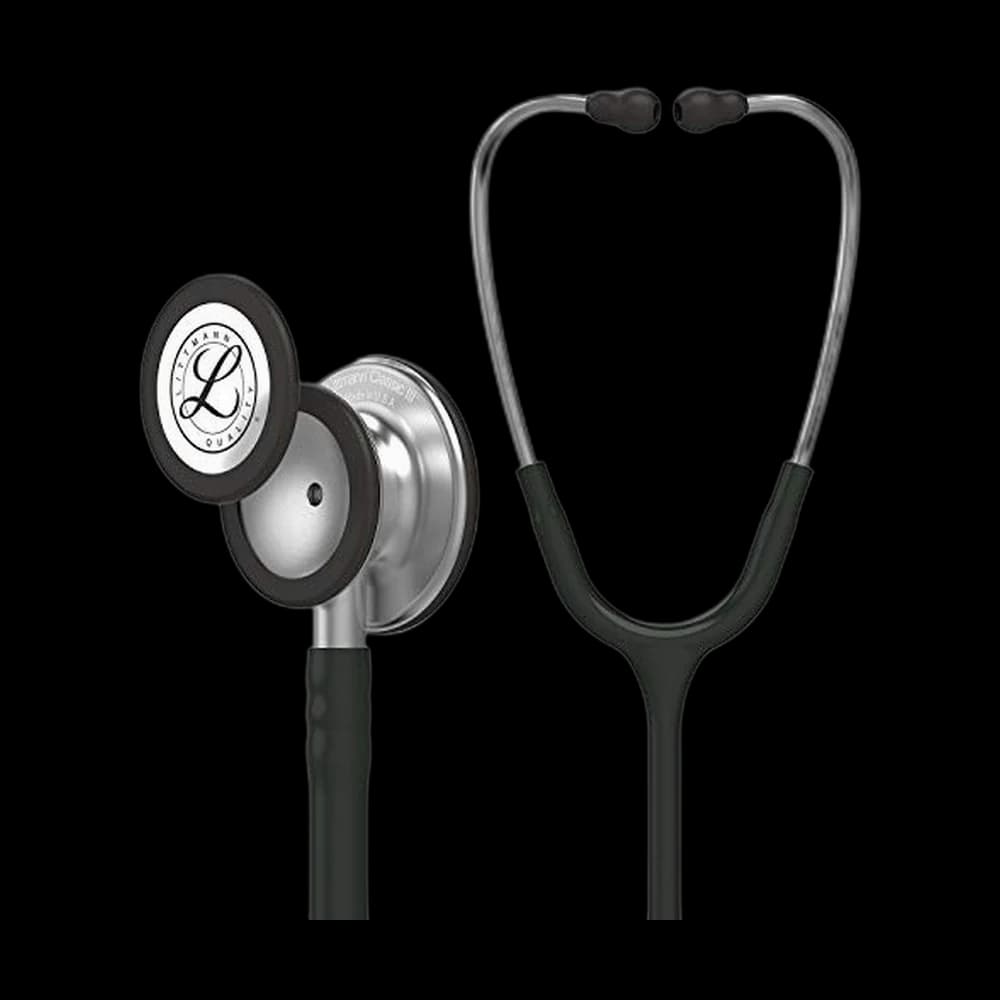
Once you know your unit, the upgrades that earn their money are specific rather than general. A personal Littmann Classic III Monitoring Stethoscope at around $96 makes sense if your facility does not issue one or if you have moved somewhere the ambient noise is genuinely fighting you — it is tunabletunable diaphragmA single-sided chestpiece that behaves like a bell under light pressure and like a diaphragm under firm pressure, so you change register by changing how hard you press instead of flipping the head. It is the defining feature of most modern cardiology-class stethoscopes. on both sides, has a machined stainless chestpiece and Littmann states a five-year warranty. 3M's own care guidance is worth reading before you buy one: mild soap and water or 70% isopropyl alcohol, never hand sanitiser, never immerse it, and never put it through any sterilisation process. See stethoscopes.
Home health and clinic nurses are the group who genuinely need their own blood pressure cuff and pulse oximeter, because there is no wall unit in a patient's living room. Inpatient nurses mostly do not.
And if you are shopping for someone else rather than yourself, our gifts for new nurse graduates guide sorts this same list by what actually lands well as a gift, which is a different question from what is essential.
One thing about hygiene that is easy to get wrong
Anything you carry between patients is shared equipment, whatever it says on the box. CDC's disinfection guidance is explicit that medical equipment surfaces including blood pressure cuffs and stethoscopes can become contaminated with infectious agents and contribute to healthcare-associated infections, and should be disinfected with an EPA-registered low- or intermediate-level disinfectant. Your shears, your penlight, your badge reel and your phone are in the same category by behaviour even where they are not by policy. Buy things you can actually wipe, and follow your facility's protocol over any manufacturer's suggestion, including ours.
The honest close
Nearly every "nurse essentials" list is longer than it needs to be because a longer list sells more. The real one fits in a locker and a pair of pockets. Spend on the two things that touch you for twelve hours — shoes and socks — buy the cheap consumables in multiples, borrow or defer everything else, and give yourself three months on the unit before you decide what you are missing. You will be right about it then, and you are mostly guessing now.
| Item | On a typical inpatient unit | Buy your own when | Our pick and catalog price |
|---|---|---|---|
| Stethoscope | Often issued; many units require a dedicated isolation-room scope anyway | Your facility issues none, or ambient noise is genuinely fighting you | Littmann Classic III, $96.29 |
| Blood pressure cuff | Wall-mounted or on the vitals machine | Home health and clinic work, where there is no wall unit | ADC Prosphyg 760, $35.31 |
| Pulse oximeter | On the vitals machine | Home health and clinic work | Innovo Deluxe iP900AP, $34.99 |
| Trauma shears | Stocked, but they walk off | Always, for that reason rather than because the unit has none | ADC 320 Medicut, $10.59 |
| Penlight | Not reliably stocked; batteries are not in the box | Always, and buy the two-pack | RISEMART 2-pack with pupil gauge, $6.59 |
| Watch with a sweep second hand | Not supplied, and a phone is not a substitute in most facilities | Always | Speidel Original Scrub Watch, $40.00 |
| Compression socks | Not supplied | Week one, not month six | CHARMKING 8 pairs, 15-20 mmHg, $19.99 |
| Badge reel | Not supplied | Always, in bulk; MRI-safe specifically if you work near MRI | MIFFLIN-USA 20-pack, $8.99 |
| Shoes | Not supplied | Always, and a second pair within a few months | HOKA Bondi 9, $160.00 |
Your next step