Our #1 Pick
Two aluminium-alloy penlights with a pupil gauge and a 5 cm ruler printed on the barrel, at a price that treats penlights as the consumable they actually are. RISEMART adds two details that matter in a pocket: a concave head that shields the bulb from drop damage, and a stiff rubber switch that resists switching on by accident and draining the batteries in your scrub top. The tradeoff is that batteries are not included and there is no meaningful service beyond a stated one-year warranty.
Key takeaways
- A printed pupil gauge on the barrel is the one feature that separates a penlight from a keychain flashlight. Buy nothing without it.
- Brighter is not better for pupil checks. A single high output with no low mode makes a light a room light, not an exam light.
- Penlights are consumables. Three of the five picks here ship as multi-packs, and that matches how the tool actually gets lost.
- High colour rendering matters when you are looking at skin, mucous membranes or drainage. Cheap cool-white LEDs push everything blue.
- The clip is the first thing to break on a plastic penlight. Aluminium bodies with riveted or stainless clips survive pockets far longer.
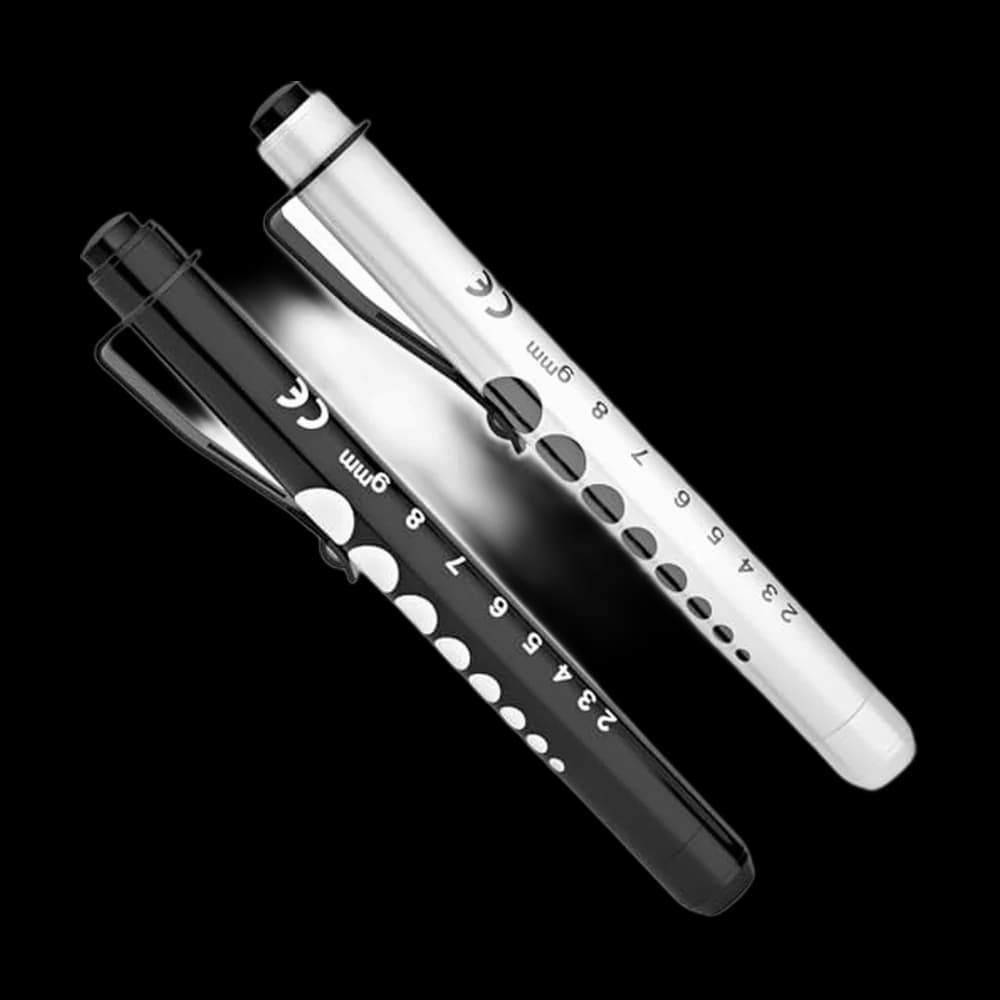
RISEMART Nurse Penlight with Pupil Gauge, 2-Pack
- Two lights in the pack, so one lives in the pocket and one in the bag
- Aluminium alloy body rather than moulded plastic
- Pupil gauge and 5 cm ruler printed on the barrel for neuro checks
It has the two things a nursing penlight actually needs, a printed pupil gauge and a metal body with a switch that will not drain itself in your pocket, and it comes two to a box at a price that acknowledges you will lose one.
Side-by-side comparison
#1RISEMART Nurse Penlight with Pupil Gauge, 2-Pack Owner rating4.6(14,698) | #2CAVN Penlight with Pupil Gauge, 2-Pack Owner rating4.6(35,575) | #3Primacare DL-9224 Disposable Penlight, 6-Pack Owner rating4.3(4,524) | #4Nitecore MT06MD High-CRI Medical Penlight Owner rating4.6(249) | #5Streamlight Stylus Pro 66118 LED Penlight Owner rating4.6(19,128) | |
|---|---|---|---|---|---|
|  |  |  |  | |
| NurseComforts Score | |||||
| Verdict | Two aluminium-alloy penlights with a pupil gauge and 5 cm ruler on the barrel, at a price that treats them as the consumable they are. | Near-identical to the RISEMART two-pack; buy on whichever price or colour combination is better on the day. | Six gauge-printed disposables, so the light you leave in an isolation room costs nothing to abandon. | The only pick here designed around the exam rather than around brightness, with a 4 lumen default and accurate colour rendering. | A superb work light in a penlight body, and the wrong tool for a pupil check because there is no gauge and no low mode. |
| Price | ~$6.59Buy on Amazon Price checked Oct 10 | ~$6.99Buy on Amazon Price checked Oct 10 | ~$7.89Buy on Amazon Price checked Oct 10 | ~$29.95Buy on Amazon Price checked Oct 10 | ~$21.72Buy on Amazon Price checked Oct 10 |
| Pupil Gauge | Yes, printed on the barrel with a 5 cm ruler | Yes, printed on the barrel with a 5 cm ruler | Yes, imprinted pupil gauge chart on the barrel | - | No |
| Battery Type | AAA (2 per light), not included | - | Sealed, non-replaceable; disposable by design | 2x AAA, included | 2x AAA alkaline, included |
| Pack Count | 2 lights | 2 lights | 6 lights (multicolour) | 1 light plus batteries | - |
| Body Material | - | Aluminium alloy | - | - | - |
| Lumens | - | - | - | 180 high; 4 on the default low mode | 100 lumens (Streamlight states), 62 m beam |
| Buyer sentiment | Quality Functionality Practicality Color Buyers praise quality, functionality, practicality and color. Mixed feedback on brightness and durability. Based on 2,233 user mentions | Value for money Color Suitability Ease Of Use Battery Included Reliability Buyers praise value for money, color, suitability and ease of use. Mixed feedback on durability. Some flag battery included and reliability. Based on 1,779 user mentions | Quality Effectiveness Suitability Penlight Quality Buyers praise quality, effectiveness, suitability and penlight quality. Mixed feedback on brightness and battery life. Based on 1,435 user mentions | Brightness Build Quality Versatility Value for money Buyers praise brightness, build quality and versatility. Mixed feedback on brightness settings and battery life. Some flag value for money. Based on 135 user mentions | Brightness Durability Portability Size Ease Of Use Buyers praise brightness, durability, portability and size. Mixed feedback on reliability. Some flag ease of use. Based on 12,973 user mentions |
| Pros |
|
|
|
|
|
| Cons |
|
|
|
|
|
* Prices are approximate. Click Buy to see current pricing on Amazon.
A penlight is a five-dollar purchase with a surprisingly specific spec sheet. It needs a printed pupil gaugepupil gaugeThe millimetre scale printed on the barrel of many penlights, used as a quick reference against which to compare pupil size. Print quality varies widely and wears off on cheap models - a gauge that survives a hundred trips through a scrub pocket is worth more than a sharper one that does not., an output bright enough to see by and dim enough not to punish the patient, and a clip that survives a scrub pocket and a laundry cycle. Most lights sold to nurses get at least one of those wrong.
Our pick for most nurses is the RISEMART Nurse Penlight with Pupil Gauge, 2-Pack. Aluminium-alloy bodies, a pupil gauge and a 5 cm ruler printed on the barrel, and two of them in the box, for under $7. That last part is not a compromise — penlights get lost, dropped in isolation rooms and put through the wash, and buying two at a time is simply the format that matches how the tool is used.
If you do frequent neuro checks and want to buy one good light instead, the Nitecore MT06MD is the genuine upgrade: it turns on in a 4 lumenlumensTotal light output from a source. On penlights more is not better: a very bright emitter aimed at an eye is unpleasant and washes out what you are trying to see. Beam evenness, tint and the presence of a low mode matter more than the headline lumen number. low mode by default and uses a high-CRICRIColor Rendering Index, a 0-100 measure of how faithfully a light source renders colour compared with a reference. Penlights with a high-CRI, warmer-tinted emitter show skin tone more naturally than a cheap cool-blue LED; the trade is usually a lower lumen figure. emitter that renders skin and mucous membranes accurately.
Our top picks
RISEMART Nurse Penlight with Pupil Gauge, 2-Pack — best for most nurses
Check price on Amazon →Two aluminium-alloy penlights with the pupil gauge and a 5 cm ruler printed right on the barrel, which is the only feature that separates a penlight from a keychain flashlight. RISEMART adds two details that matter once it lives in a pocket: a concave head that shields the bulb when you drop it, and a stiff rubber switch that resists being pressed by a folded report sheet and quietly draining the batteries.
The tradeoffs are real but small. Batteries are not included, so it does not work out of the box. RISEMART publishes no lumen figure, so you cannot know the brightness in advance. And there is one output mode, which is more light than a pupil check ideally wants.
CAVN Penlight with Pupil Gauge, 2-Pack — the same deal, different colours
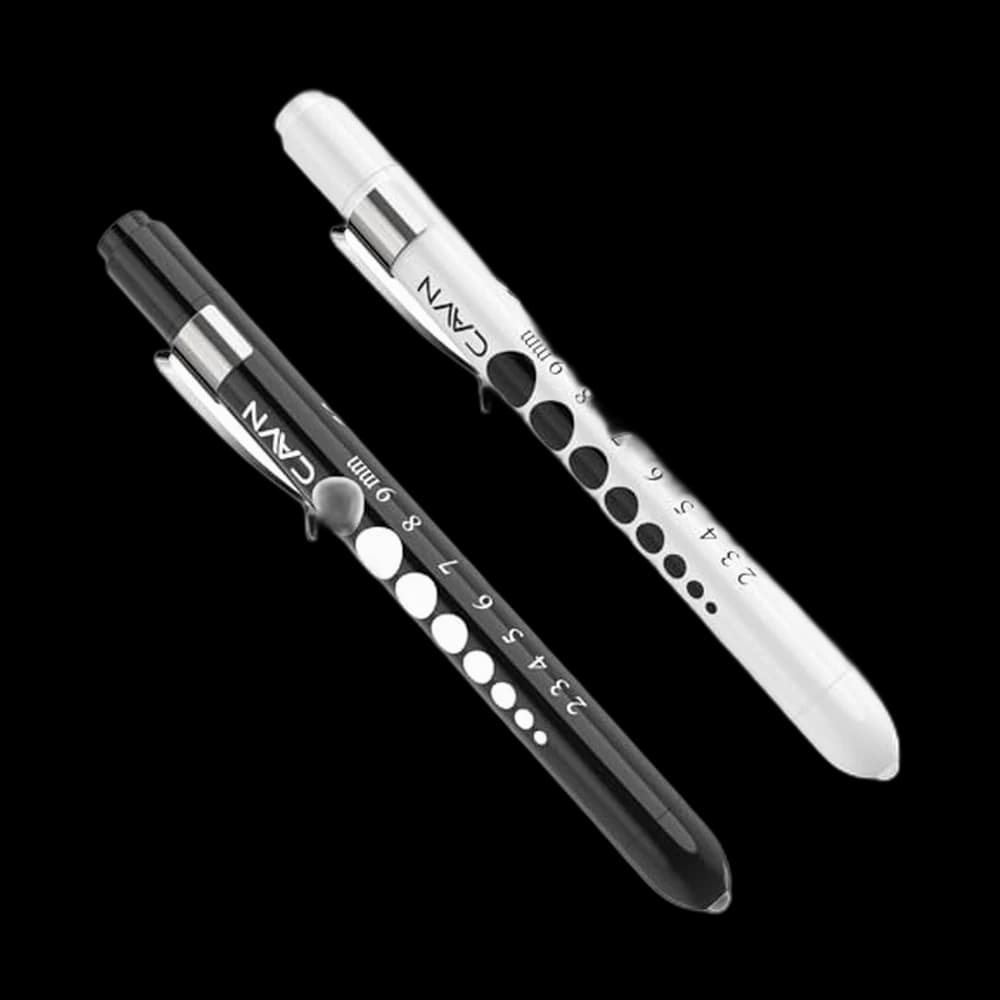
Check price on Amazon →Functionally the same proposition: two aluminium-alloy LED penlights, pupil gauge and 5 cm ruler on the barrel, push-button tail switch, pocket clip, two in the box, a few dollars. Buy whichever of these two is cheaper or comes in the colour combination you want, because the specifications are near-identical. Same caveats too — no batteries, no published lumen output, single mode.
Primacare DL-9224 Disposable Penlight, 6-Pack — best for isolation rooms
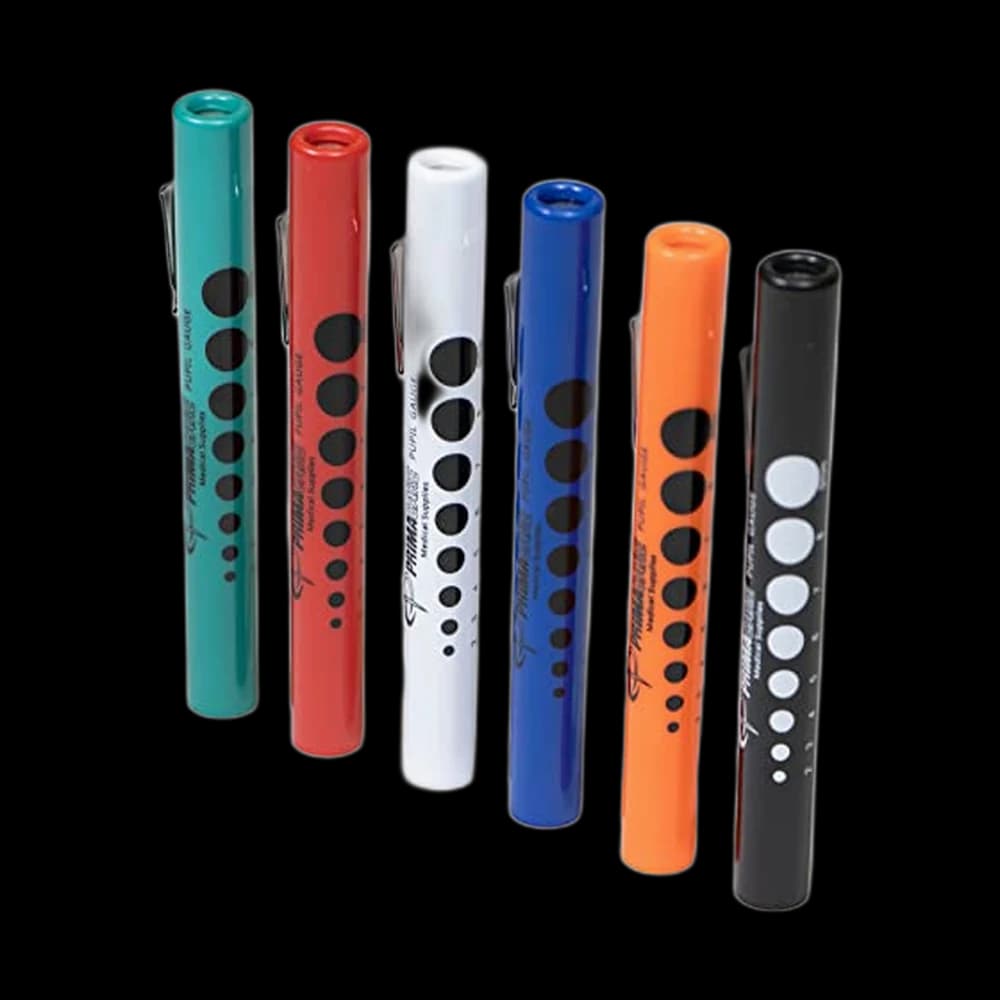
Check price on Amazon →Six lights in a bag with a pupil gauge chart imprinted on each barrel. The point is that the one you leave in an isolation room costs nothing to abandon, which is a genuine infection-control convenience rather than a marketing angle. Primacare uses a standard bulb with a pre-focused pinpoint lens and describes the light as warm rather than harsh, which patients tolerate better than cold white LED at 3am. Six colours means yours is identifiable on a shared counter.
The tradeoff is in the name. Moulded plastic bodies and clips that will not survive being sat on, sealed batteries you cannot replace, and standard bulbs that are dimmer than LED. When it fades, you bin it and open the next one.
Nitecore MT06MD High-CRI Medical Penlight — best for frequent neuro checks
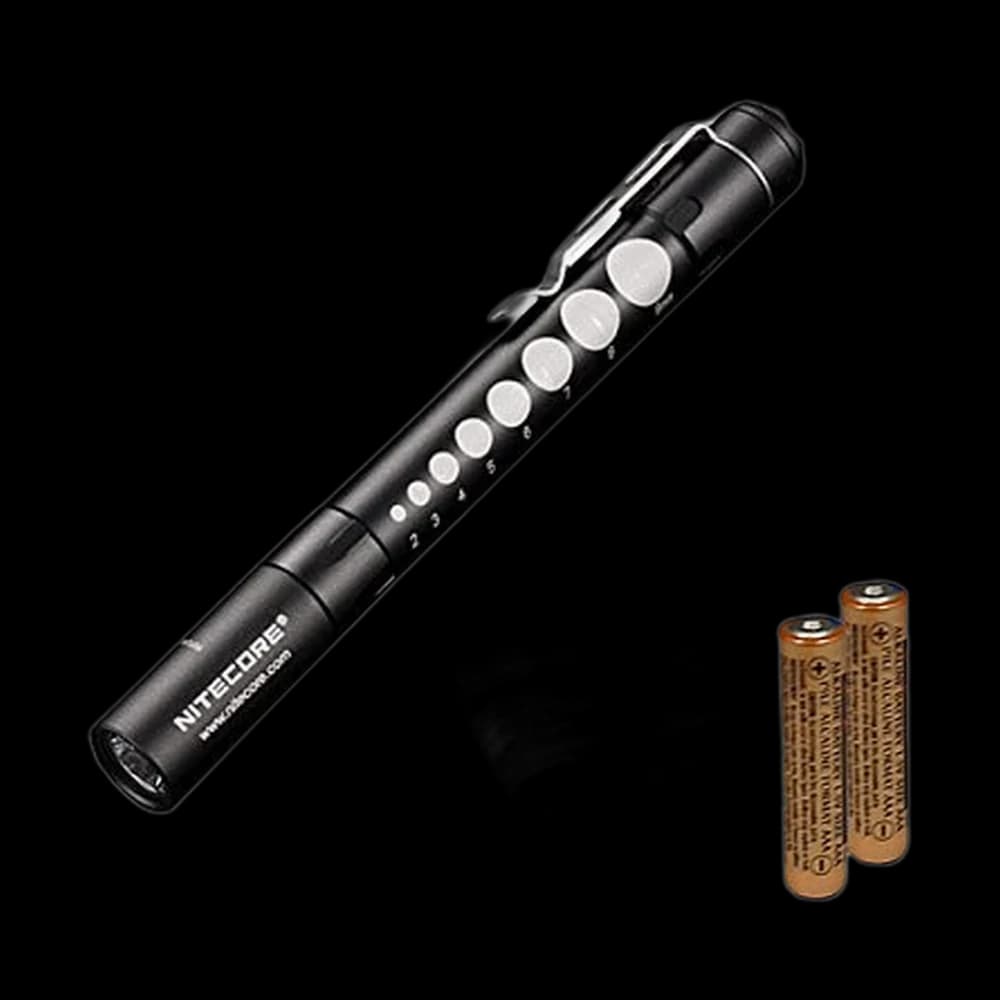
Check price on Amazon →The one light here designed around the exam rather than around brightness. It defaults to a 4 lumen low mode on turn-on, specifically so you are not flashing someone's eye, and steps to 180 lumens when you need a working light. The Nichia 219B emitter has a stated CRI above 90, which means skin tone, mucous membranes and drainage render closer to how they look under decent room light instead of being pushed blue by a cheap cool-white LED. Two AAA cells, a stated runtime up to 35 hours, a stainless steel pocket clip and a reverse-click tail switch you can work one-handed.
The tradeoff is money and singularity: around $30 buys one light with no spare in the box, which is a problem if you are the kind of person who loses penlights. Note also that the pupil gauge is only on the marked variant — confirm the version before you order.
Streamlight Stylus Pro 66118 LED Penlight — best room light
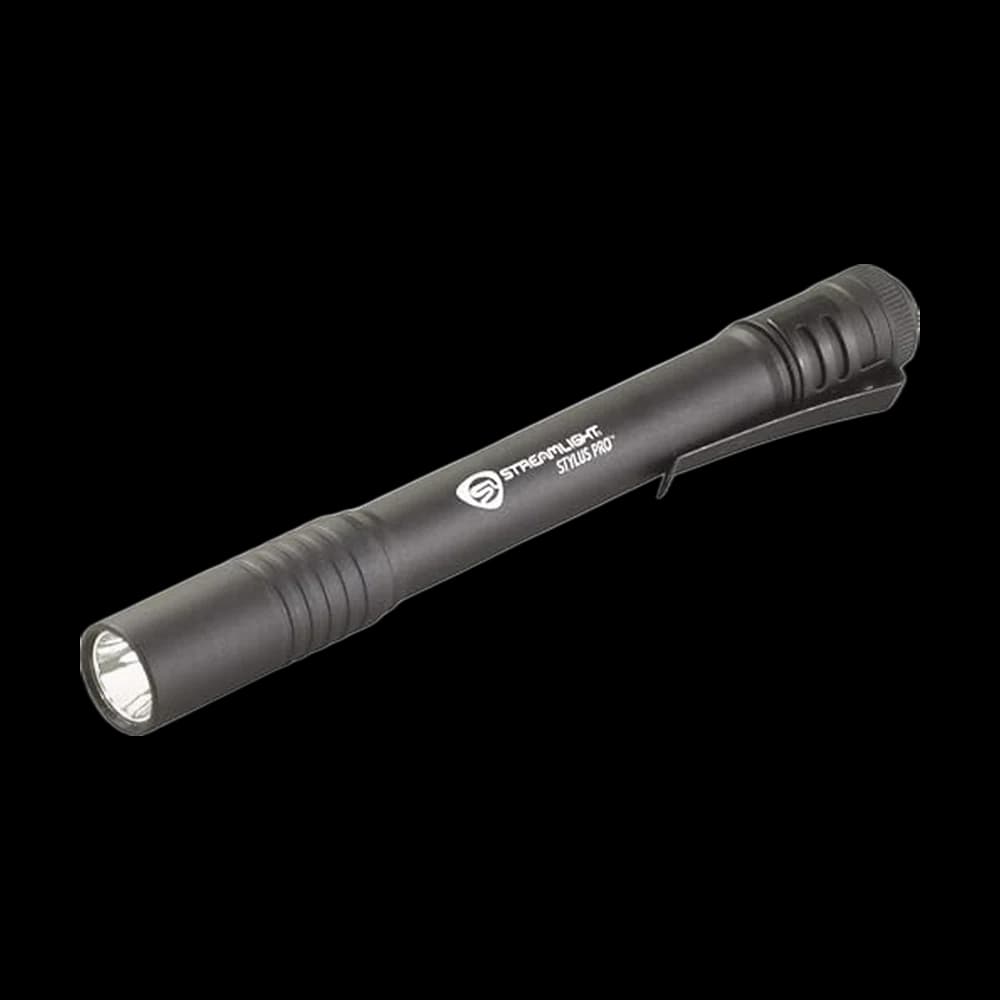
Check price on Amazon →Streamlight states 100 lumens with a focused 62 m beam, machined aluminium with a MIL-SPEC anodised finish, IPX4 water resistance and a 1 m impact rating, batteries and a nylon holster included. It is genuinely excellent for finding a pump alarm, a dropped cap or a bed control in a dark room.
It is also the wrong tool for the thing penlights are most associated with. There is no pupil gauge on the barrel and no low mode, so 100 lumens goes straight into the eye or nowhere. Buy it as a work light and keep a gauge-printed light for assessment.
What actually decides this for a nurse
Brighter is not better for pupil checks. This is the counterintuitive part of the category. Streamlight states 100 lumens for the Stylus Pro, which is a lot of light in a dark room and considerably more than you want aimed at an eye. Clinicians who have compared penlights specifically for pupil assessment argue the useful range sits far lower. If a light has one output mode and that mode is high, it is a room light that happens to be pen-shaped. The Nitecore's default 4 lumen mode exists precisely because of this.
A printed pupil gauge is the one clinical feature that matters. Millimetre markings on the barrel mean you document a measurement rather than an estimate from memory, and a ruler on the same barrel is a real bonus for wound documentation. Any light without a gauge is a flashlight.
Check the clip and the switch before the lumens. The clip is the first failure point on plastic penlights, usually within weeks of daily pocket use. Aluminium bodies with a riveted or stainless clip survive far better. On the switch, a tail-cap click is easy to operate one-handed while your other hand is holding a chart; a twist-on body is not.
Batteries determine the failure mode. AAA lights can be revived at 3am with cells from the supply room. Sealed disposables cannot, but they cost so little that the failure mode is simply throwing one away. Rechargeable USB penlights are the worst of both worlds on a floor: they add a charging routine to a tool whose whole job is to work when you pull it out of your pocket, and the charge port is one more surface to contaminate.
Treat it as a consumable and buy accordingly. Between the two-packs and the six-pack here, three of the five picks put ten lights in the box. That is not a downgrade from a "real" penlight. It is the buying pattern that matches a tool which lives in the same pocket as your shears and disappears at roughly the same rate.
The short version
Buy the RISEMART or CAVN two-pack and keep one in your bag. Add the Primacare six-pack if you rotate through isolation rooms. Upgrade to the Nitecore MT06MD only if neuro checks are a regular part of your assignment and colour rendering matters to you. Buy the Streamlight if what you actually need is a light to work by, and do not use it for pupil assessment.
Worth the upgrade
RISEMART Nurse Penlight with Pupil Gauge, 2-Pack ($6.59) is our #1 pick here. If your budget stretches further, this is a pricier option in the same category — our researched verdict on it is below.
Streamlight Stylus Pro 66118 LED Penlight
This is a work light in a penlight body rather than an exam tool. Streamlight lists 100 lumens with a focused beam, machined aluminium construction with a MIL-SPEC anodised finish, IPX4 water resistance and a 1 m impact rating, and it ships with two AAA cells and a tear-resistant nylon holster. That makes it the right pick for finding a pump alarm or a dropped cap in a dark room at 3am. The tradeoff is that there is no pupil gauge and no low mode, so 100 lumens straight into a patient's eye is more light than a neuro check wants.
Your next step