Our #1 Pick
The step-up fingertip clip, and the one worth the extra money for anyone who wants to know whether a reading deserves to be believed. Alongside the SpO2 and pulse rate figures it displays a plethysmograph waveform and a perfusion index, which is how you tell a real trace from a cold finger or a moving hand. Innovo states the device is FDA cleared with a 70 to 100 percent SpO2 measuring range and an accuracy tolerance of plus or minus 2 percent against arterial blood gas. The tradeoff is bulk: the extra display makes this a chunkier unit than a bare two-digit clip.
Key takeaways
- These are spot-check and wellness devices that display an estimate of oxygen saturation and pulse rate. They do not diagnose anything, and nothing here is medical advice.
- NIH's MedlinePlus Magazine states that over-the-counter oximeters sold directly to consumers do not undergo FDA review and should not be used for medical purposes.
- Skin pigmentation is a documented limitation. MedlinePlus describes melanin absorbing some of the light these devices emit, which can lead some of them to read falsely high.
- Buy the waveform. A plethysmograph trace and perfusion index tell you whether the device had a usable signal; a bare two-digit display tells you nothing.
- Cold hands and dark nail polish are the two most common causes of an alarming home reading. Warm the hand, remove the polish, and hold still.
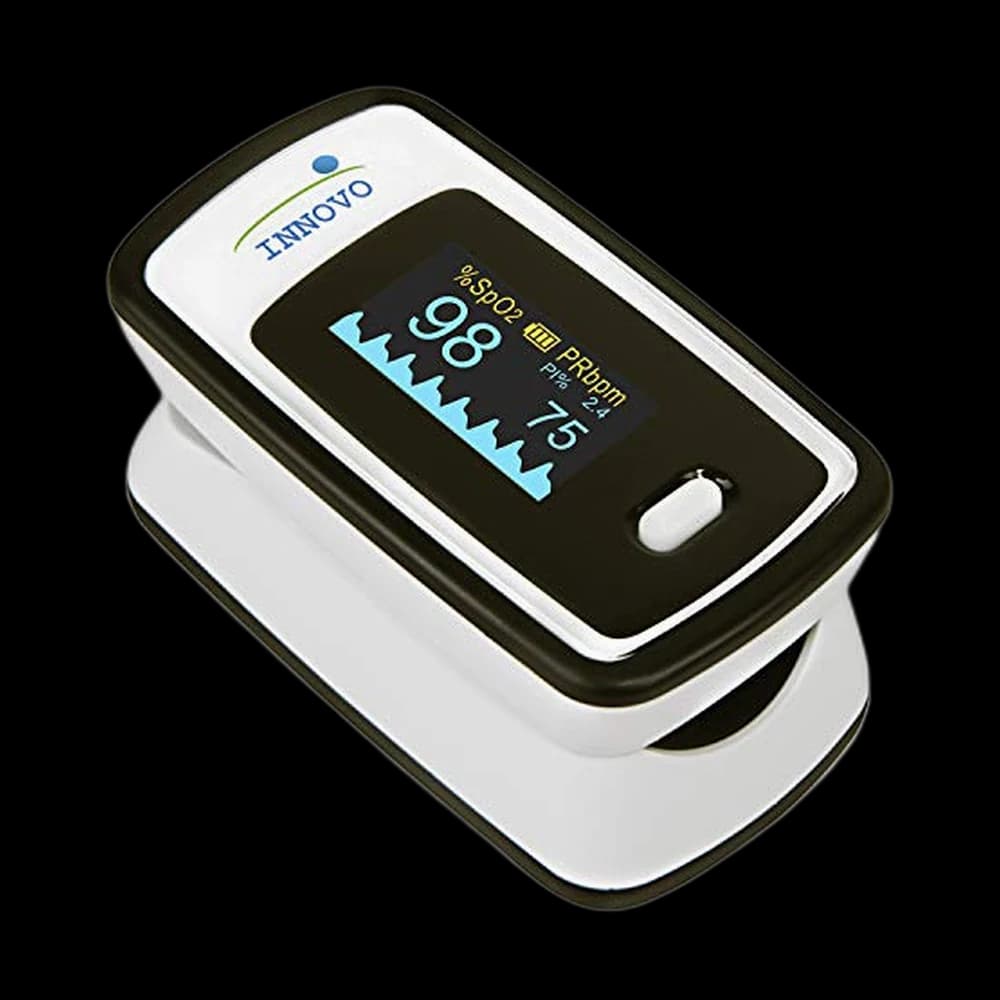
Innovo Deluxe iP900AP Fingertip Pulse Oximeter
- Displays a plethysmograph waveform and perfusion index, not just a bare number
- Innovo states an upgraded LED and sensor that keeps reading at low perfusion
- Audible alarm, pulse detection beeps and adjustable display brightness
It is the only clip at a sensible price that shows a plethysmograph waveform and perfusion index, which is the difference between a number you can sanity-check and a number you simply have to trust.
Side-by-side comparison
#1Innovo Deluxe iP900AP Fingertip Pulse Oximeter Owner rating4.6(50,776) | #2Zacurate 500BL Fingertip Pulse Oximeter Owner rating4.6(125,386) | #3Wellue O2Ring Continuous Oxygen Monitor Owner rating4.0(1,393) | #4Wellue Bluetooth Fingertip Pulse Oximeter (FS20F) Owner rating4.6(8,933) | #5Zacurate Pro Series 500DL Oximeter + Thermometer Bundle Owner rating4.5(39) | |
|---|---|---|---|---|---|
|  |  |  |  | |
| NurseComforts Score | |||||
| Verdict | The clip that shows you how good the reading was, with a plethysmograph waveform and perfusion index alongside the numbers. | The genuinely cheap spot-checker, priced so a lost unit is an inconvenience rather than a loss. | A wearable that records continuously for up to 16 hours, answering a question a spot-check clip structurally cannot. | App logging and a perfusion index in a clip, for a fraction of what a continuous wearable costs. | The most familiar consumer clip, sold here bundled with a forehead thermometer, with no signal-quality display. |
| Price | ~$34.99Buy on Amazon Price checked Oct 10 | ~$8.99Buy on Amazon Price checked Oct 10 | ~$159.99Buy on Amazon Price checked Oct 10 | ~$24.99Buy on Amazon Price checked Oct 10 | ~$38.23Buy on Amazon Price checked Oct 10 |
| Displayed Metrics | SpO2, pulse rate, plethysmograph waveform, perfusion index | SpO2, pulse rate and pulse strength bar | SpO2, pulse rate and body motion, recorded continuously | SpO2, pulse rate and perfusion index on an OLED display | SpO2, pulse rate, pulse strength bar; bundled thermometer displays temperature |
| Regulatory Status | Innovo states the device is FDA cleared | Zacurate states sports and aviation use, not a medical device | Wellue describes it as FDA registered; no clearance number published | - | Zacurate states sports and aviation use, not a medical device |
| Stated Accuracy | Innovo states 70-100% range, +/-2% against arterial blood gas | Zacurate states +/-2% SpO2 | - | Wellue states 70-99% range, +/-2% between 70 and 100% | Zacurate states +/-2% SpO2 |
| Form Factor | - | - | Soft silicone wearable ring, rechargeable, 12-16 hours per charge | Fingertip clip with Bluetooth; batteries, pouch and lanyard included | - |
| Buyer sentiment | Quality Accuracy Value for money Readability Buyers praise quality, accuracy, value for money and readability. Mixed feedback on reliability. Based on 10,957 user mentions | Reliability Quality Ease Of Use Value for money Buyers praise reliability, quality, ease of use and value for money. Mixed feedback on accuracy and reading speed. Based on 22,726 user mentions | Data Accuracy Life-Saving Oxygen Monitoring Comfort Durability Buyers praise data accuracy, life-saving, oxygen monitoring and comfort. Mixed feedback on accuracy and value for money. Some flag durability. Based on 824 user mentions | Quality Functionality Ease Of Use Value for money Buyers praise quality, functionality, ease of use and value for money. Mixed feedback on accuracy and app connectivity. Based on 1,865 user mentions | - |
| Pros |
|
|
|
|
|
| Cons |
|
|
|
|
|
* Prices are approximate. Click Buy to see current pricing on Amazon.
A fingertip pulse oximeter shines light through a finger and displays an estimate of oxygen saturationSpO2Peripheral oxygen saturation - the percentage of haemoglobin carrying oxygen, as estimated by a pulse oximeter shining light through a fingertip. It is an estimate from an optical model, not a direct measurement, and manufacturers publish an accuracy range for it. Interpreting any reading is clinical judgement, not something a gear review can supply. and pulse rate. That is the whole job. It does not diagnose anything, nothing on this page is medical advice, and if a reading worries you that is a conversation with a clinician rather than a shopping decision.
With that said, the useful question is not which clip is "most accurate" — almost every one of them prints the same plus-or-minus-2-percent figure on the box — but which one gives you any way to judge the number it just showed you. On that basis our pick is the Innovo Deluxe iP900AP Fingertip Pulse Oximeter, because alongside the SpO2 and pulse rate it displays a plethysmographperfusion indexA number some pulse oximeters display alongside saturation, indicating how strong the pulsatile signal at the sensor site is. A weak signal is the usual reason a reading will not settle. Devices that show a waveform or a perfusion figure let you see that the number is unstable rather than trusting a number that should not be trusted. waveform and a perfusion index. A clean trace tells you the device had a decent signal. A bare two-digit display tells you nothing at all.
If you want the cheap spot-checker that lives in a scrub pocket, the Zacurate 500BL is the honest budget entry at under $10. If the question you are actually asking is about overnight trends rather than one moment, no clip will answer it and the Wellue O2Ring will.
Our top picks
Innovo Deluxe iP900AP Fingertip Pulse Oximeter — best for most buyers
Check price on Amazon →The step-up clip, and the one worth the extra money for anyone who wants to know whether a reading deserves to be believed. The plethysmograph waveform and perfusion index are the differentiator: they are how you tell a real trace from a cold finger or a hand that would not stay still. Innovo states the device is FDA clearedFDA clearedA device that has been through the FDA's 510(k) premarket notification pathway for its stated intended use. It is not the same as 'FDA approved', and many oximeters and thermometers sold online are labelled for general wellness or sporting use rather than clinical use. The label on the box states which - and we report what it states rather than what the listing implies., with a 70 to 100 percent SpO2 measuring range and a tolerance of plus or minus 2 percent against arterial blood gas — a numeric claim most consumer clips do not publish at all. There is an audible alarm, pulse beeps, adjustable display brightness, and two AAA cells plus a lanyard in the box.
The tradeoff is bulk and price. The extra display makes it chunkier than a plain clip, and it costs several times a basic spot-check unit. And it is still a fingertip oximeter, which means readings degrade with movement, cold hands, nail polish and poor perfusion like every other device here.
Zacurate 500BL Fingertip Pulse Oximeter — best budget spot-checker
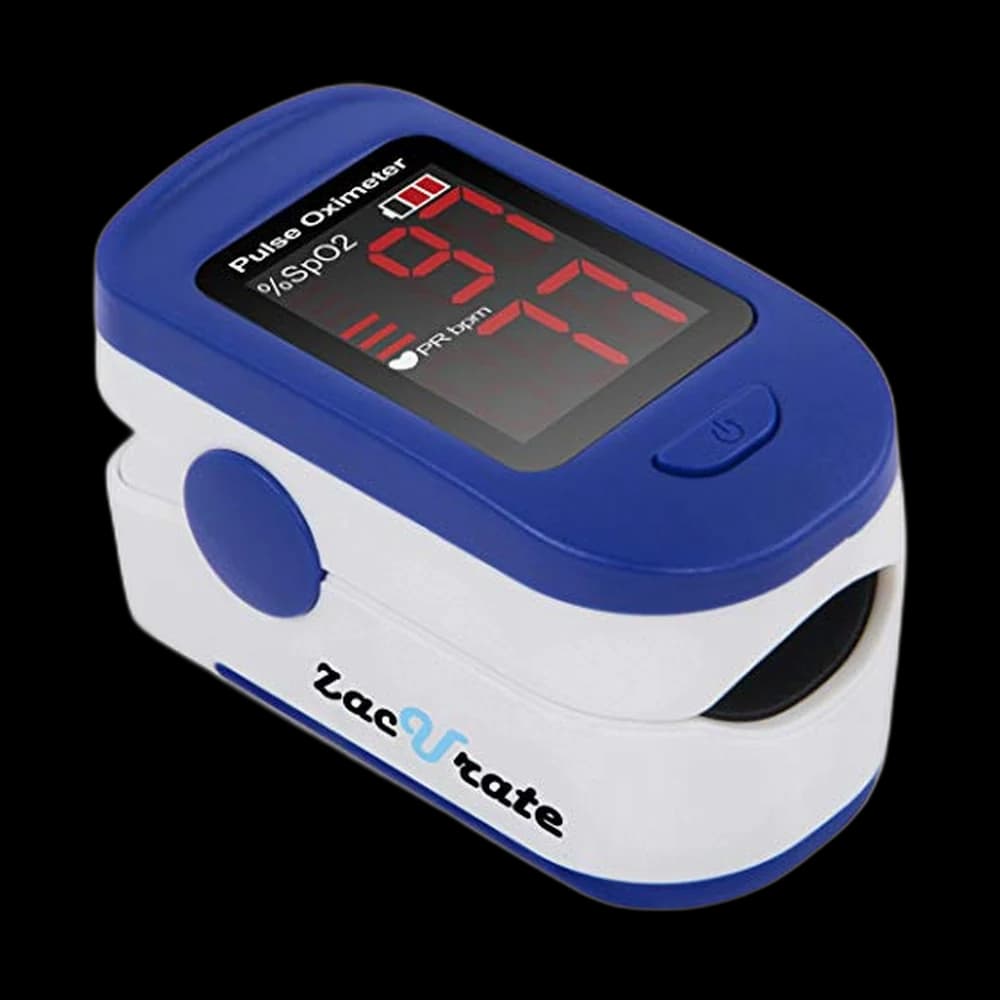
Check price on Amazon →Under $10, batteries included, reads SpO2, pulse rate and a pulse-strength bar on a large user-facing LED display in about ten seconds. Its real virtue is that it costs so little you can keep one in a scrub pocket without caring whether it comes home. The spring-loaded chamber takes a wide range of adult fingers, and Zacurate states a 12-month warranty with US-based phone support.
Read the labelling before you lean on it, though. Zacurate states its consumer oximeters are intended for sports and aviation use by healthy people and are not medical devices, and states the unit is for ages 12 and above. There is no waveform and no perfusion index, so nothing on screen warns you when the signal was poor.
Wellue O2Ring Continuous Oxygen Monitor — best for overnight trends
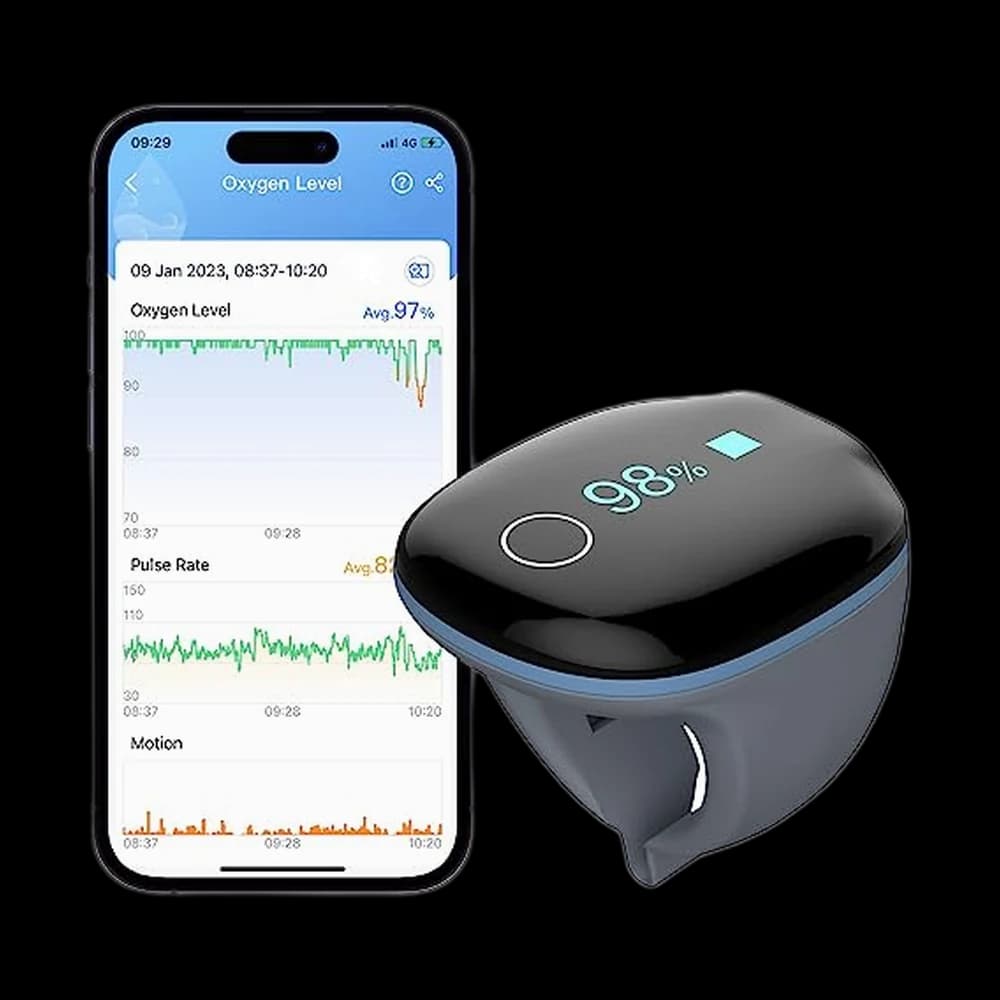
Check price on Amazon →A soft silicone ring you wear rather than a clip you press, and that difference is the entire point. It records SpO2, pulse rate and body motion continuously for up to 16 hours and syncs a graphed report to a free app or PC software, exportable as PDF or CSV. It vibrates when readings cross a threshold you set. If the question is "what happens across a night," a spot-check clip structurally cannot answer it and this can.
The tradeoffs: it costs many times what a clip does, it fits finger circumferences of 2.17 to 3.15 inches only, and Wellue describes it as FDA registered rather than publishing a clearance number — check the labelling against what you intend to use it for.
Wellue Bluetooth Fingertip Pulse Oximeter (FS20F) — app logging without the ring price
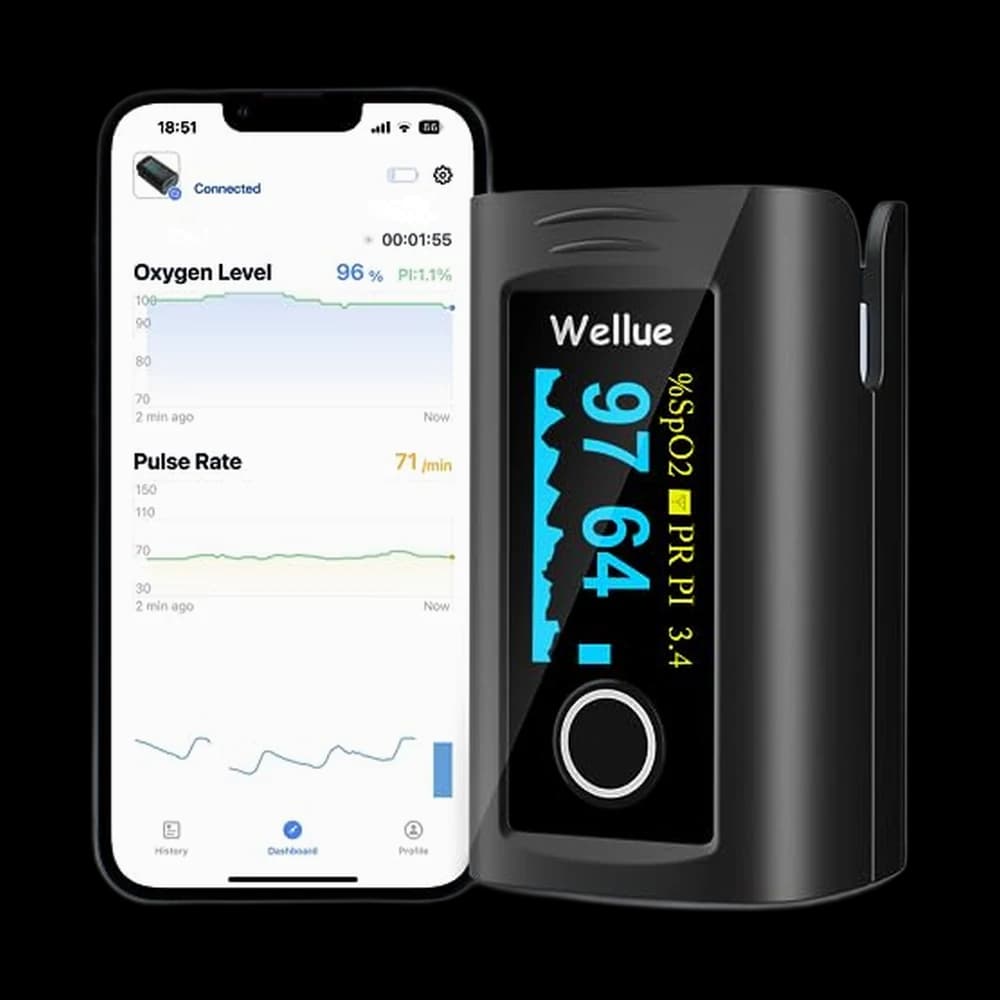
Check price on Amazon →Reads in about eight seconds on an OLED display, stores the last 12 readings onboard, and pushes them to a free iOS or Android app so you end up with a trend instead of numbers you meant to write down. It also displays a perfusion index, which is more signal-quality information than any budget clip offers. Wellue states a 70 to 99 percent measuring range with plus or minus 2 percent accuracy between 70 and 100 percent.
The tradeoffs are labelling and workflow. Wellue lists this unit for wellness, sports and aviation use rather than as a cleared medical device. Data only syncs while the app is open, so a reading taken with your phone across the room is not logged — and on a busy shift the app is the step you will skip, at which point a plain clip would have done.
Zacurate Pro Series 500DL Oximeter + Thermometer Bundle — the familiar one
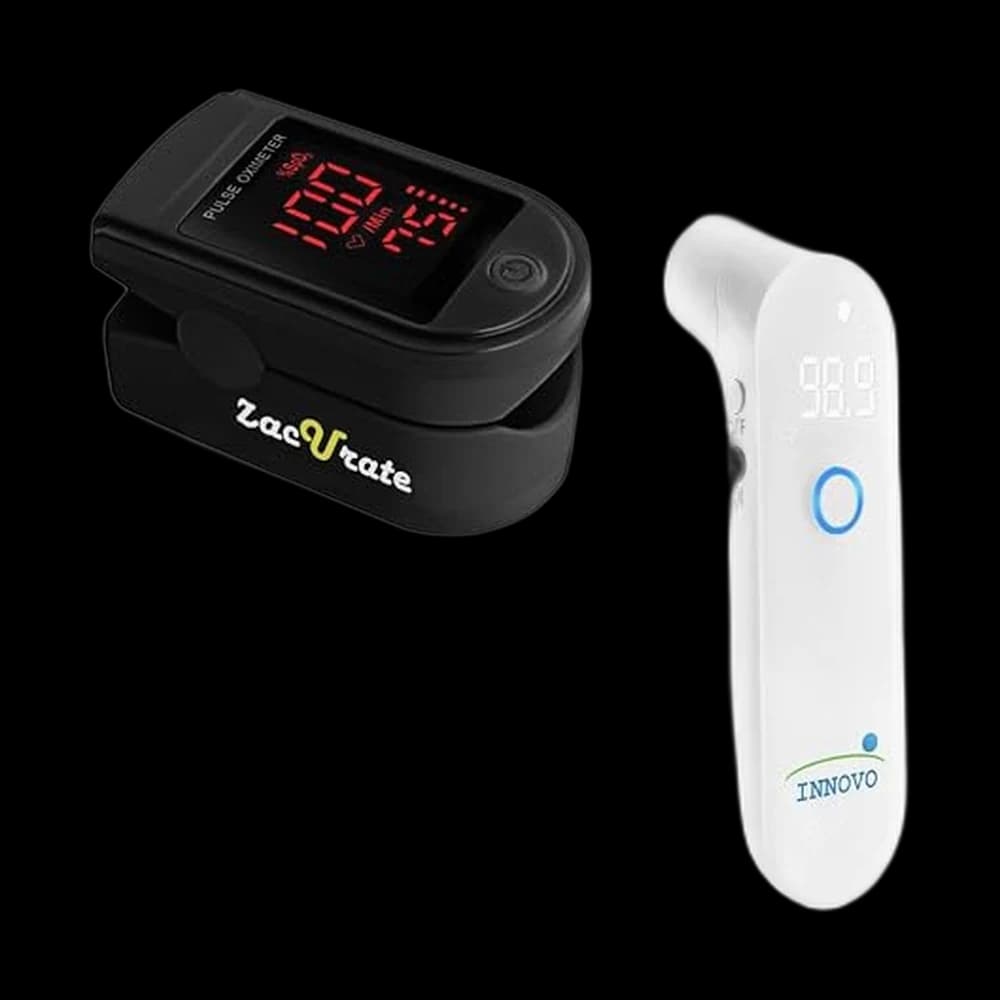
Check price on Amazon →The 500DL is the reference point for what a consumer clip costs and what it does not do: SpO2, pulse rate and a pulse-strength bar in about ten seconds, no waveform, no perfusion index. This particular listing bundles it with a touchless forehead thermometer, so you are buying two devices. If you only want the oximeter, the standalone 500BL above is cheaper.
Note that the "hospital grade accuracy" language that appears on listings like this one is marketing, not a regulatory category. Zacurate itself states its consumer oximeters are for sports and aviation use and are not medical devices.
What actually decides this
Know the regulatory split, because the box will not make it obvious. NIH's MedlinePlus Magazine puts it plainly: over-the-counter oximeters sold directly to consumers do not undergo FDA review and should not be used for medical purposes, and it is the prescription devices that the agency evaluates through clinical testing. Several of the best-selling clips online sit on the wellness side of that line. That is not a scandal — it is a labelling fact worth knowing before you interpret a number, and it is why "medical grade" in a product title should make you read the manufacturer's own statement rather than the listing copy.
Skin pigmentation is a documented limitation, and it is not a small one. MedlinePlus describes melanin absorbing some of the red and infrared light these devices emit, which can lead some of them to give falsely high readings, and cites NIH-funded work finding readings artificially higher than actual blood oxygenation in non-White patients and Black patients nearly three times more likely to have occult hypoxemia than White patients. The FDA has said publicly that concerns about accuracy differences between individuals with lighter and darker skin pigmentation shaped its regulatory work on these devices, and its January 2025 draft guidance for manufacturers states its recommendations are based in part on those concerns and includes labelling recommendations intended to help users understand the benefits and risks. Until that labelling is widespread, treat a single number from a consumer clip on darker skin with extra caution and weigh how the person looks and feels alongside it. This is a real limitation of the technology, not a reason to distrust one brand over another.
Several ordinary things change the reading. Poor circulation, skin temperature, skin thickness, tobacco use and fingernail polish all sit on the FDA's list of factors that can affect accuracy. Cold hands and dark polish are the two that catch people out most often at home. Warm the hand, take the polish off, rest the hand below heart level, and hold still before you decide a number means anything.
Buy the waveform. This is the practical recommendation that survives all of the above. A perfusion index and a plethysmograph trace tell you whether the device had a decent signal to work from. Only two of the five picks here surface that. It is the single most useful feature in the category and it is almost never the one being advertised.
Spot check or trend? A clip gives you one moment; a wearable records a night. Buying the wrong form factor for your question is the most common mistake here, and it is more expensive than buying the wrong brand.
The short version
For most buyers, the Innovo Deluxe iP900AP, because it shows you how good the reading was. For a pocket spot-checker, the Zacurate 500BL. For overnight recording, the Wellue O2Ring. And whatever you buy, read the manufacturer's own labelling rather than the listing headline — that gap is the real story in this category, and it applies just as much when you are shopping blood pressure cuffs.
Cheaper alternative
Innovo Deluxe iP900AP Fingertip Pulse Oximeter ($34.99) is our #1 pick here. If that is more than you want to spend, this is a cheaper option in the same category — our researched verdict on it is below.
Zacurate 500BL Fingertip Pulse Oximeter
The genuinely cheap spot-checker: SpO2, pulse rate and a pulse strength bar on a large LED display in about ten seconds, batteries included, for less than a takeaway lunch. Its real virtue is that it costs so little you can keep one in a scrub pocket without caring if it walks off. As with every Zacurate consumer model, read the labelling first, because Zacurate states these are intended for sports and aviation use by healthy people rather than as medical devices.
Your next step