Our #1 Pick
Littmann states this is the lightest of all its adult stethoscopes at 118 grams, and the teardrop chestpiece is shaped specifically to slide under a blood pressure cuff and around dressings. If your day is vitals, manual pressures and routine assessment rather than hunting subtle murmurs, this is the sensible Littmann. It still has a tunable diaphragm and an open bell, but it is built for comfort and access, not for detective work in a loud unit.
Key takeaways
- Check the required kit list before you buy anything. Some programs specify a model, and skills validations are graded against it - buying a second scope in week three is the common outcome of guessing.
- Buy dual-sided. Check-offs frequently ask you to demonstrate the bell and the diaphragm as separate steps, and a single-sided scope cannot do it.
- The Littmann Lightweight II S.E. is the sensible student default: Littmann states 118 grams, the lightest of all its adult stethoscopes, with a teardrop chestpiece designed to position under blood pressure cuffs.
- A Cardiology IV is a purchase for a job, not a rotation. Littmann positions it for emergency, ICU and step-down work, it is around 176 grams, and clinicals are where a scope is most likely to disappear.
- Engrave it, pick an uncommon tube colour, photograph the serial number - and spend an amount you could genuinely afford to lose.
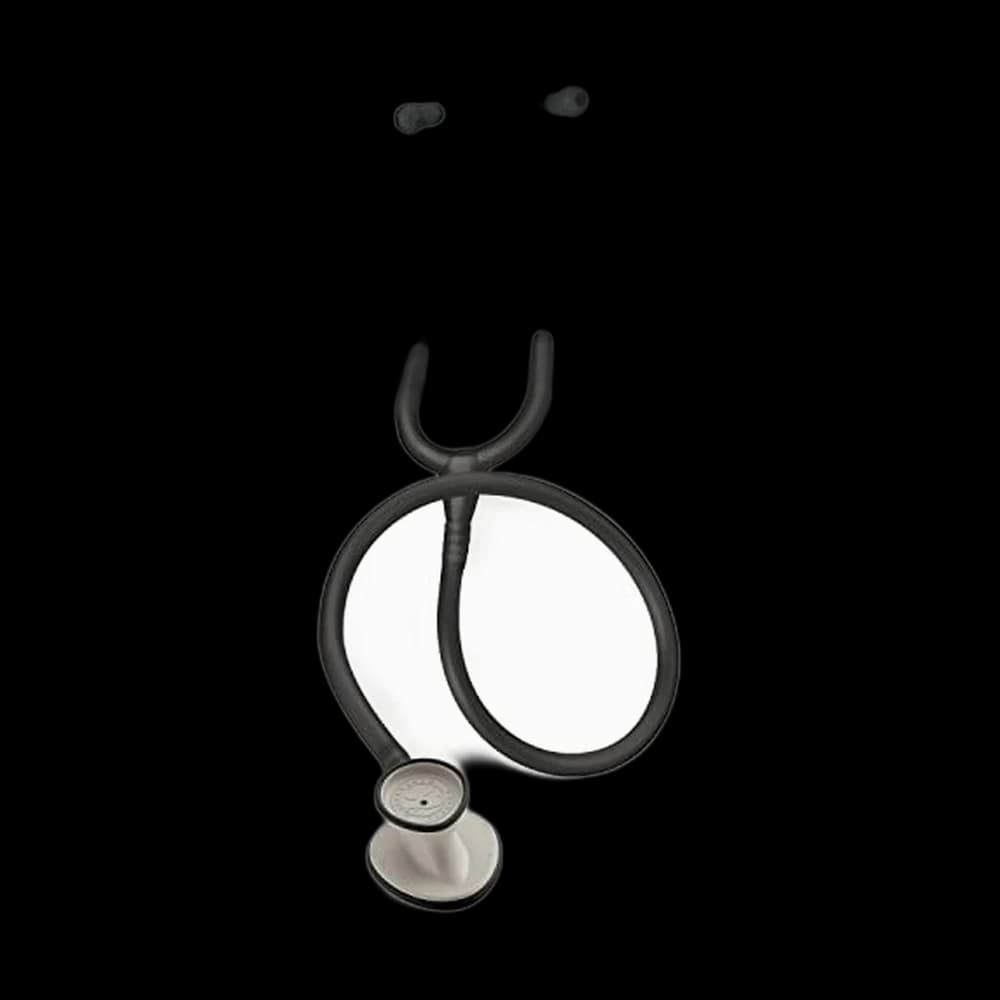
Littmann Lightweight II S.E. Stethoscope (2450)
- 118 g, the lightest adult Littmann, which shows up by hour ten of a shift
- Teardrop chestpiece designed to fit under BP cuffs and around bandages
- Tunable diaphragm plus a true open bell on the reverse side
Student clinical hours are mostly vitals, manual pressures and routine assessment, and this is the Littmann built for exactly that: 118 grams by Littmann's own figure, a teardrop chestpiece shaped to slide under a blood pressure cuff, a tunable diaphragm plus an open bell for dual-sided check-offs, and a price low enough that losing it during a rotation is not a catastrophe.
Side-by-side comparison
#1Littmann Lightweight II S.E. Stethoscope (2450) Owner rating4.7(26,731) | #2Littmann Classic III Monitoring Stethoscope (5620) Owner rating4.8(45,973) | #3ADC Adscope 619 Ultra-Lite Clinician Stethoscope Owner rating4.7(5,794) | |
|---|---|---|---|
| 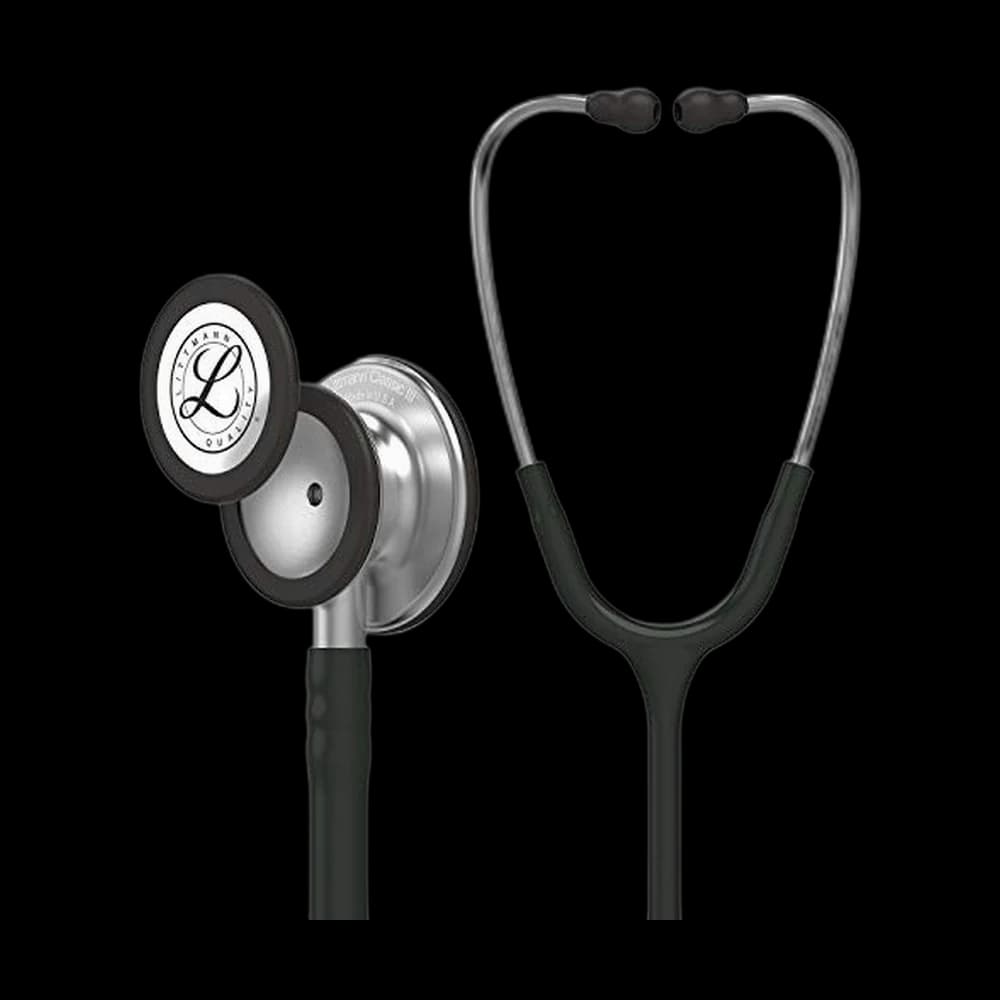 | 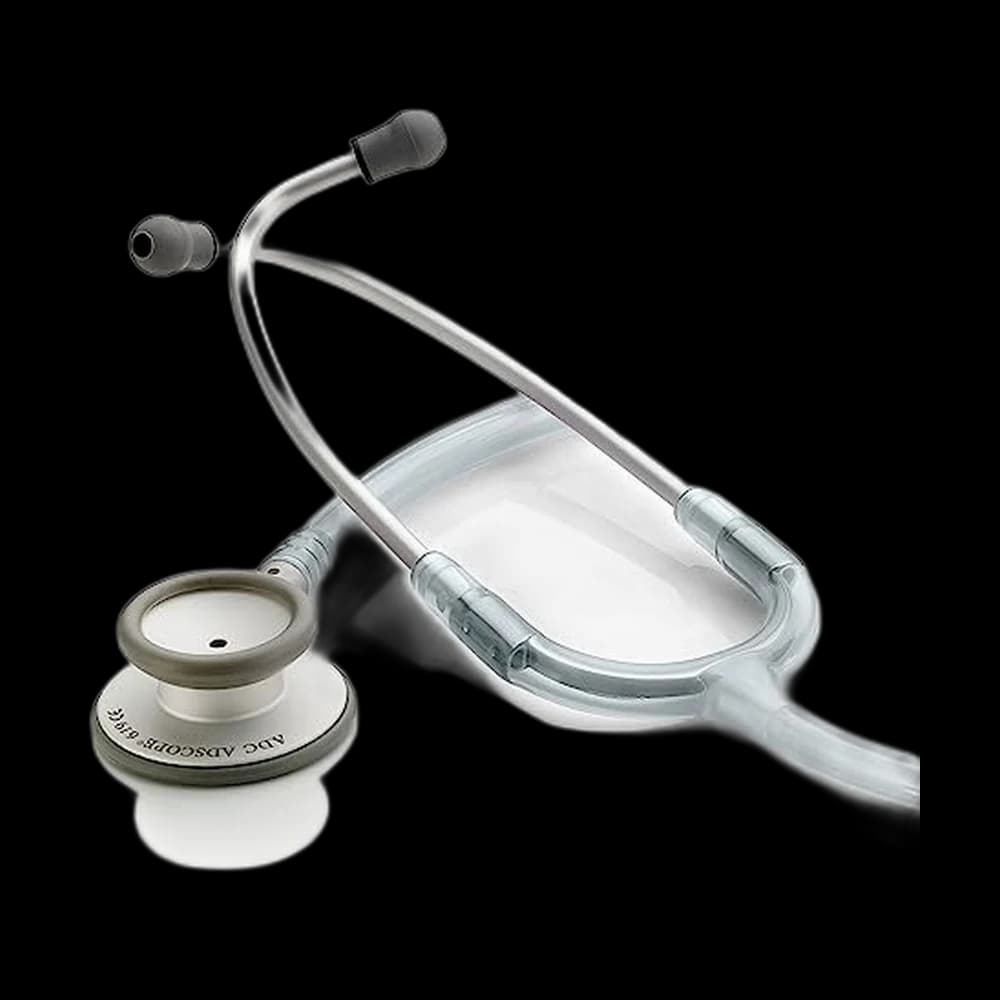 | |
| NurseComforts Score | |||
| Verdict | The sensible student scope: the lightest adult Littmann at a stated 118 g, with a teardrop chestpiece shaped to work under a blood pressure cuff. | The buy-once option: tunable on both sides, machined stainless chestpiece, and a five-year warranty Littmann publishes on its own product page. | The budget floor that is still a real clinician scope: 105 g, tunes by pressure, and ADC states free parts forever. |
| Price | ~$54.99Buy on Amazon Price checked Oct 10 | ~$98.77Buy on Amazon Price checked Oct 10 | ~$32.29Buy on Amazon Price checked Oct 10 |
| Weight | 118 g (Littmann states) | 150 g (Littmann-published net weight) | 3.7 oz (105 g) |
| Chestpiece Type | Dual-sided teardrop, tunable diaphragm plus open bell | Dual-sided, tunable diaphragm on both sides | Dual-sided with AFD tunable diaphragm |
| Warranty | 2-year warranty (Littmann states) | 5-year warranty (Littmann states) | Free parts forever and refurbishment (ADC states) |
| Buyer sentiment | Quality Weight Functionality Suitability Buyers praise quality, weight, functionality and suitability. Mixed feedback on sound quality and color. Based on 6,528 user mentions | Sound Quality Value for money Color Enjoyment Buyers praise sound quality, value for money, color and enjoyment. Mixed feedback on durability. Based on 3,368 user mentions | Quality Value for money Lightweight Suitability Hearing Quality Buyers praise quality, value for money, lightweight and suitability. Mixed feedback on sound quality and durability. Some flag hearing quality. Based on 893 user mentions |
| Pros |
|
|
|
| Cons |
|
|
|
* Prices are approximate. Click Buy to see current pricing on Amazon.
For most nursing students, the right stethoscope is a dual-sided Littmann in the middle of the range, bought once and engraved immediately. Our pick is the Littmann Lightweight II S.E. Stethoscope (2450): Littmann states it is the lightest of all its adult stethoscopes at 118 grams, its teardrop chestpiece is shaped to slide under a blood pressure cuff, and it costs roughly half what the Classic III does. Student clinical hours are mostly vitals, manual pressures and routine assessment, which is exactly the work Littmann positions it for.
Two things override that pick. If your program's required kit list names a specific model — and plenty of them do — buy that model, because skills validations are graded against it. And if you want one scope to carry from clinicals through your first job on a busy unit, the Littmann Classic III Monitoring Stethoscope (5620) is the buy-once answer, with a tunable diaphragmtunable diaphragmA single-sided chestpiece that behaves like a bell under light pressure and like a diaphragm under firm pressure, so you change register by changing how hard you press instead of flipping the head. It is the defining feature of most modern cardiology-class stethoscopes. on both sides and a five-year warranty Littmann publishes on its own product page. What almost nobody needs on day one is a Cardiology IV. More on why below.
What does nursing school actually require?
Check the syllabus before the shopping list, because programs differ more than the internet suggests.
Some schools bundle a stethoscope into a required kit, in which case the decision is made for you and reselling the kit scope to buy a different one is usually a bad trade. Some name a minimum spec rather than a model — most commonly a dual-sided adult scope, because skills check-offs often ask you to demonstrate the bellbell vs diaphragmThe two faces of a traditional dual-head chestpiece. The large flat diaphragm favours higher-frequency sounds; the smaller cup-shaped bell, used with light skin contact, favours lower-frequency ones. Which you reach for depends on what you are listening to. and the diaphragm as separate steps. Students on r/StudentNurse describe exactly this scenario: someone buys a single-sided scope, then has to buy a second one because a validation requires rotating the head and using the other side.
The practical rule that follows: buy a dual-sided scope even if a single-sided one sounds better on paper. All three picks below are dual-sided.
The second thing worth checking is whether your program requires anything else in the same order — a penlight, a pupil gaugepupil gaugeThe millimetre scale printed on the barrel of many penlights, used as a quick reference against which to compare pupil size. Print quality varies widely and wears off on cheap models - a gauge that survives a hundred trips through a scrub pocket is worth more than a sharper one that does not., bandage scissors. Buying them together is cheaper than the three separate shipping charges you will otherwise pay in week two.
The three that make sense
ADC Adscope 619 Ultra-Lite Clinician Stethoscope — the budget floor that is still a real scope
Check price on Amazon →This is the one to buy if the budget is genuinely tight, or if you are the person who loses things. At 3.7 oz (105 g) it is the lightest scope we compared, lighter even than the Littmann Lightweight II S.E., and it still tunes by pressure rather than making you flip the chestpiece — ADC calls that AFD technology. ADC states free parts forever plus complimentary refurbishment, which over a four-year program covers the eartips and diaphragms that actually go missing.
The compromises are honest ones. Aluminium alloy marks and dents where stainless would not, there is one spare pair of eartips in the box rather than two, and ADC publishes a parts-and-refurbishment programme rather than a fixed-term warranty. Some preceptors still visibly register the brand on your neck, which is a social cost rather than a clinical one.
Littmann Lightweight II S.E. Stethoscope (2450) — best for most students
Check price on Amazon →Littmann describes this as a lightweight entry-level instrument suited to taking blood pressure readings and making limited patient assessments, and that description is the reason it works for students rather than a reason to avoid it. First-year clinicals are vitals-heavy. The teardrop chestpiece is designed to position more easily under blood pressure cuffs and around bandages, which is a real convenience when you are taking manual pressures under supervision and cannot afford a fumble.
At 118 grams it is the lightest adult scope Littmann makes, it has a tunable diaphragm plus a true open bell, and it carries the Littmann service network at roughly half the Classic III's price. The trade is a two-year warranty rather than five, and a scope that is not built to chase faint cardiac findings in a loud room. If your program is heavy on advanced assessment early, that matters. For most first- and second-year students, it does not.
Littmann Classic III Monitoring Stethoscope (5620) — the buy-once option
Check price on Amazon →If you would rather buy one scope and be done, this is it. The chestpiece is machined stainless steel and tunable on both the adult and paediatric sides, so you change frequency response by changing hand pressure instead of rotating the head mid-assessment. Littmann publishes a five-year warranty and describes it as used by students and professionals alike. At 150 grams it is heavier than the Lightweight II S.E. but nowhere near the Cardiology IV.
The argument against it for a student is not acoustic, it is financial and situational: it costs roughly twice the Lightweight II S.E., and clinicals are the environment in which a scope is most likely to walk. If someone in your family is asking what to buy you for graduation, this is the correct answer to give them.
Why not a Cardiology IV on day one?
Because you would be buying capability you will not use, in the setting where it is most likely to disappear.
Littmann positions the Cardiology IV explicitly for emergency, intensive care, cardiac ICU and step-down environments, states the chestpiece is larger and the bell deeper than the Classic III's, and backs it with a seven-year warranty. Those are real advantages in a loud unit with a genuinely difficult patient. They are not advantages during a med-surg rotation where you are documenting bowel sounds under supervision.
The cost side is worse than the price tag suggests. It is around 176 grams, noticeably heavier on the neck than the 118-gram Lightweight II S.E., and it is the single most commonly named theft target in student threads. Nurses on r/nursing who own both are surprisingly consistent that they reach for the Classic anyway, several saying outright they would have bought the cheaper scope from the start.
If your specialty ends up being critical care, buy the Cardiology IV then, with a job's income behind it and a locker to keep it in. Our full stethoscope comparison works through that decision for practising nurses.
Theft, engraving and the thing nobody budgets for
Assume your scope will at some point be picked up by someone else, in a hurry, without malice.
The advice that recurs across r/StudentNurse is unglamorous and it works. Engrave your name or initials on the chestpiece — many retailers offer it at point of sale, and one student reported paying around forty dollars for a long hyphenated name, which is worth knowing before you assume it is free. Pick a colour combination nobody else in your cohort has; an unusual tube colour is the cheapest anti-theft feature there is. Photograph the serial number. Use the ID tag if one is included, as it is with several ADC and MDF models.
And then the part that is genuinely a budgeting decision rather than a technique: buy an amount of money you can afford to lose. That single sentence explains why so many experienced nurses tell students to spend less, not more, on their first scope. It is not snobbery about equipment. It is that a stolen budget scope is an annoyance and a stolen premium scope is a month of groceries.
What about the very cheap no-name scopes?
They will pass a check-off and they will make your first semester harder than it needs to be.
The failure mode is rarely the chestpiece. It is the eartips, which do not seal, and the tubing, which transmits every brush against your collar as noise. When a student says they cannot hear anything, a bad eartip seal is the most common explanation — Littmann's own troubleshooting guidance lists improperly seated eartips first among the causes of a muffled scope. A scope you cannot hear through teaches you to doubt your own assessment, which is the last habit you want to build in year one.
The ADC Adscope 619 Ultra-Lite is roughly the floor at which that stops being a risk. Below it, you are gambling on a component that costs the manufacturer very little to get wrong.
Where to buy and what to check
Buy from a seller you can identify. Counterfeit Littmanns are a persistent complaint in student threads, and the tell is usually price: a Classic III at a third of its normal price is not a bargain.
When it arrives, check three things before you use it in a clinical setting. The eartips should seat firmly and angle forward, following the direction of your ear canals. The chestpiece stem should be tight — a loose stem is a common cause of a scope that sounds dead. And the tubing should be free of cracks, especially if you bought a display or open-box unit.
If you are still deciding between models, our compared picks with published weights, warranties and chestpiece designs are in stethoscopes, and the reasoning for practising nurses is in Best Stethoscopes for Nurses.
The short version
Buy a dual-sided scope, buy it once, and engrave it the week it arrives. The Littmann Lightweight II S.E. is the right weight, the right price and the right capability for the work students actually do. The Classic III is the buy-once upgrade and the correct thing to ask for as a gift. The ADC Adscope 619 Ultra-Lite is a real scope at a price that makes theft survivable. And the Cardiology IV is a purchase for a job, not for a rotation.
| Scope | Price | Weight | Warranty as published | Chestpiece |
|---|---|---|---|---|
| ADC Adscope 619 Ultra-Lite | $32.29 | 3.7 oz (105 g) | Complimentary refurbishment and free parts forever, per ADC | Dual-sided with AFD tunable diaphragm |
| Littmann Lightweight II S.E. (2450) | $54.99 | 118 g | 2-year, per Littmann | Dual-sided: tunable diaphragm plus an open bell |
| Littmann Classic III (5620) | $98.77 | 150 g | 5-year, per Littmann | Machined stainless steel, tunable on both the adult and paediatric sides |
| Littmann Cardiology IV | $199.99 | 6.2 oz (about 176 g) | 7-year, per Littmann | Tunable both sides; the paediatric side converts to an open bell |
Your next step