
Quick Answer
The Classic III is the right scope for general wards, clinics and urgent care, which is where most nurses spend most shifts. The Cardiology IV earns its roughly doubled price in ED, ICU, cardiac ICU and step-down, where Littmann's 40 percent larger chestpiece and 60 percent deeper bell help you find faint low-frequency sounds in a noisy room. It also weighs about a quarter more on your neck.
Stethoscopes · Head-to-head
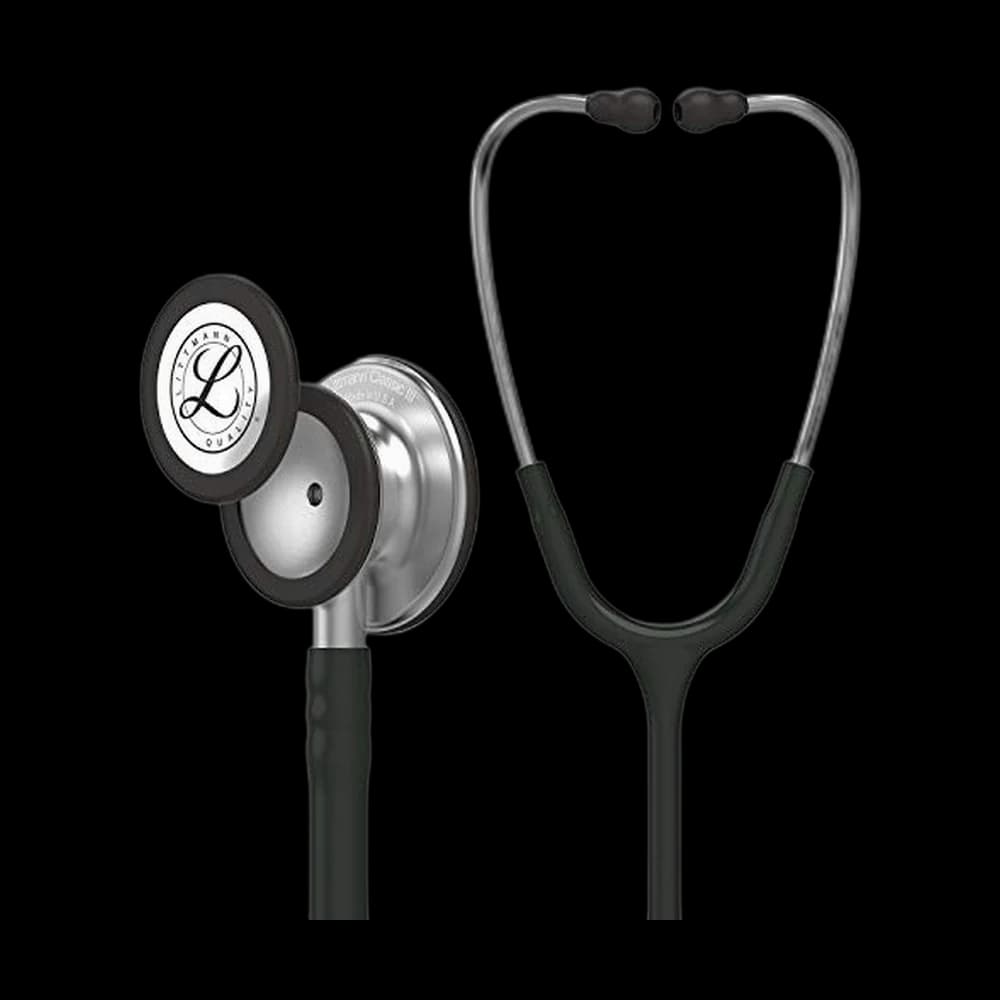 Littmann Classic III Monitoring Stethoscope (5620)$96.2986 · Score
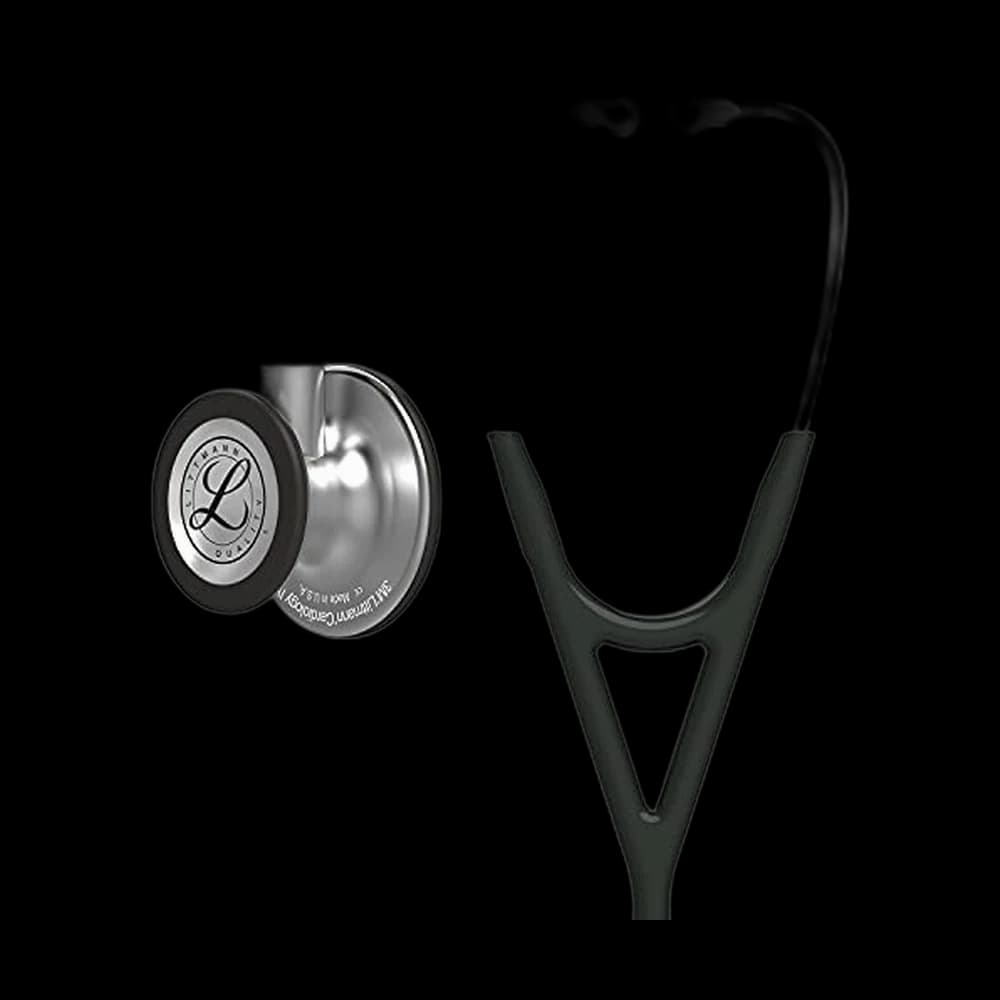 Littmann Cardiology IV Diagnostic Stethoscope (6152)$199.9982 · Score
A tick marks the side that wins a row outright on the numbers. Rows where “better” depends on the nurse — upper material, closure, chestpiece type — or where neither product states the property carry no tick at all.
Key takeaways
- The acoustic gap is real but narrow. Littmann states the Cardiology IV has a 40 percent larger chestpiece and a 60 percent deeper bell than the Classic III, which pays off hunting faint low-frequency sounds in a loud room and does little on routine lung fields.
- The weight gap is the tradeoff nobody quotes. Littmann publishes 150 g for the Classic III against 6.2 oz, about 176 g, for the Cardiology IV - roughly a quarter more on your neck across a twelve.
- Warranty steps up from five years to seven. That is Littmann telling you where each model sits in the range; it covers defects, not a scope that walks off a counter.
- Theft decides more of this purchase than acoustics do. The Classic III's huge colour range is the cheapest anti-theft feature available, and a lost premium scope hurts far more.
- Our NurseComforts Score puts the Classic III at 86 and the Cardiology IV at 82, and the gap is almost entirely value - the two score identically on build and serviceability.
Almost every nurse who buys a stethoscope with their own money ends up choosing between these two. The Littmann Classic III is the scope hanging on more necks than every other model combined. The Cardiology IV is the one people upgrade to, or think they should. The honest version of this comparison is that the gap between them is smaller than the price gap suggests, and that it only matters in a specific set of rooms.
The short answer
Buy the Classic III if you work a general ward, a clinic, urgent care, or anywhere your listening is lung sounds, bowel sounds and manual pressures. That is exactly the environment Littmann positions it for, and it is what most nurses are doing most of the time.
Buy the Cardiology IV if you work ED, ICU, cardiac ICU or step-down, or if you have genuinely struggled to hear faint heart tones in a noisy room. Littmann positions it explicitly for those settings, and the hardware backs that up.
If you are still in school, buy the Classic III or something cheaper and revisit this once you have a specialty and a paycheck.
What Littmann actually changed
The specification difference is not vague, and it is not marketing fog. Littmann states the Cardiology IV's chestpiece is 40 percent larger than the Classic III's and its bellbell vs diaphragmThe two faces of a traditional dual-head chestpiece. The large flat diaphragm favours higher-frequency sounds; the smaller cup-shaped bell, used with light skin contact, favours lower-frequency ones. Which you reach for depends on what you are listening to. is 60 percent deeper. A bigger diaphragm collects sound over more skin, and a deeper bell resonates lower frequencies better. That is the entire acoustic case, and it is a real one - it is just narrow. It pays off when you are hunting a faint low-frequency finding in a room that will not go quiet, and it does very little on a routine set of lung fields.
Both are dual-sided machined stainless chestpieces with a tunable diaphragmtunable diaphragmA single-sided chestpiece that behaves like a bell under light pressure and like a diaphragm under firm pressure, so you change register by changing how hard you press instead of flipping the head. It is the defining feature of most modern cardiology-class stethoscopes., so on both scopes you change frequency range with hand pressure rather than by flipping the head mid-assessment. Both run 27-inch tubing. On the Cardiology IV the pediatric side additionally converts to a traditional open bell.
Weight, and why some ICU nurses leave the Cardiology in a drawer
This is the tradeoff nobody puts on a spec sheet next to the acoustics. Littmann's published net weight for the Classic III is 150 g, with the chestpiece accounting for 82 g of that. The Cardiology IV is listed at 6.2 oz, roughly 176 g. That is about a quarter more mass hanging on your neck across a twelve.
It is also the single most common complaint in the nursing threads. In r/nursing and r/StudentNurse the default answer is a Classic III, described over and over as everything a floor nurse needs - including by ICU nurses who own a Cardiology and leave it in a drawer because it is heavy and the tubing feels short. The Cardiology IV keeps a real constituency among ED and critical-care nurses and among people who struggle to hear heart tones, but it is just as often called more stethoscope than the job requires.
Warranty: five years versus seven
The warranty gap between these two is bigger than the acoustics gap most nurses will ever notice. Littmann states five years on the Classic III and seven on the Cardiology IV. Both are long for their price bands, and both are the manufacturer telling you where each model sits in the range.
Worth being clear about what a warranty does and does not cover: it addresses defects, not the scope walking off a counter. Which brings us to the variable that decides more of these purchases than acoustics does.
Theft is the real variable
Nurses treat losing a stethoscope as a matter of when. The disillusioned note that recurs in every thread is that engraving, name tags and charms frequently fail to stop it, with physicians and residents named as culprits as often as anyone.
This is why the Classic III's enormous colour and finish range is a genuine feature rather than a vanity one: a scope nobody else on the unit owns is the cheapest anti-theft measure available, and it costs nothing. It is also why the Cardiology IV's price is a real argument against it. Losing a premium scope is a bad afternoon; losing a mid-band one is an annoyance.
Price bands and what our score says
The Classic III sits in the mid band for clinician stethoscopes - the same money as a decent pair of work shoes. The Cardiology IV sits at roughly double that, the most expensive scope in the category we track by a wide margin.
Our NurseComforts Score rates the Classic III 86 and the Cardiology IV 82. Read that carefully: it is a deterministic composite, published in full on our methodology page, and the gap between these two is driven almost entirely by value rather than by sound. Both score identically on build and serviceability, and within a point on all-shift comfort. The score is saying the Cardiology IV is a very good instrument that costs a lot, not that it is a worse one.
Owner ratings are effectively tied. Both sit at the same average, though the Classic III has that average across many times more reviews. Amazon's review-summary data has buyers praising sound quality on both; the Cardiology IV picks up mixed feedback on weight that the Classic III does not.
Where the honest dissent sits
There is a genuine dissenting camp in the nursing threads, not a fringe one, arguing that hospital-issue disposable or cheap unit stethoscopes are clinically adequate for routine lung sounds and blood pressures, and that students should run a cheap scope through school and buy a Littmann only after they land a specialty. The school threads are visibly split on it. If money is tight, that position is defensible and we are not going to talk you out of it.
The counter-argument is not acoustic, it is practical: a scope you own and know is a scope whose tunable diaphragm you have actually practised with, and pressure tuning is a skill before it is a feature.
Who should buy which
Buy the Classic III if you work general wards, clinics or urgent care, you want the lightest of the two on your neck, you want the widest colour range for anti-theft reasons, or you would rather spend the difference on shoes.
Buy the Cardiology IV if you work ED, ICU, cardiac ICU or step-down, you specifically struggle with faint low-frequency cardiac sounds in noisy rooms, you want the seven-year warranty, or you want the pediatric side to convert to a true open bell.
Buy neither yet if you are a first-year student. Get through your assessment course on something cheap, learn what light and firm pressure do on the same spot, and then spend real money once you know which sounds you are straining to hear.
Your next step